40 Years of Wireless Evolution to Smart Networks
Imagine a world where your phone doesn’t just connect to the internet—it senses your environment, predicts your needs, and acts as an invisible force guiding your daily life. This isn’t science fiction. It’s the trajectory of wireless technology, evolving from basic voice calls to a hyper-connected, intelligent network. Over four decades, each wireless generation has brought unexpected breakthroughs. Now, as we approach 6G, the network itself may become so seamless it disappears—yet remains everywhere.
From 1G to 5G: The Unpredictable Journey of Wireless Innovation
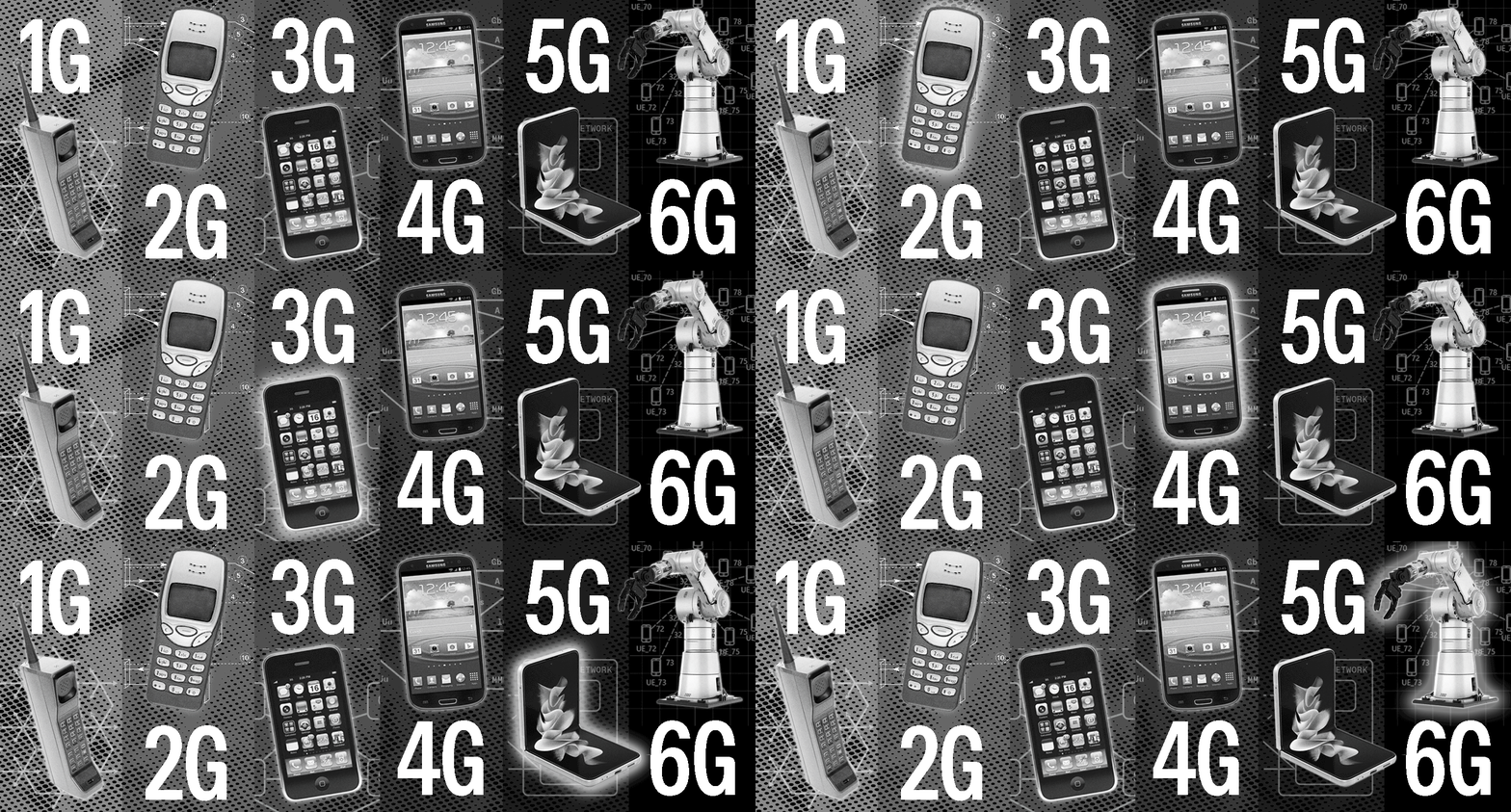
1G to 3G: The Foundation of Mobile Communication
The first generation of wireless networks in the 1980s focused on analog voice calls. By the 2000s, 3G introduced mobile data, enabling text messaging and basic internet access. These early stages laid the groundwork for a mobile-first world, though no one could foresee the internet of things (IoT) or real-time video streaming.
4G and 5G: The Rise of Smart Connectivity
4G (2010s) revolutionized mobile broadband, making streaming and cloud computing possible. 5G followed with ultra-low latency and high-speed data, powering innovations like autonomous vehicles and remote surgery. Yet, the true surprise of 5G wasn’t just speed—it was its role in creating a network of networks, connecting billions of devices.
6G’s Hidden Surprise: The Network That Disappears
According to Dr. Mallik Tatipamula (CTO at Ericsson) and Dr. Vint Cerf (Google’s Chief Internet Evangelist), 6G may render the network itself invisible. Instead of a visible infrastructure, it will function as a “nervous system”—always present, always responsive, but unnoticed. This shift will enable real-time environmental sensing, from monitoring air quality to detecting natural disasters.
Key Features of 6G Smart Networks
- Ubiquitous Connectivity: 6G will operate in the terahertz spectrum, enabling coverage in remote and urban areas alike.
- Artificial Intelligence Integration: AI will optimize network performance and predict user needs.
- Energy Efficiency: Networks will adapt to minimize power consumption, supporting sustainability goals.
The Future of Wireless: A Sensing Network
By 2030, 6G could transform cities into living ecosystems. For example, smart traffic systems will adjust in real time to reduce congestion, while healthcare devices will monitor patients continuously. The network will act as a silent partner, anticipating demands and solving problems before they arise.
Challenges and Opportunities
While the potential is vast, challenges remain. Security, privacy, and global standardization will require unprecedented collaboration. However, the rewards—such as climate monitoring and disaster prevention—make this evolution critical.
Conclusion: Embrace the Invisible Revolution
The journey from 1G to 6G isn’t just about faster internet. It’s about creating a world where technology feels intuitive, not intrusive. As Dr. Tatipamula and Dr. Cerf emphasize, the future lies in networks that adapt to us, not the other way around. Stay ahead of this invisible revolution by staying informed and ready to innovate.