
6 Best Nano Banana 2 Prompts for Smart AI Image Generation in 2026
Why Nano Banana 2 Prompts Matter for AI Artists
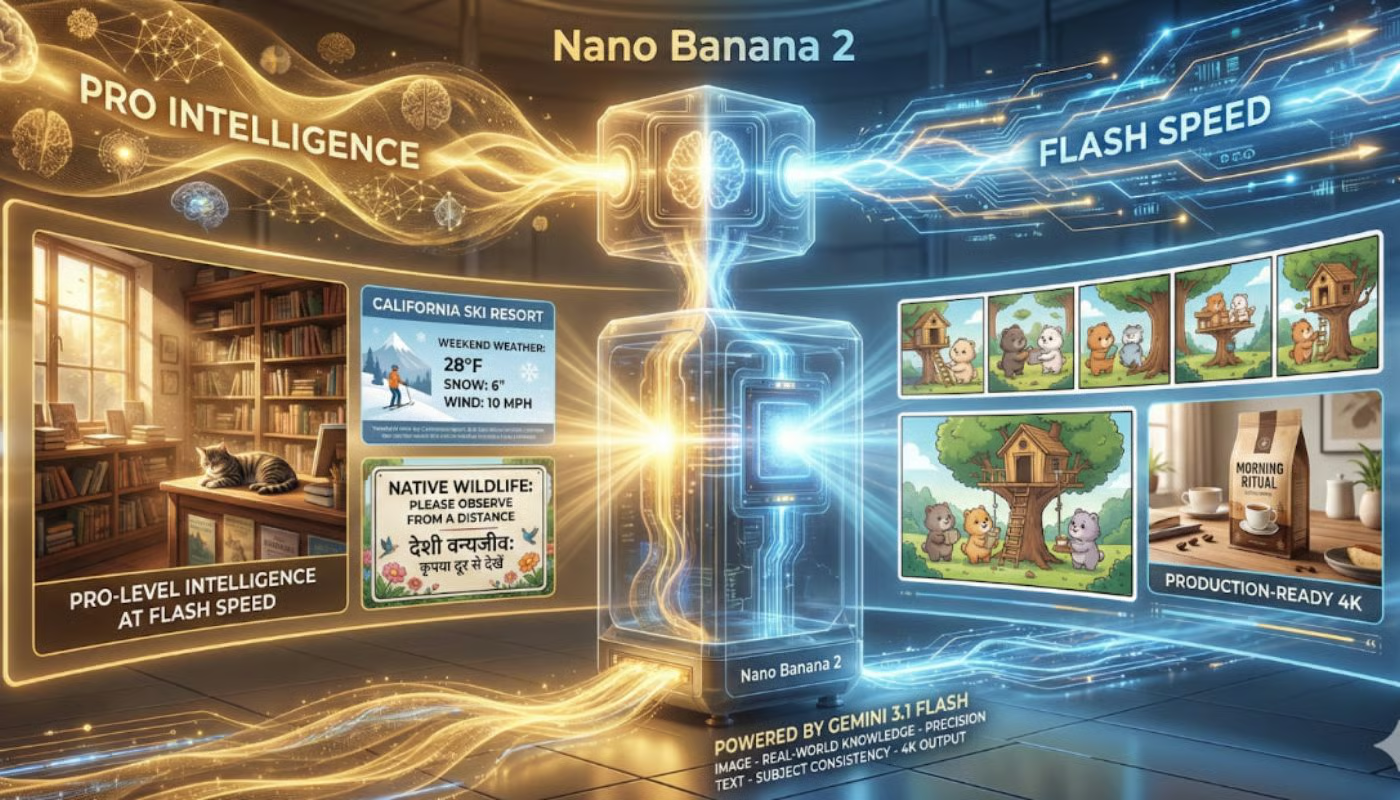
In 2026, Google’s Nano Banana 2 (Gemini 3.1 Flash Image) revolutionized AI image generation by merging speed with precision. But even the best tools need smart prompts to unlock their full potential. These 6 prompts are designed to help creators generate high-quality, production-ready images while maximizing efficiency.
Key Features of Nano Banana 2
- 4K resolution output
- Real-world knowledge integration
- Improved character consistency
- Cleaner text rendering
- Pro-level intelligence at Flash speed
Top Nano Banana 2 Prompts for 2026
1. Conceptual Art with Technical Precision
“Create a hyper-detailed cyberpunk cityscape at night, with neon-lit holographic billboards, autonomous flying vehicles, and augmented reality overlays. Include subtle text elements like digital graffiti and product logos that align with the futuristic theme.”
2. Character Design with Consistency
“Design a fantasy warrior character with intricate armor patterns, glowing runes, and a dynamic battle pose. Maintain consistent facial features and armor design across multiple variations showing different combat scenarios.”
3. Product Visualization for E-Commerce
“Generate a high-resolution image of a luxury smartwatch with a minimalist design, sapphire glass, and a customizable band. Show the watch in three different settings: a modern office, a fitness gym, and a luxury travel destination.”
4. Architectural Visualization
“Create a photorealistic render of a sustainable eco-hotel with green roofs, solar panels, and natural ventilation systems. Include contextual elements like native plants, water features, and eco-friendly materials.”
5. Data-Driven Infographics
“Visualize global climate change statistics using an abstract art style. Combine scientific data with creative elements like melting icebergs, temperature gradients, and carbon footprint symbols in a cohesive composition.”
6. Storytelling Scene Composition
“Generate a cinematic still from a sci-fi movie showing a space explorer discovering an alien artifact on a distant planet. Include atmospheric effects like dust storms, alien flora, and subtle lighting to create dramatic tension.”
Pro Tips for Using Nano Banana 2
- Start with broad concepts before adding specific details
- Use “and” to combine multiple elements in a single prompt
- Specify resolution requirements (e.g., ‘4K ultra HD’)
- Include lighting and color preferences
- Request multiple variations for creative exploration
Conclusion: Mastering AI Image Generation
These prompts demonstrate how Nano Banana 2 can transform creative workflows. By combining technical specifications with artistic vision, users can generate images that meet professional standards while pushing creative boundaries. Experiment with these prompts to discover new possibilities in AI-generated art.
Try these prompts today and see how Nano Banana 2 can elevate your AI image projects in 2026!
FAQs About Nano Banana 2 Prompts
1. How do Nano Banana 2 prompts differ from previous versions?
Nano Banana 2 offers improved character consistency, faster processing, and better text integration compared to earlier models. The new version maintains Pro-level quality while matching Flash’s speed.
2. Can I use these prompts for commercial projects?
Yes, Nano Banana 2 generates production-ready images suitable for commercial use. Always verify licensing requirements for specific use cases.
3. What file formats does Nano Banana 2 support?
The model outputs images in standard formats including PNG, JPEG, and WebP at resolutions up to 4K.
4. How can I optimize prompts for best results?
Combine technical specifications with creative direction. Start with a clear concept, then add specific details about style, lighting, and composition.
5. Are there any limitations to Nano Banana 2’s capabilities?
While highly advanced, the model still requires clear guidance for complex prompts. Extremely abstract or vague requests may produce inconsistent results.








