
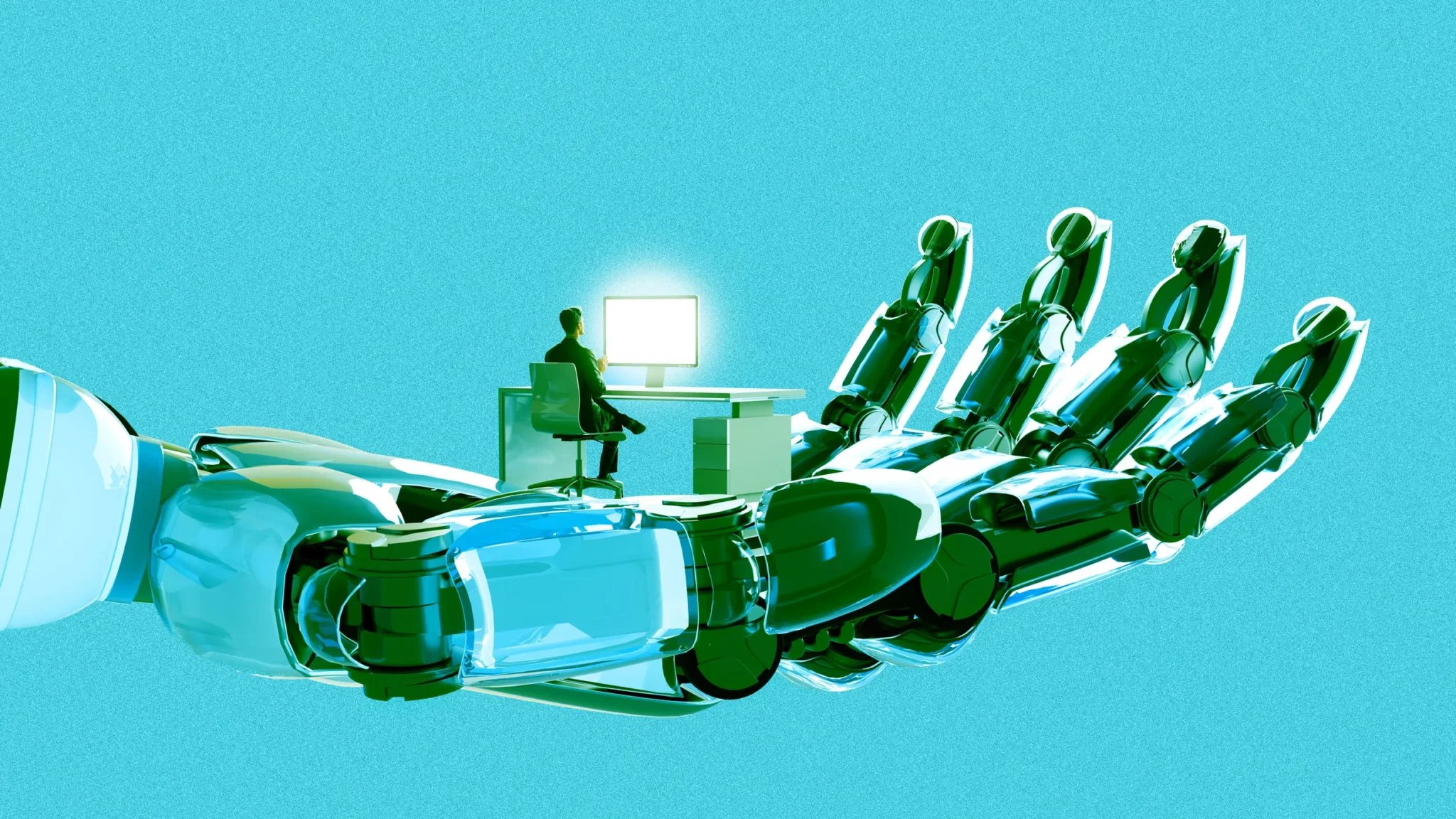
AI Job Disruption: Navigating the Future of Work
Inside a cozy book-lined apartment, Dario Amodei, CEO of Anthropic, laughs at a joke—then shifts tone when asked about AI’s societal impact. His concern isn’t doomscrolling but a sobering reality: AI job disruption is accelerating faster than past industrial shifts. "The adaptive mechanisms will be overwhelmed," he warns, noting half of entry-level white-collar roles are at risk.
From Reassurance to Reality: The AI Industry’s Messaging Shift
For years, tech leaders framed AI as a "cognitive exoskeleton"—a tool to enhance human productivity. But recent statements from Mustafa Suleyman (Microsoft) and Sam Altman (OpenAI) reveal a stark reversal. Suleyman predicts most white-collar work will be automated within 18 months. Altman calls entire job categories "totally, totally gone."
The Passive Voice of Disruption
Industry messaging often uses passive phrasing: "jobs will be automated" or "roles will go away." This obscures the truth: these changes stem from boardroom decisions driven by profit motives. As Oxford philosopher G.A. Cohen noted, when the problem creator advocates for a solution, the argument loses credibility—like a kidnapper urging ransom payment to "fix" the crisis.
Preparing for AI Job Disruption: A Leader’s Playbook
- Reskill Strategically: Invest in AI literacy and adaptability training for employees.
- Reimagine Workflows: Use AI to automate repetitive tasks, freeing humans for creative problem-solving.
- Build Ethical Frameworks: Establish guidelines to ensure AI adoption prioritizes human well-being.
Case Study: Anthropic’s Dilemma
Amodei’s dual role as both AI innovator and cautionary voice highlights the tension. While Anthropic develops cutting-edge models, Amodei publicly warns of job losses. This duality mirrors the "kidnapper’s ransom" paradox: the same forces creating disruption also claim to seek solutions.
Thriving in the Age of AI Automation
Leaders like Faisal Hoque advocate for proactive alignment of purpose, people, and technology. His work emphasizes frameworks to turn disruption into opportunity—whether through podcasts, books, or consulting. The key message? Adaptation isn’t optional. As AI reshapes industries, organizations must prioritize:
- Continuous learning cultures
- Human-centric AI integration
- Transparent stakeholder communication
Conclusion: From Panic to Progress
AI job disruption isn’t a distant threat—it’s here. The challenge lies in balancing innovation with responsibility. By embracing strategic reskilling, ethical AI deployment, and proactive leadership, businesses can transform disruption into sustainable growth. The future belongs to those who prepare for it.








