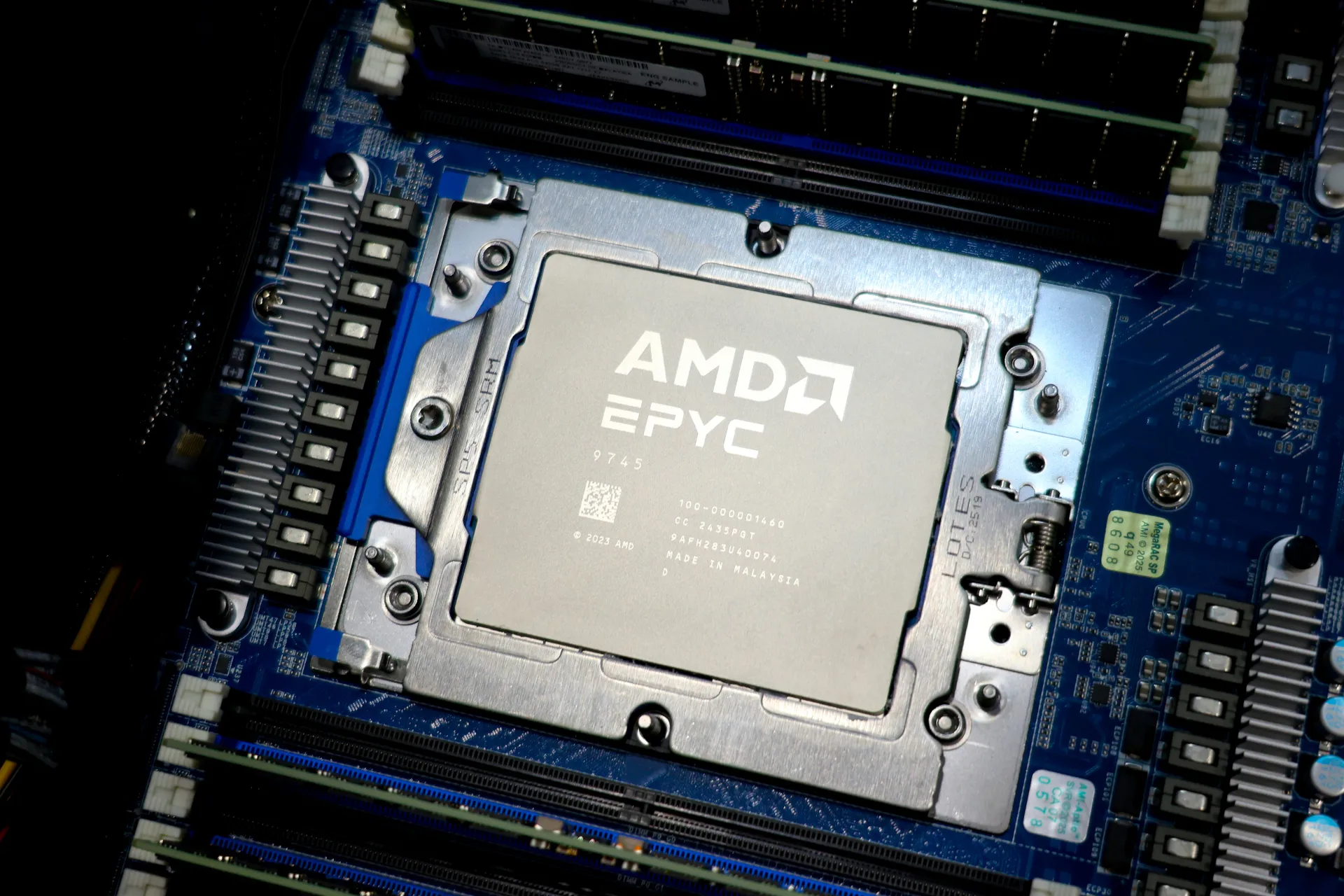
AMD EPYC 9745 vs 9755: Zen 5C vs Zen 5 Core Comparison
Key Differences Between AMD EPYC 9745 and 9755
When choosing between the AMD EPYC 9745 and 9755, the decision hinges on power efficiency versus raw performance. Both processors offer 128 cores but differ in architecture, thermal design power (TDP), and clock speeds. The EPYC 9745 uses Zen 5C cores for a 400W TDP, while the EPYC 9755 leverages full-fat Zen 5 cores at 500W TDP. This guide breaks down their strengths and ideal use cases.
Core Architecture and Power Efficiency
Zen 5C vs Zen 5: What’s the Difference?
The EPYC 9745’s Zen 5C cores prioritize density and power efficiency. With a 400W TDP (reducible to 320W via cTDP), it’s ideal for platforms with thermal constraints. The EPYC 9755’s Zen 5 cores deliver higher clock speeds (up to 4.1GHz all-core boost) but consume 500W. While the 9745 sacrifices some clock speed (3.7GHz max boost), its lower power draw makes it a compelling option for energy-conscious deployments.
L3 Cache and Performance Implications
The EPYC 9755 doubles the L3 cache at 512MB compared to the 9745’s 256MB. This can impact workloads reliant on large datasets, such as databases or AI training. However, the 9745’s reduced cache is offset by its ability to fit into 400W-limited server platforms, offering a trade-off between memory bandwidth and power efficiency.
Benchmark Insights: Performance vs. Power
Real-World Workload Comparisons
In benchmarks using the Gigabyte MZ33-AR1 server, the EPYC 9755 outperformed the 9745 in compute-heavy tasks like code compilation and AI inference. However, the 9745’s 320W cTDP configuration matched the AmpereOne A128-32X’s power efficiency while maintaining a 3.7GHz max boost. For mixed workloads, the 9745’s lower power draw can reduce cooling costs by up to 20% in data centers.
Thermal Constraints and Platform Compatibility
Motherboards supporting the EPYC 9005 series often have TDP limits. The 9745’s 400W TDP makes it compatible with platforms that cannot handle 500W CPUs. Custom TDP tuning further allows users to balance performance and power, making it a flexible choice for edge computing or colocation environments.
Pricing and Value Proposition
Both processors retail for ~$7,200, but their value depends on use cases. The EPYC 9755 suits high-performance computing (HPC) and cloud workloads requiring maximum throughput. The 9745 is better for energy-efficient data centers or platforms with strict thermal budgets. For example, a 320W 9745 setup could save $500–$1,000 annually in electricity costs compared to a 500W 9755 in a 24/7 operation.
Conclusion: Which Processor Should You Choose?
AMD’s EPYC 9745 and 9755 cater to different priorities. Opt for the 9755 if you need peak performance and have robust cooling infrastructure. Choose the 9745 for power-sensitive environments or platforms with TDP limitations. For a deeper dive into benchmark results, explore the full 9-part series on Phoronix.
Call to Action
Ready to optimize your server setup? Download our comparison guide to compare AMD EPYC processors side-by-side and find the best fit for your workload.