
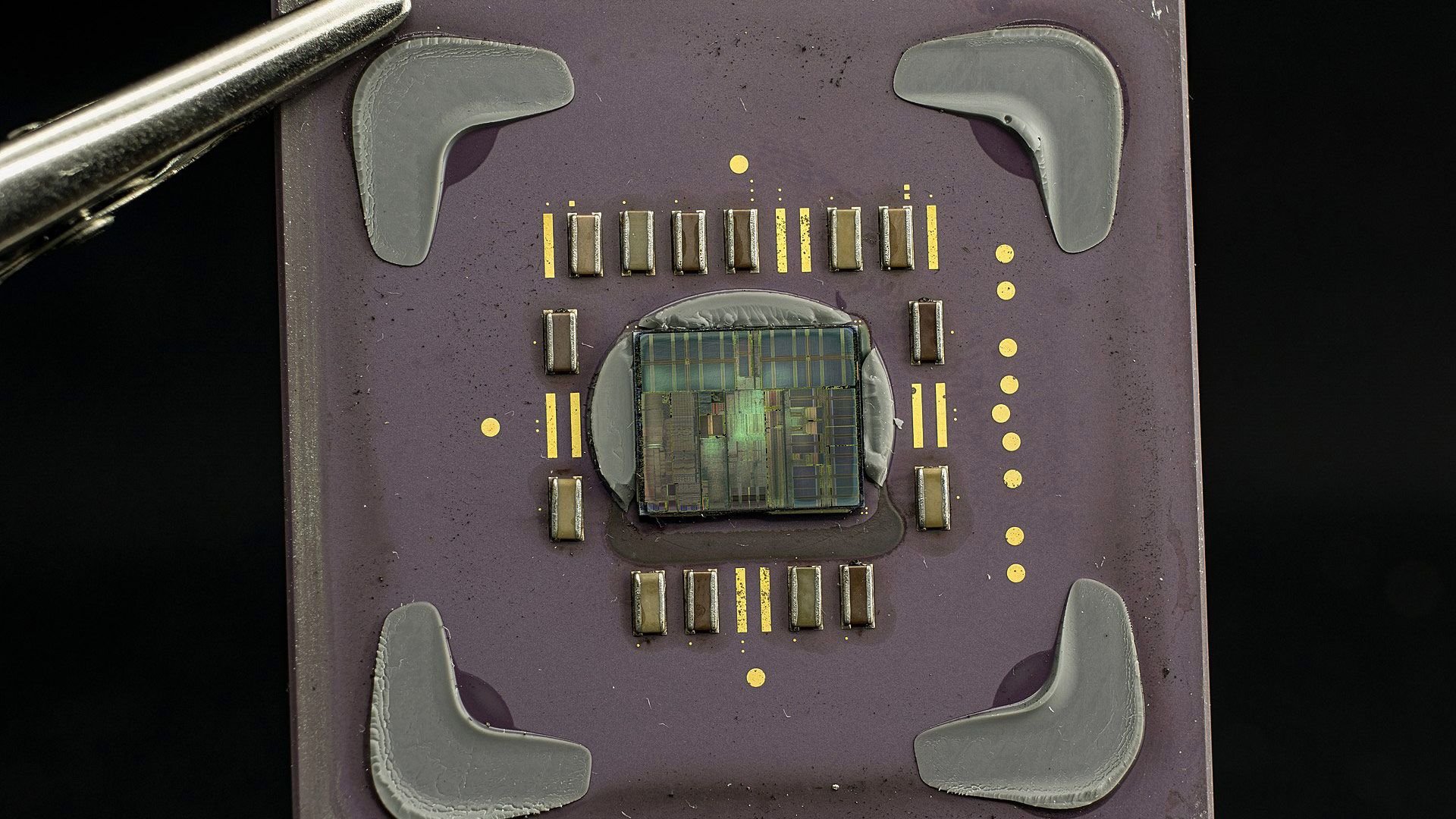
The Rise of AMD K6-III: A Game-Changer in 1999
In February 1999, AMD launched the K6-III ‘Sharptooth’ processor, a landmark achievement in the Super Socket 7 era. This CPU introduced on-die L2 cache, a feature previously absent in mainstream processors, and directly challenged Intel’s dominance with the Pentium II and III. By integrating 256KB of L2 cache directly onto the die, AMD slashed latency and boosted performance in memory-intensive applications. The K6-III 400 and 450 MHz models arrived just days before Intel’s Pentium III Katmai launch, proving AMD’s strategic foresight.
On-Die L2 Cache: AMD’s Secret Weapon
Before the K6-III, both AMD’s K6-2 and Intel’s Pentium II relied on external L2 cache, which operated at half the CPU’s clock speed. The K6-III’s on-die cache ran at full speed, delivering a 15–20% performance boost in benchmarks. This innovation gave AMD a critical edge in price-sensitive markets, where Socket 7 motherboards remained popular despite Intel’s shift to Slot 1.
Super Socket 7: The Platform That Outlived Its Time
AMD’s commitment to Socket 7 extended its lifespan far beyond Intel’s. The platform supported a wide array of CPUs, from Cyrix MII to AMD K6-III, and offered features like a 100 MHz front-side bus and AGP 2.0. By 2026, retro enthusiasts prized Super Socket 7 boards for their flexibility, compatibility with vintage GPUs like the Voodoo3, and support for DOS-era software.
Key Specs of the AMD K6-III
- Architecture: K6 NextGen
- Instruction Sets: x86, MMX, 3DNow!
- Cores: 1C / 1T
- Node: 0.25µm
- Clocks: 400–450 MHz
- Caches: 64KB L1, 256KB L2 on-die
Legacy and Longevity: From K6-III to Athlon
The K6-III’s success paved the way for AMD’s Athlon K7 series, which debuted at 500 MHz later in 1999. Despite the Athlon’s arrival, the K6-III remained in production until 2003, ensuring a smooth transition for budget users while Socket A motherboards catered to high-end markets. This dual-tier strategy solidified AMD’s reputation for balancing innovation with affordability.
Why the K6-III Still Matters
Today, the K6-III is a symbol of AMD’s ingenuity in the late 1990s. Its on-die cache design influenced future CPU architectures, and its legacy lives on in retro computing circles. For historians and tech enthusiasts, the K6-III remains a testament to AMD’s ability to disrupt the status quo.
Conclusion: A Processor Ahead of Its Time
The AMD K6-III wasn’t just a competitor—it was a revolution. By combining cutting-edge cache technology with Socket 7’s versatility, AMD delivered a processor that outperformed Intel’s offerings at a lower cost. Its impact on the PC industry is still felt today, and its story serves as a reminder of the power of innovation. Explore the K6-III’s legacy and discover why it’s a cornerstone of retro computing history.
FAQs
What made the AMD K6-III a standout processor in the Super Socket 7 era?
The AMD K6-III’s on-die L2 cache reduced latency and boosted performance, outpacing Intel’s Pentium II and III in price-sensitive markets. Its compatibility with Socket 7 also extended the platform’s lifespan.
How did the K6-III compare to the Pentium III?
While Intel’s Pentium III introduced SSE instructions, the K6-III’s on-die cache gave it a performance edge in applications sensitive to memory latency, despite a lower clock speed.
Can I still use a K6-III today?
Yes, retro computing enthusiasts use K6-III CPUs in Super Socket 7 boards for DOS compatibility, vintage gaming, and hardware preservation projects.
What was the significance of the Super Socket 7 platform?
Super Socket 7 supported a wide range of CPUs and offered features like AGP 2.0 and a 100 MHz front-side bus, making it a flexible and future-proof platform for its time.
Why did AMD phase out the K6-III in favor of the Athlon?
The Athlon K7 series offered higher clock speeds and improved architecture, but the K6-III remained in production until 2003 to serve budget markets during the transition.








