AMD Ryzen AI 400 CPUs: A Game-Changer for Pro Desktops
AMD has just redefined professional computing with its Ryzen AI 400 series, a mid-Zen 5 refresh that brings neural processing units (NPUs) to desktops for the first time. These chips combine Zen 5 architecture with RDNA 3.5 GPU cores and AMD’s XDNA 2 NPU, positioning them as Copilot+ PCs tailored for enterprise users. Let’s break down what makes this launch significant.
Key Features of AMD Ryzen AI 400 CPUs
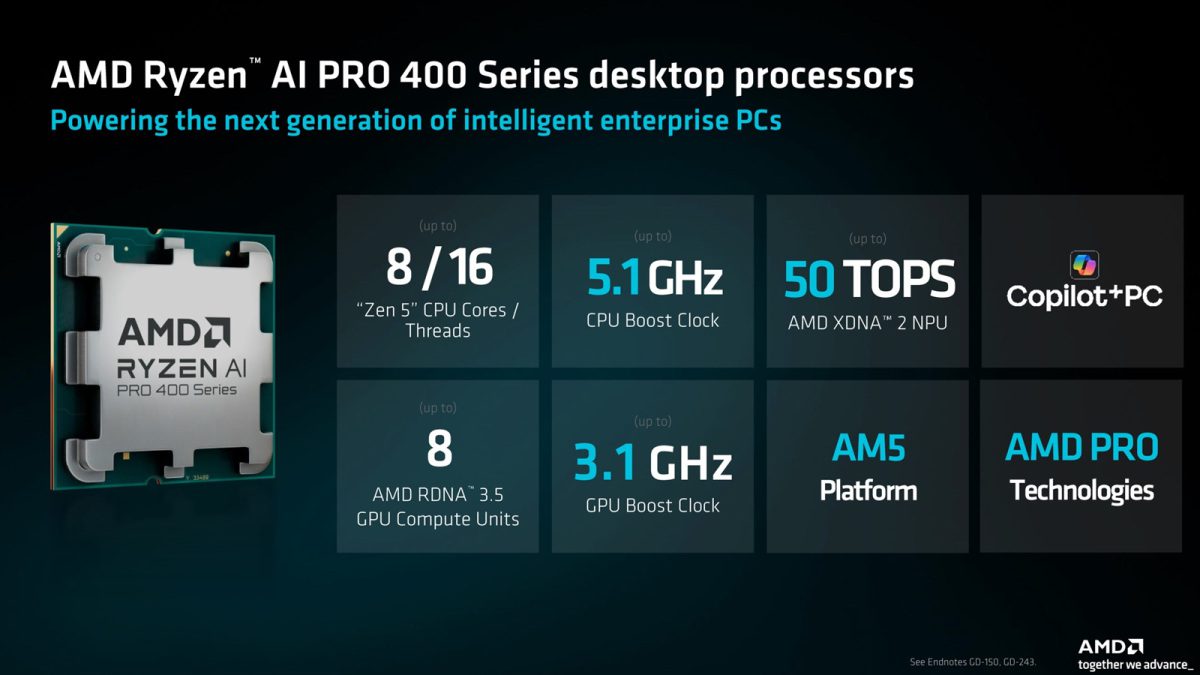
The Ryzen AI 400 lineup includes six new CPUs, each designed to balance performance and efficiency. The flagship AMD Ryzen AI 7 Pro 450G offers 8 cores, 16 threads, and a 5.1 GHz max boost clock. It pairs with 8 RDNA 3.5 GPU cores and a 50 TOPS NPU for local AI tasks. Lower-tier models like the Ryzen AI 5 440G and 425G scale down cores, threads, and GPU power while maintaining competitive boost clocks.
- Pro Versions: Enhanced features for enterprise environments, including security and management tools.
- Energy Efficiency: Lower TDP variants prioritize power savings without sacrificing performance.
- AI-Centric Design: XDNA 2 NPUs enable on-device AI processing for tasks like real-time analytics and machine learning.
Why AMD Targeted Professionals
Unlike consumer-focused Ryzen 9000 series, the AI 400 CPUs are engineered for professionals. AMD’s decision to skip the Ryzen 10000 branding signals a strategic shift toward AI-driven workloads. By avoiding high-core-count mobile chips (like 16-core variants), AMD focuses on stability and reliability for office environments.
“This isn’t about gaming PCs,” explains AMD. “It’s about empowering professionals with tools that adapt to their workflows.” The absence of DIY-friendly models also hints at supply chain challenges, making enterprise adoption a safer bet.
What’s Missing and What’s Next?
While the AI 400 series is a leap forward, it lacks the top-tier mobile silicon AMD previously offered. Gamers and enthusiasts might feel left out, but the company’s roadmap suggests a possible jump to AI 500 CPUs in the future. For now, the Ryzen AI 400 series fills a critical gap in the pro desktop market.
Conclusion: A Strategic Move for the Future
AMD’s Ryzen AI 400 CPUs mark a pivotal moment in desktop computing. By integrating NPUs and targeting professionals, AMD addresses growing demand for AI-powered workstations. As the tech landscape evolves, this mid-Zen 5 refresh sets the stage for more intelligent, efficient, and secure computing solutions.
Ready to upgrade your workflow? Explore AMD’s Ryzen AI 400 series and discover how AI can transform your professional tasks today.
FAQs
1. What makes AMD Ryzen AI 400 CPUs unique?
Their integration of XDNA 2 NPUs for local AI processing and RDNA 3.5 GPU cores sets them apart from traditional CPUs.
2. Are Ryzen AI 400 CPUs suitable for gaming?
No, they’re optimized for professional workloads rather than gaming performance.
3. How does the NPU benefit enterprise users?
It enables real-time AI tasks like data analysis and predictive modeling without cloud dependency.
4. Will AMD reintroduce Ryzen 10000 CPUs?
Unlikely, as the company shifts focus to AI-centric branding like Ryzen AI 500.
5. What are the power efficiency advantages?
Lower TDP variants reduce energy consumption while maintaining performance for office environments.