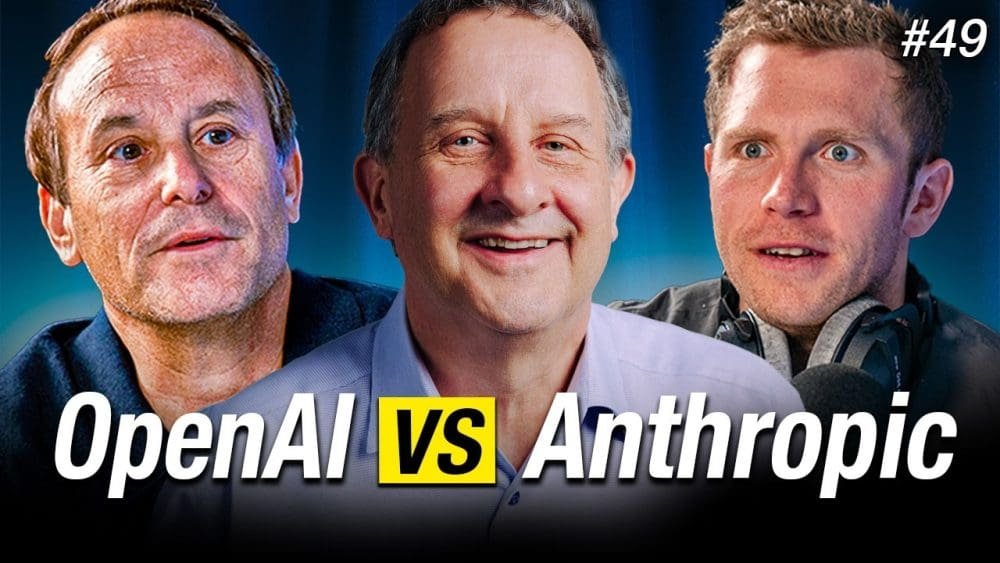
Why Anthropic Is Winning the Enterprise AI Race
Enterprise AI spending is shifting fast. Ramp data reveals 73% of new enterprise AI budgets now flow to Anthropic, up from 50-50 just ten weeks ago. This isn’t just a market fluctuation—it’s a lock-in. Companies building AI workflows on Claude aren’t switching back, even if token costs seem cheaper elsewhere. Why? The soft costs of switching—retraining teams, rebuilding integrations, and losing optimized workflows—are too high.
OpenAI’s Strategic Missteps
OpenAI still leads in total enterprise spend, but the marginal buyer—the company making a new AI decision today—chooses Anthropic 70% of the time. OpenAI’s inconsistent messaging (scaling headcount up, then down; pivoting to agentic commerce, then deprioritizing it) has created uncertainty. Meanwhile, Anthropic’s focus on Claude Sonnet and Opus 4-4.7 has delivered tangible improvements for developers and AI agents.
The Enterprise Coding Market Is the Prize
Enterprise coding tools represent the largest AI spend category. If Anthropic becomes the default for another 6-12 months, OpenAI risks losing irreversible value. Consumer tools like ChatGPT retain muscle memory, but enterprise workflows demand reliability—something Anthropic has consistently delivered.
Figma’s AI Product: A Case Study in Misalignment
Figma’s stock drop wasn’t about Google’s Stitch. The real issue? Figma Make, its AI product, lags behind competitors. It can’t extract context from live websites—a basic feature now offered by Replit and Lovable. For a company with 35% growth and a massive user base, this is a red flag.
The Installed Base Trap
Legacy systems demand constant maintenance. Figma’s 50 years of features and offline integrations consume 98% of its resources, leaving little for innovation. Public companies face even tougher constraints: charging for a subpar AI product is a hard sell to investors. The market’s test is simple: Are you charging for your AI? If not, you’re not an AI company yet.
Bezos’ $100B Bet: AI-Driven Manufacturing
Jeff Bezos isn’t building Amazon 2.0. His $100B fund targets existing manufacturers in semiconductors, space, and defense. The goal? Inject AI into these industries without the 25-year grind of building from scratch. It’s a “Walmart play” for AI: buy, optimize, and scale. Less disruptive than Amazon’s retail takeover, but faster and more profitable for Bezos.
Why This Strategy Works
- Bezos can afford to buy time and scale quickly.
- AI integration in manufacturing offers 10x efficiency gains.
- It avoids the risks of starting from zero.
SpaceX’s $2 Trillion Valuation: A Technical Milestone Play
SpaceX’s TerraFab chip fab—70% of TSMC’s capacity for $25B—extends its flywheel. Starlink’s profit margins are already exceptional. Adding in-house chip manufacturing for data centers and Tesla creates a self-sustaining ecosystem. Polymarket gives a 50-60% chance of a $2T valuation by IPO. Tesla’s stock indifference to the news? A sign the market sees this as SpaceX’s value, not shared gains.
The Math Behind the Valuation
SpaceX’s growth isn’t linear. It’s driven by chunky milestones: government contracts, Starlink, remote cellular, and now TerraFab. Each unlocks a new TAM layer. If Starlink’s margins are the baseline, TerraFab could multiply that by 100x. The question isn’t if SpaceX can hit $2T—it’s when.
What This Means for SaaS Companies
The AI era demands two things: 1) Charge for AI features (Notion doubled ARPU with its $20/month tier), and 2) Show revenue acceleration (new product attach rates, ACV growth). Token costs matter less than value delivered. For companies spending $2K/month on AI agents, saving $500 by switching models is noise—unless the new model delivers 100x more value.
Key Takeaways for Founders
- Focus on marginal buyers—they decide the future.
- Build AI products that customers will pay for.
- Invest in technical milestones, not just marketing.
Conclusion: The AI Lock-In Is Happening Faster Than You Think
The enterprise AI race is no longer about who has the best model. It’s about who can lock in workflows, charge for value, and scale sustainably. Anthropic’s lead, Figma’s missteps, and Bezos’ $100B bet all point to one truth: the companies that adapt fastest will dominate. What’s your strategy for staying ahead?
CTA: Share your thoughts in the comments—how is your company navigating the AI shift?