Apple Unveils M5 Pro and M5 Max: A Game-Changer for Pro Users
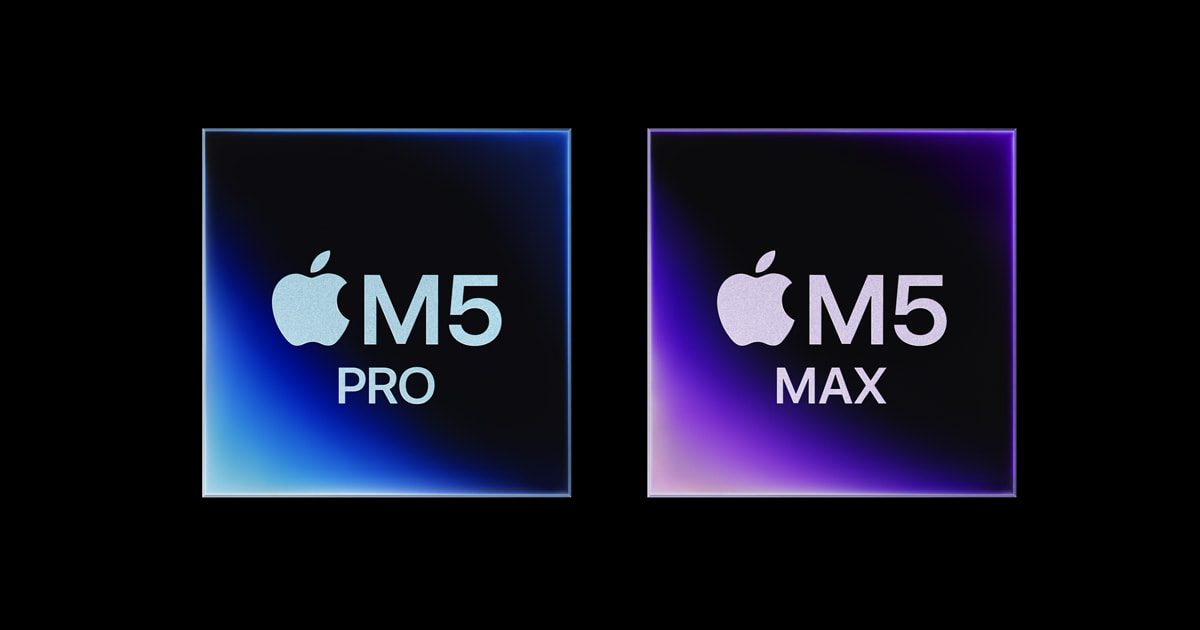
Apple has once again raised the bar for laptop performance with the launch of the M5 Pro and M5 Max chips. These new Apple-designed chips bring groundbreaking upgrades to the MacBook Pro lineup, including a next-generation Fusion Architecture, up to 40-core GPUs, and faster SSD speeds. Whether you’re a creative professional or a developer, the M5 series is engineered to handle demanding tasks with ease.
Apple M5 Pro and M5 Max: A New Era in Laptop Performance
Fusion Architecture: Smarter, Faster, More Efficient
At the heart of the M5 Pro and M5 Max is Apple’s innovative Fusion Architecture. This design combines high-performance cores with efficiency cores, allowing the chips to dynamically allocate resources based on workload. The result? Up to 4x faster LLM (Large Language Model) prompt processing and improved multitasking capabilities.
- Super Cores: Enhanced performance cores for intensive tasks like video rendering.
- Efficiency Cores: Optimized for background processes and everyday use.
- Unified Memory: Up to 128GB of high-bandwidth memory for seamless data access.
Next-Generation GPU and Neural Accelerators
The M5 Max features a next-generation up-to-40-core GPU, delivering a 15% performance boost over the M4 Max. Paired with advanced Neural Accelerators, these chips enable real-time AI tasks like image generation and local LLM execution. For example, Awni Hannun’s benchmarks show M5 Max is up to 8x faster in prefill/image generation compared to M1 Max.
Blazing-Fast SSD Speeds
Apple has doubled the SSD speeds in the M5 Pro and M5 Max models. This upgrade ensures faster file transfers, application launches, and data-intensive workflows. The base storage now starts at 1TB (2TB for M5 Max models), making it ideal for professionals who work with large datasets or high-resolution media.
Real-World Applications and Performance Gains
For Creative Professionals
Graphic designers, video editors, and 3D artists will benefit from the M5 Max’s raw power. The 16-inch MacBook Pro with M5 Max can handle 8K video editing in real-time, while the 40-core GPU accelerates rendering tasks. The 24-hour battery life ensures productivity without constant recharging.
For Developers and AI Enthusiasts
With local AI processing capabilities, the M5 Pro and M5 Max are perfect for developers running advanced machine learning models. The Neural Accelerators support frameworks like MLX, enabling on-device training and inference without relying on cloud services.
Why the M5 Series Matters
Apple’s M5 chips aren’t just incremental upgrades—they redefine what’s possible in a laptop. The Fusion Architecture, combined with faster GPUs and SSDs, positions the MacBook Pro as the ultimate tool for professionals. While the price has increased (starting at $1,699 for the 14-inch model), the performance gains justify the investment for power users.
Conclusion: Upgrade or Wait?
If you rely on your laptop for high-performance tasks, the M5 Pro and M5 Max are worth the upgrade. For casual users, the base M5 MacBook Pro (starting at $1,499) offers excellent value. Explore Apple’s official site or trusted retailers to learn more and pre-order your new MacBook Pro today.
FAQs
- What’s the key difference between M5 Pro and M5 Max? The M5 Max has a 40-core GPU and 128GB of unified memory, making it ideal for intensive workflows like 3D rendering and AI development.
- How much faster is the M5 Max compared to the M4 Max? Benchmarks show a 15% performance boost in CPU tasks and up to 8x faster image generation for AI workloads.
- Can the M5 Pro handle local AI models? Yes, the Neural Accelerators support on-device LLM execution, eliminating the need for cloud-based processing.
- What storage options are available? Base models start at 1TB (2TB for M5 Max), with up to 8TB of expandable storage.
- Is the M5 series worth the price hike? For professionals, the performance gains and storage upgrades justify the cost. Casual users may prefer the base M5 model.