
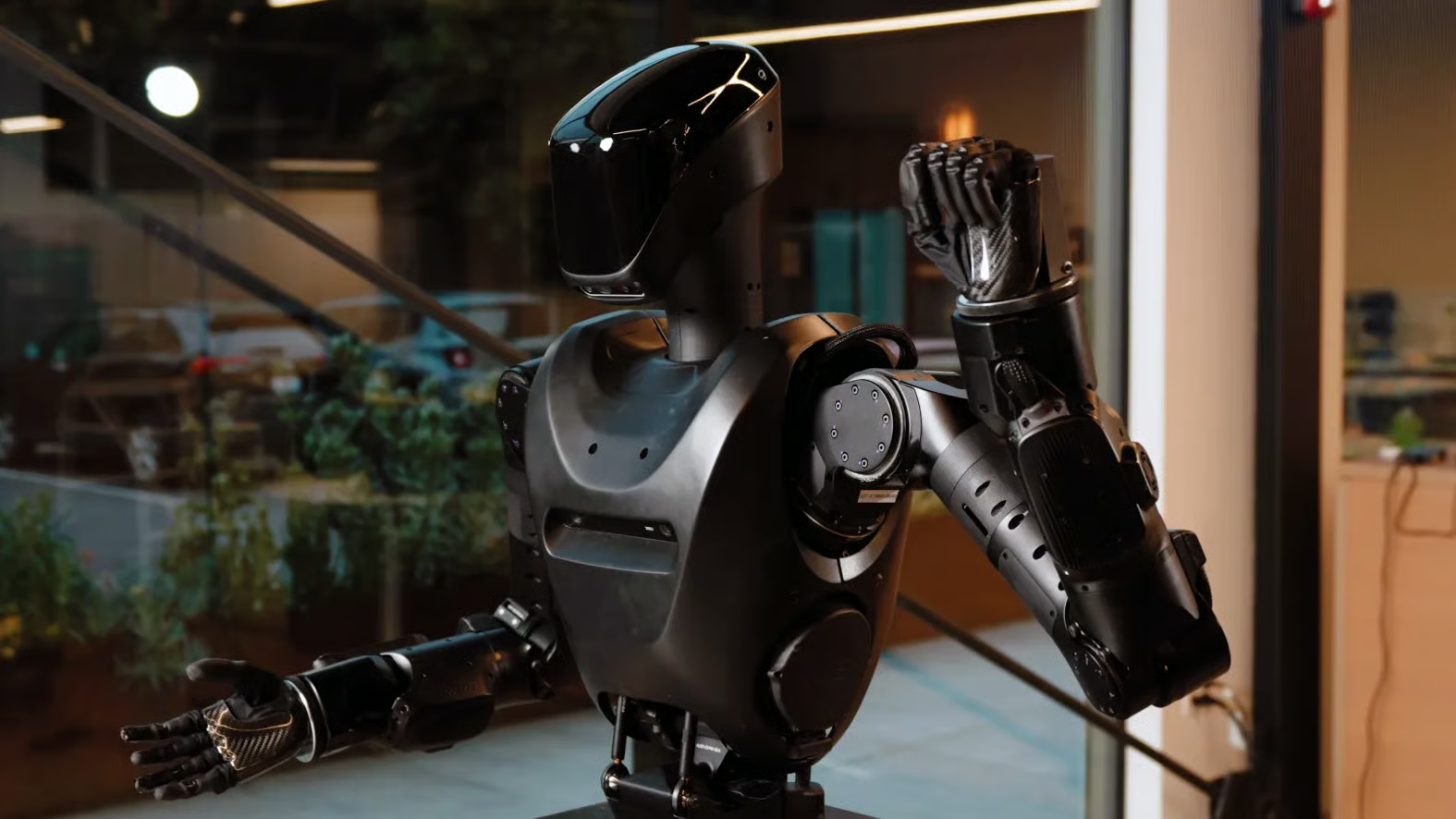
Armed Humanoid Robots: The Future of Military Technology?
Introduction to Military Robotics
Imagine a battlefield where humanoid robots, equipped with advanced AI and weaponry, operate alongside human soldiers. This is no longer science fiction. Startups like Foundation, a San Francisco-based robotics company, are actively developing armed humanoid robots for military use. With $18 million in federal contracts already secured, the intersection of robotics and defense is evolving rapidly. But what does this mean for national security, ethics, and the future of warfare?
The Rise of Foundation Robotics
Startup Background
Foundation, a two-year-old robotics firm, has positioned itself at the forefront of military innovation. Founded in 2024, the company specializes in humanoid robots designed for complex environments. Its flagship product, the Phantom, combines mobility, dexterity, and AI-driven decision-making to perform tasks ranging from logistics to combat support.
Military Contracts and Applications
The U.S. Army, Air Force, and Navy have already awarded Foundation over $18 million in contracts. These agreements focus on testing the Phantom’s capabilities in real-world scenarios, including:
- Reconnaissance missions in hostile territories
- Transporting heavy equipment in disaster zones
- Providing surveillance in high-risk areas
Ethical and Strategic Debates
Arming Humanoid Robots
While current contracts emphasize non-lethal applications, discussions with the Trump administration hint at future plans to arm these machines. Proponents argue that armed robots could reduce human casualties by taking on dangerous tasks. Critics, however, warn of unintended consequences, such as:
- Escalation of autonomous warfare
- Accountability gaps in lethal decisions
- Public perception of “robot soldiers”
Global Implications
The U.S. is not alone in exploring military robotics. Nations like China and Russia are also investing heavily in AI-powered defense systems. This technological arms race raises critical questions about international regulations and the potential for destabilization.
Future Outlook and Challenges
Technological Hurdles
Despite rapid progress, several challenges remain:
- AI Reliability: Ensuring robots make ethical decisions in unpredictable environments.
- Cost: Scaling production while maintaining safety standards.
- Public Trust: Addressing fears of job displacement and military overreach.
Policy and Regulation
Governments must balance innovation with oversight. Key policy considerations include:
- International treaties on autonomous weapons
- Domestic laws governing AI accountability
- Public-private partnerships for ethical development
Conclusion: A New Era of Defense
Armed humanoid robots represent a paradigm shift in military strategy. While the technology offers unprecedented capabilities, it also demands rigorous ethical scrutiny. As startups like Foundation push boundaries, stakeholders must collaborate to ensure these innovations serve humanity responsibly. What are your thoughts on the future of military robotics? Share your perspective in the comments below.
FAQs
1. What are the primary uses of armed humanoid robots in the military?
Armed humanoid robots are primarily tested for reconnaissance, logistics, and surveillance. Future applications may include direct combat support, though ethical debates persist.
2. How much funding has Foundation Robotics received?
Foundation has secured over $18 million in federal contracts from the U.S. Army, Air Force, and Navy.
3. What are the ethical concerns surrounding armed robots?
Key concerns include accountability for lethal decisions, potential escalation of conflicts, and public trust in autonomous systems.
4. Are other countries developing similar technology?
Yes, nations like China and Russia are investing heavily in AI-powered military robotics, creating a global arms race.
5. What challenges remain for military robotics?
Key challenges include AI reliability, cost scalability, and ensuring public trust in autonomous defense systems.








