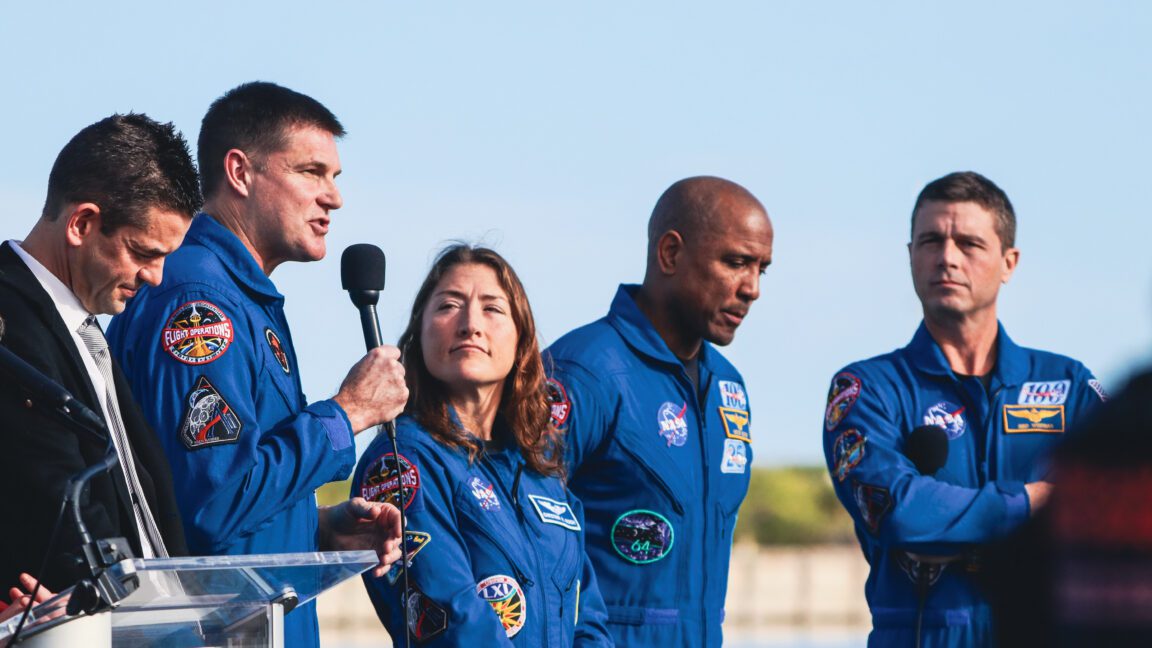
Artemis II Mission Risks: What NASA Isn’t Saying
When NASA officials faced questions about the Artemis II Moon mission’s risks during a recent press conference, their answers were carefully worded. Reporters pressed for clarity on dangers inherent to the first crewed lunar mission since 1972, but NASA’s responses skirted direct answers. Why? The answer lies in the complex balance between transparency and public perception in high-stakes space exploration.
The Artemis II Mission: A New Era of Risk
Artemis II isn’t just a test flight—it’s a historic leap. The mission will carry four astronauts 2,000 miles beyond the Moon’s far side, a journey 1,000 times farther from Earth than the International Space Station. With only one uncrewed test flight (Artemis I) under its belt, NASA faces unprecedented challenges. The Space Launch System (SLS) and Orion spacecraft remain unproven in human-rated conditions, and the mission’s nine-day duration amplifies risks related to life support, communication, and reentry.
Why NASA Avoids Risk Numbers
Lori Glaze, NASA’s acting associate administrator, admitted the agency’s probabilistic risk assessment for Artemis II is “valuable but limited.” She warned against overreliance on numerical risk metrics, stating, “Those numbers aren’t the whole story.” This cautious approach reflects a broader strategy: NASA aims to avoid “failure of imagination,” a term used to describe unforeseen dangers that defy statistical models.
John Honeycutt, chair of the Artemis II mission management team, echoed this sentiment in a rare moment of candor. “We’re not hiding risks—we’re managing them,” he said. “But some uncertainties can’t be quantified.” This philosophy prioritizes adaptability over rigid risk thresholds, a pragmatic stance for a mission venturing into uncharted territory.
Behind the Scenes: Preparing for Artemis II
Recent delays highlight the mission’s fragility. A hydrogen seal leak and helium loading issues forced NASA to return the SLS rocket to the hangar for repairs. Engineers now rely on a successful countdown rehearsal to validate fixes, with no further fueling tests planned before launch. “We’ve tested the seals enough,” Glaze said. “The next test is the real thing.”
Key Risk Mitigation Strategies
- Heat Shield Validation: The Orion spacecraft’s heat shield underwent rigorous review after concerns about reentry trajectory accuracy.
- Communication Redundancy: Backup systems are in place to maintain contact with Earth during the mission’s most critical phases.
- Life Support Testing: Environmental control systems have been stress-tested to handle nine days in deep space.
The Bigger Picture: Risk in Space Exploration
Artemis II isn’t just about NASA—it’s a test of humanity’s ability to explore responsibly. The mission’s risks are amplified by its symbolic weight: it represents a bridge between the Apollo era and future lunar colonization. As Administrator Jared Isaacman noted, “This is a test flight. We’re learning as we go.”
For the public, the stakes are equally high. Taxpayer-funded missions demand accountability, but spaceflight’s inherent dangers require a nuanced conversation. NASA’s reluctance to quantify risks isn’t evasion—it’s a recognition that some uncertainties can’t be measured in percentages.
Conclusion: Embracing Uncertainty
The Artemis II mission embodies the tension between ambition and caution. While NASA’s answers may frustrate those seeking clear-cut risk assessments, the agency’s approach reflects a deeper understanding of exploration’s unpredictable nature. As the launch window opens in April 2026, the world will watch not just for a successful flight, but for how humanity navigates the unknown.
Stay informed: Follow Artemis II updates and join the conversation about space exploration’s future.