
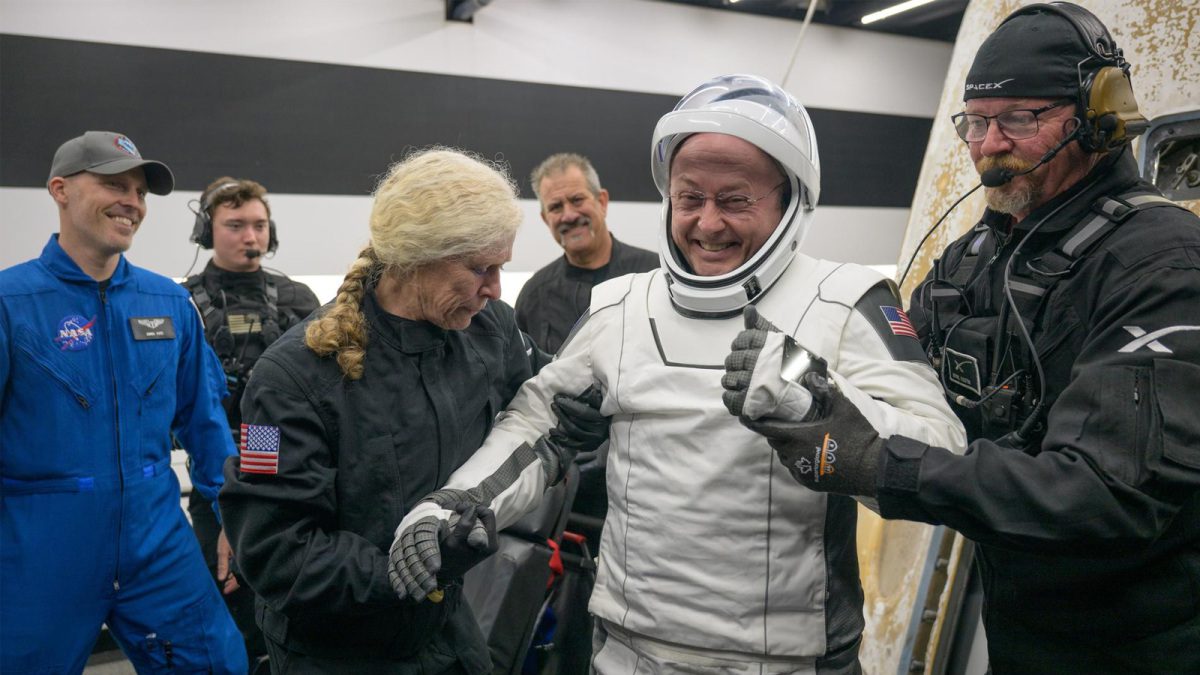
Astronaut Mike Fincke’s Medical Issue Sparks Crew-11 Early Return
In a surprising turn of events, NASA astronaut Mike Fincke revealed that an undisclosed medical issue prompted the early return of Crew-11 from the International Space Station (ISS). The crew, including Fincke and three other astronauts, returned to Earth weeks ahead of schedule, leaving many questions about the nature of the health concern. While details remain under wraps, the incident highlights the challenges of managing medical emergencies in space.
What We Know About Crew-11’s Medical Return
Fincke, a veteran astronaut with over 300 days in space, described the situation in a statement: “I experienced a medical event that required immediate attention from my incredible crewmates. Thanks to their quick response and the guidance of our NASA flight surgeons, my status quickly stabilized.” The crew used the ISS’s medical resources to stabilize Fincke before NASA decided to bring the entire team home for advanced imaging and care.
Why the ISS Isn’t Enough for Complex Medical Cases
Despite the ISS’s state-of-the-art medical equipment, certain conditions require Earth-based facilities. Fincke’s issue necessitated “advanced medical imaging not available on the space station,” according to NASA. This underscores a critical limitation of space missions: even with robust protocols, some health crises demand immediate access to terrestrial hospitals.
Fincke’s Recovery and Post-Flight Reconditioning
Currently, Fincke is recovering at NASA’s Johnson Space Center in Houston. “I’m doing very well and continuing standard post-flight reconditioning,” he said. The return also disrupted the ISS’s usual crew rotation, briefly reducing the station’s population to three astronauts before Crew-12 arrived in mid-February.
What This Means for Future Space Missions
The Crew-11 incident raises important questions about medical preparedness for long-duration space travel. While NASA has protocols for emergencies, this event demonstrates the need for even more advanced in-orbit diagnostics. Experts suggest that future missions to the Moon or Mars will require autonomous medical systems capable of handling complex cases without Earth-based support.
Lessons from the Crew-11 Experience
- Teamwork is critical: Fincke credited his crewmates for their rapid response, emphasizing the importance of training for medical emergencies.
- Communication matters: NASA’s decision to keep the issue private until resolution shows the balance between transparency and mission safety.
- Preparation is key: The incident highlights the need for astronauts to undergo rigorous medical training for all possible scenarios.
FAQs About Crew-11’s Early Return
1. What caused Crew-11’s early return?
NASA attributed the decision to a medical issue involving astronaut Mike Fincke, though specifics remain undisclosed.
2. How does the ISS handle medical emergencies?
The ISS is equipped with basic medical tools, but complex cases require evacuation to Earth for advanced care.
3. Was Fincke’s condition life-threatening?
Fincke stated his condition stabilized quickly, but the severity required immediate evacuation.
4. How does this affect future ISS operations?
The incident may lead to improved medical protocols for long-duration space missions.
5. What’s next for Crew-11?
Fincke is recovering in Houston, while the crew’s early return has been integrated into NASA’s mission planning.
Final Thoughts: The Crew-11 experience serves as a reminder of the human element in space exploration. As missions grow longer and more ambitious, ensuring astronaut health will remain a top priority. Share your thoughts in the comments—how do you think space agencies can better prepare for medical emergencies in orbit?








