
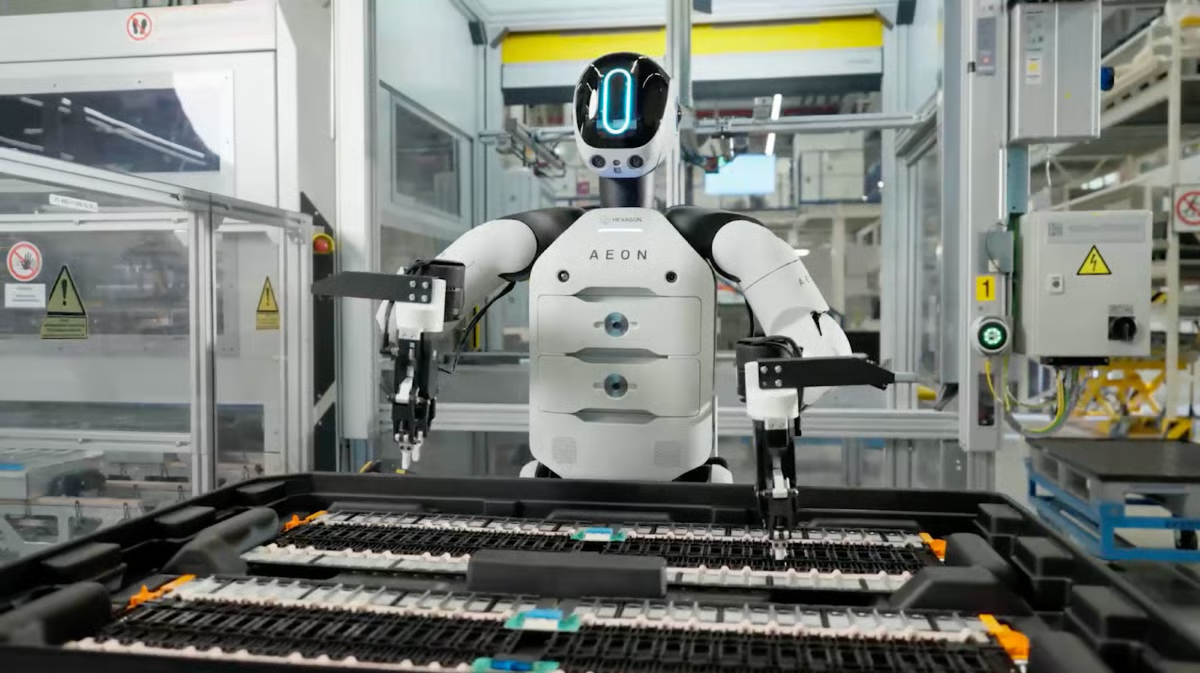
BMW’s Humanoid Robot Joins the Assembly Line in Europe
Imagine a factory floor where human-shaped robots work alongside engineers, assembling car parts with precision. That vision is now reality at BMW’s Leipzig plant in Germany, where the automaker has deployed a humanoid robot to test advanced manufacturing techniques. This marks a significant leap forward in automotive production, blending robotics with human expertise to boost efficiency and innovation.
Why Humanoid Robots Matter in Manufacturing
Humanoid robots are no longer confined to science fiction. Companies like BMW are leveraging these machines to perform complex tasks that require dexterity and adaptability. Unlike traditional industrial robots, humanoid models can navigate dynamic environments, handle delicate components, and collaborate safely with human workers.
For BMW, this technology addresses key challenges in modern manufacturing: reducing costs, minimizing errors, and scaling production for electric vehicles. The humanoid robot in Leipzig focuses on battery assembly and component manufacturing—critical areas where precision is paramount.
How BMW’s Humanoid Robot Works
The robot, developed in partnership with leading robotics firms, uses advanced sensors and AI to learn from its surroundings. At the Spartanburg plant, it successfully positioned sheet-metal parts for welding during 10-hour shifts. Now, in Germany, it’s tackling even more intricate tasks, such as aligning battery cells and tightening high-tolerance fasteners.
- Adaptive Learning: The robot adjusts its movements based on real-time feedback from human workers.
- Collaborative Safety: Sensors detect nearby personnel, ensuring safe interaction on the factory floor.
- Scalability: BMW plans to expand this pilot to other plants if results meet expectations.
Implications for the Future of Manufacturing
This pilot reflects a broader trend: manufacturers are investing heavily in robotics to stay competitive. According to a 2025 McKinsey report, 68% of automotive companies plan to integrate humanoid robots by 2030. BMW’s initiative highlights how these machines can:
- Reduce production downtime by handling repetitive tasks.
- Improve product quality through consistent precision.
- Attract tech-savvy talent by creating cutting-edge work environments.
However, challenges remain. Training robots for complex workflows and ensuring cybersecurity in AI-driven systems require ongoing innovation. BMW’s phased approach—starting with controlled trials—offers a blueprint for other industries.
What’s Next for BMW’s Humanoid Robots?
While the Leipzig pilot is still in its early stages, BMW has already shared promising data. Early results show a 22% increase in assembly speed and a 15% reduction in defects. If successful, the company could roll out these robots to plants in the U.S., China, and beyond.
For now, the focus remains on refining the technology. BMW’s engineers are working to enhance the robot’s ability to handle unexpected scenarios, such as part misalignments or tool malfunctions. This iterative process ensures the robots evolve alongside manufacturing demands.
Conclusion: A New Era for Automotive Production
BMW’s humanoid robot is more than a technological marvel—it’s a glimpse into the future of manufacturing. By merging human creativity with robotic precision, the automaker is setting new standards for efficiency and quality. As this pilot progresses, it will undoubtedly inspire other industries to explore the potential of humanoid robotics.
Ready to stay ahead of the curve? Follow our blog for updates on how AI and robotics are transforming global manufacturing.
FAQs
How is BMW using humanoid robots in manufacturing?
BMW’s humanoid robots assist with battery assembly and component manufacturing, leveraging AI and sensors to work alongside human engineers in Germany and the U.S.
What advantages do humanoid robots offer over traditional automation?
Humanoid robots adapt to dynamic environments, handle delicate tasks, and collaborate safely with workers—capabilities that traditional robots lack.
Will humanoid robots replace human workers in manufacturing?
No. These robots are designed to augment human labor, not replace it. They focus on repetitive or high-precision tasks, freeing workers for more complex roles.
How does BMW ensure safety with humanoid robots on the factory floor?
Sensors and AI algorithms monitor the robots’ surroundings, allowing them to pause or adjust movements if a human enters their workspace.
What industries beyond automotive could benefit from humanoid robots?
Healthcare, logistics, and aerospace are already exploring humanoid robots for tasks ranging from surgery to warehouse management.








