
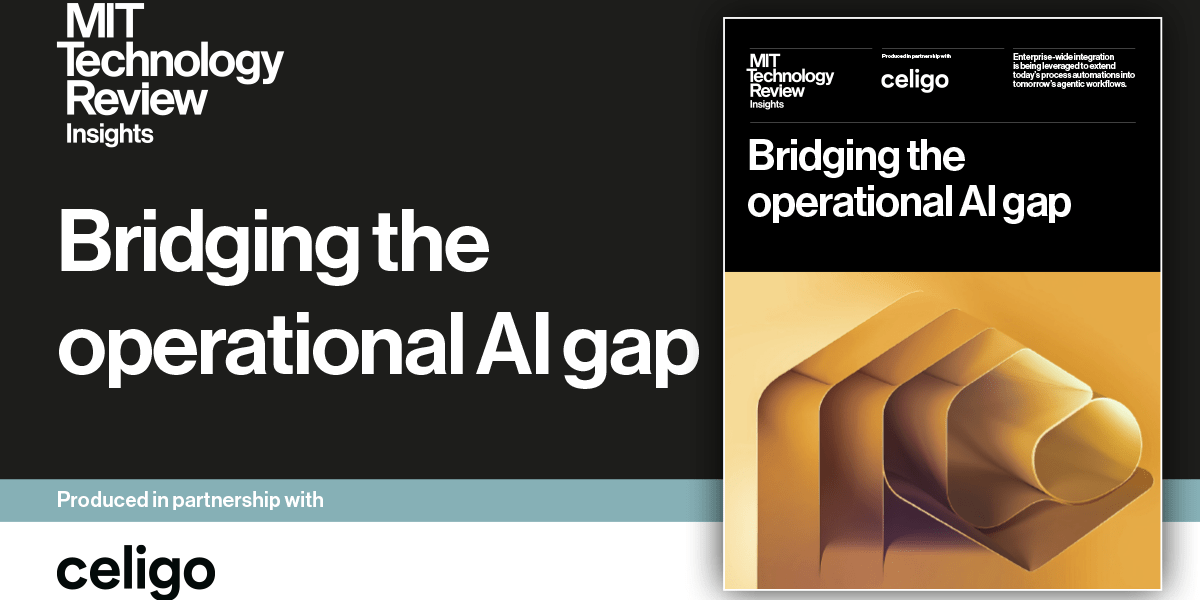
Bridging the Operational AI Gap: Key to Enterprise Success
Artificial intelligence is no longer a futuristic concept—it’s a business imperative. Yet, despite growing investments and enthusiasm, many enterprises struggle to move AI from pilot projects to scalable, production-ready workflows. The operational AI gap—the divide between AI experimentation and real-world implementation—remains a critical barrier. Without a robust integration strategy, even the most advanced AI models risk failing to deliver tangible value.
Understanding the Operational AI Gap
According to a 2025 MIT Technology Review Insights survey of 500 senior IT leaders, 76% of organizations have at least one AI workflow in production. However, success is uneven. Only 43% report consistent wins with AI applied to well-defined processes, while 32% are still experimenting with fragmented use cases. The root cause? A lack of cohesive integration platforms and governance models.
Gartner predicts that over 40% of agentic AI projects will be canceled by 2027 due to cost overruns, inaccuracy, and poor governance. This isn’t a flaw in AI itself but a failure to build the operational infrastructure needed to support it. Without integrated data systems, stable workflows, and clear ownership, AI initiatives stall in silos.
The Role of Integration Platforms
Enterprises with enterprise-wide integration platforms are five times more likely to use diverse data sources in AI workflows. These platforms enable cross-departmental collaboration, reduce duplication, and provide oversight as AI workflows gain autonomy. For example, 59% of organizations using such platforms leverage five or more data sources—compared to just 11% of those relying on fragmented tools.
Strategies for Bridging the Gap
- Centralize AI Governance: Assign dedicated teams to oversee AI workflows. Only 34% of organizations currently have specialized AI teams, but these companies report higher success rates.
- Automate Established Processes: Focus AI implementation on well-defined tasks first. Nearly half of successful AI projects target processes already automated.
- Invest in Integration Tools: Platforms that unify data, applications, and workflows reduce silos and improve scalability.
Why the Operational AI Gap Matters
The stakes are high. Companies that fail to bridge this gap risk wasting millions on underperforming AI projects. Conversely, those that build integration-first strategies gain a competitive edge. For instance, organizations with enterprise integration platforms are 3x more likely to deploy AI across multiple departments and achieve higher autonomy in workflows.
Consider the case of a retail giant that automated inventory management using AI. By integrating real-time sales data, supplier APIs, and warehouse systems, they reduced stockouts by 30% and cut operational costs by $12M annually.
Future-Proofing AI Workflows
As agentic AI evolves, workflows will demand greater autonomy. This requires proactive governance. Only 21% of companies currently assign central IT to maintain AI systems, but this model is unsustainable at scale. The solution? Hybrid teams combining IT expertise with domain-specific knowledge.
Conclusion: Take Action Now
Don’t let the operational AI gap derail your AI ambitions. Start by auditing your integration infrastructure and aligning AI initiatives with business goals. Download the full MIT Technology Review Insights report to explore actionable strategies for scaling AI successfully.
FAQs
How can enterprises bridge the operational AI gap effectively?
Invest in enterprise-wide integration platforms, centralize AI governance, and prioritize automation for well-defined processes.
What percentage of AI projects fail due to poor integration?
Gartner estimates over 40% of agentic AI projects will be canceled by 2027 due to cost and governance issues.
Why are integration platforms critical for AI success?
They unify data sources, reduce silos, and enable cross-departmental collaboration—key for scaling AI workflows.
What’s the biggest challenge in AI adoption?
Lack of dedicated AI teams and fragmented governance models hinder progress for two-thirds of organizations.
How does AI success vary by process type?
43% of organizations succeed with AI in established processes, while 25% apply it to new workflows.








