Britain Turns Up the Heat on Homegrown Ceramics
Britain has taken the first steps towards producing its own ultrahigh temperature materials, regarded as vital for applications including hypersonic vehicles, space, and advanced propulsion systems. The Defence Science and Technology Laboratory (DSTL) says it invested in Cross Manufacturing Ltd to build the UK’s first pilot-scale end-to-end manufacturing process for ceramic matrix composites (CMCs).
What are Ceramic Matrix Composites?
CMCs are a composite material, one in which the fibers are ceramic or carbon, embedded in a ceramic matrix. They are created to overcome the brittleness of traditional ceramics, while providing high-temperature resistance, light weight, and high strength. According to DSTL, they are capable of withstanding temperatures exceeding 1,000°C (1,832°F), and unlike metals, they hold their strength and shape under extreme heat and stress.
Applications of CMCs
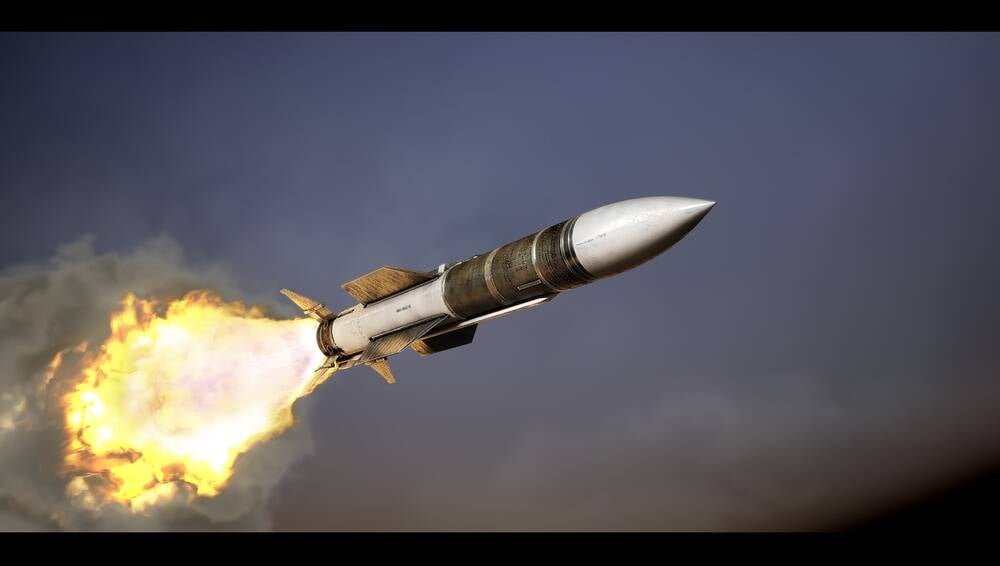
Their characteristics make them suitable for a variety of uses where toughness and the ability to withstand high temperatures are key, such as rocket nozzles or thermal protection systems for hypersonic vehicles. While the UK doesn’t have a space industry on the same scale as other nations, the Ministry of Defence (MoD) does have a hypersonic missile program, and recently awarded a £12 million ($16 million) contract to an engineering firm to start development on the design.
This will enter flight testing before being adapted into prototype missiles able to operate at extreme speeds and temperatures required for hypersonic flight. The latest reports indicate a demonstrator is expected by 2030.
Investment in the Cross Manufacturing Programme
The investment in the Cross Manufacturing programme is intended to make Britain self-sufficient in this critical technology. “This milestone represents a significant enhancement of UK sovereign capability. These advanced materials will underpin future defence systems, space technologies and high‑temperature applications,” said DSTL materials engineer Chris Hawkins.
We understand that DSTL invested about £350,000 (about $470,000) into setting up the new facility via funding from the MoD’s Chief Scientific Adviser. It also has backing from the University of Oxford, the National Composites Centre, and UK Atomic Energy Authority (UKAEA), plus defense firms QinetiQ and MBDA.
Results of the Programme
The result is a dedicated pilot facility producing composite materials at modest scale, but designed for transition to full industrial production. During development, the team at Cross Manufacturing says it produced sample components including nose cones, curved panels and high-temperature seals, subjecting these to rigorous testing.
Research & Technology Manager, Dr Talha Pirzada, said the program has taken specialized expertise from research to pilot‑scale manufacturing. “The consortium now holds the capability to produce demonstrator components from oxide‑based ceramic matrix composites, a first for the UK.”
Conclusion
In conclusion, Britain’s investment in homegrown ceramics for hypersonic missiles is a significant step towards producing its own ultrahigh temperature materials. With the help of the Cross Manufacturing programme, the UK is one step closer to becoming self-sufficient in this critical technology.
For more information on ceramic matrix composites and their applications, please see our FAQs below.
Frequently Asked Questions
- What are ceramic matrix composites (CMCs)? CMCs are a composite material, one in which the fibers are ceramic or carbon, embedded in a ceramic matrix.
- What are the applications of CMCs? CMCs are suitable for a variety of uses where toughness and the ability to withstand high temperatures are key, such as rocket nozzles or thermal protection systems for hypersonic vehicles.
- How much did DSTL invest in the Cross Manufacturing programme? DSTL invested about £350,000 (about $470,000) into setting up the new facility.
- What is the expected outcome of the Cross Manufacturing programme? The programme is expected to make Britain self-sufficient in this critical technology and produce demonstrator components from oxide‑based ceramic matrix composites.
- When is the demonstrator for the hypersonic missile program expected? The latest reports indicate a demonstrator is expected by 2030.