CERN Moves Antimatter by Truck in Groundbreaking Experiment
Imagine moving a material that could power the future, but only in the tiniest amounts—and doing it without triggering an explosion. That’s exactly what scientists at CERN achieved recently by transporting 92 antiprotons via truck for the first time in history. This milestone opens new doors for antimatter research and collaboration across global scientific facilities.
How CERN Transported Antimatter Safely
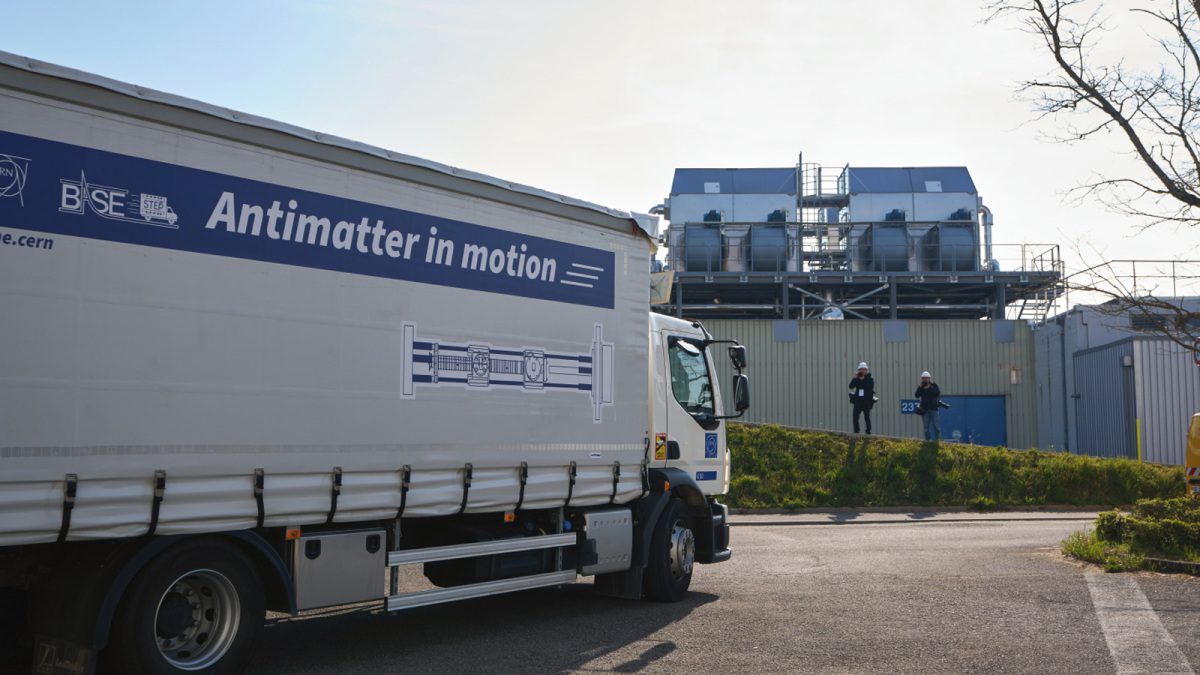
The experiment involved placing antiprotons into a 1,000-kilogram cryogenic storage unit equipped with supercooled magnets. This device kept the antimatter isolated from regular matter during a 30-minute drive around CERN’s Geneva campus. Despite the minuscule quantity (just 92 antiprotons), the team demonstrated that antimatter can be moved without leaks or catastrophic reactions.
Key Details of the Transport
- Storage Unit: Weighed over 2,200 pounds and used supercooled magnets for containment.
- Distance: 30-minute drive within CERN’s campus.
- Quantity: 92 antiprotons—equivalent to a fraction of a gram of antimatter.
Challenges of Antimatter Transportation
Antimatter is notoriously difficult to handle. When it interacts with matter, it annihilates both, releasing massive energy. CERN’s director for research and computing, Gautier Hamel de Monchenault, called the project “pioneering and ambitious.” The team faced two major hurdles:
1. Containment
Antimatter requires extreme isolation. The storage unit used magnetic fields to trap antiprotons, preventing contact with surrounding matter. Even a single collision could trigger annihilation, though the tiny quantity in this experiment posed no real risk.
2. Scalability
Producing antimatter is slow and costly. CERN generates 400 million antiprotons per hour, yet creating a single gram would take billions of years. Transporting such small amounts limits practical applications, but it’s a critical step for research collaboration.
Future Implications and Research
This experiment isn’t just a scientific novelty—it’s a foundation for future breakthroughs. By enabling antimatter to be shared between facilities, researchers can study its properties more deeply. Potential applications include:
- Medical Imaging: Antimatter could enhance positron emission tomography (PET) scans.
- Energy Research: Studying annihilation reactions might unlock new energy storage methods.
- Space Exploration: Antimatter propulsion remains a theoretical but high-energy option for deep-space travel.
Next Steps for CERN
The current containment unit holds antimatter for about four hours. Researchers aim to improve this for longer trips, such as to the Heinrich Heine University in Düsseldorf (an eight-hour drive). Future upgrades will focus on:
- Enhancing magnetic containment for stability.
- Reducing energy consumption during transport.
- Expanding compatibility with international research facilities.
Why This Matters for Science
Antimatter is the rarest substance in the universe. By proving it can be moved safely, CERN has removed a major barrier to collaborative research. As de Monchenault noted, “We’re at the start of an exciting journey to deepen our understanding of antimatter.”
Stay tuned: Follow CERN’s progress as they refine antimatter transportation and unlock its potential for science and technology.