The Challenge of LHC Maintenance
Inside the Large Hadron Collider (LHC), 27 kilometers of vacuum tubes house particle beams at -271°C. Human access is nearly impossible due to extreme conditions. Over 2,000 plug-in modules (PIMs) manage thermal expansion, but tiny RF contacts within these modules can deform, causing beamline obstructions. Traditional manual inspections are time-consuming and risky.
Enter the Robot Mice: PipeINEER
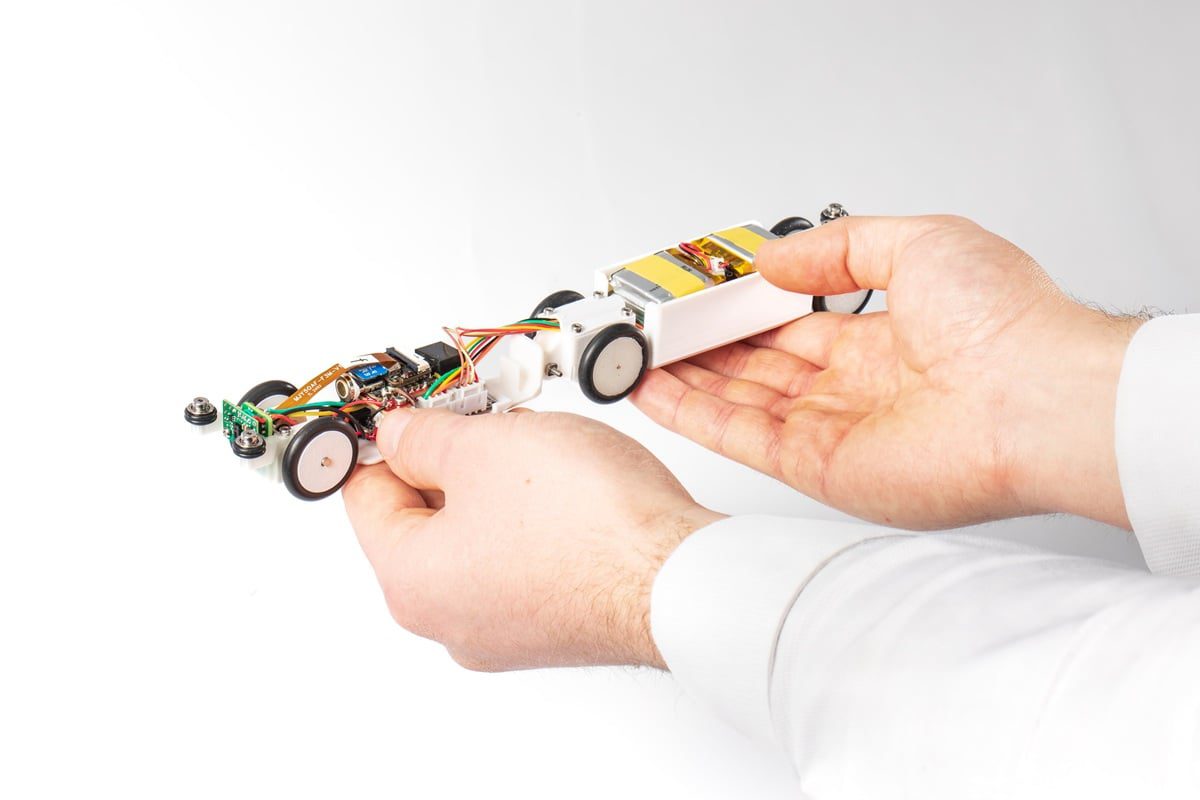
Developed by the UK Atomic Energy Authority (UKAEA) and CERN, PipeINEER is a 3.7cm-wide robot designed to navigate narrow LHC pipes. Named for its “pioneer” role, this AI-powered device autonomously inspects PIMs, capturing high-resolution images to detect deformities. Its compact size allows it to reach areas inaccessible to humans.
How Robot Mice Work
- AI Detection: Trained on Edge Impulse, the robot identifies abnormalities in RF contacts.
- Sensors: Lidars and time-of-flight sensors map the environment for precise navigation.
- Autonomy: Battery-powered for 6km, it returns to its base to report issues with exact locations.
Impact on Scientific Research
By eliminating the need to disassemble pipes, PipeINEER reduces downtime and costs. This innovation ensures the LHC’s superconducting magnets remain operational, supporting groundbreaking experiments. The collaboration between UKAEA’s RACE center and CERN highlights cross-disciplinary robotics advancements.
Future Applications
Similar robots could inspect nuclear reactors or space infrastructure. As Nick Sykes of RACE notes, “Combining robotics with scientific excellence ensures safe, efficient operations for years to come.”
Why This Matters
Robot mice like PipeINEER are redefining maintenance in extreme environments. Their success in the LHC paves the way for AI-driven solutions in fields from energy to aerospace.
Stay Updated
Follow CERN and UKAEA for updates on how robotics are shaping the future of science.