Countering Underwater Attack Drones: US and UK Seek Advanced Defense Tech
As tensions escalate in the Gulf, the US and UK are racing to develop cutting-edge solutions to neutralize the growing threat of underwater attack drones. With Iran deploying explosive-laden sea drones and Russia testing nuclear-capable systems, maritime security has never been more critical. The urgency is clear: defend ports, ships, and coastal infrastructure from these silent, subaquatic threats.
Why Underwater Drones Are a Game-Changer
Autonomous underwater vehicles (UUVs) are the underwater equivalent of airborne drones—but with devastating potential. Iran’s recent attacks on oil tankers and Russia’s Poseidon nuclear torpedo highlight the risks. These weapons can bypass traditional defenses, striking with precision and minimal warning. For example, Ukraine’s alleged 2023 attack on a Russian submarine using a “Sub Sea Baby” drone demonstrated the real-world impact of such technology.
Iran’s Role in the Underwater Threat
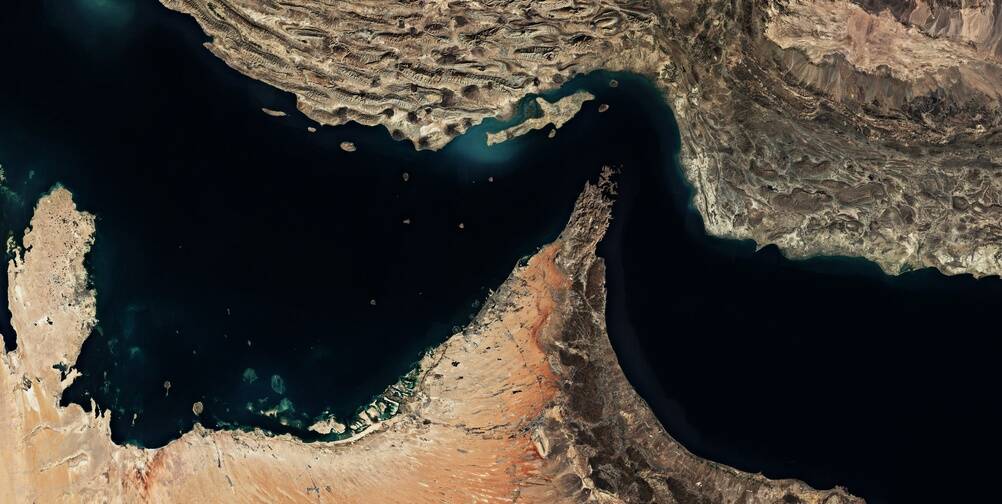
Iran has been shipping torpedo-like UUVs to Houthi rebels in Yemen since 2024. These small but lethal drones can inflict significant damage on ships. Recent attacks in the Gulf, including one near Oman and another near Iraq, have forced the US to deploy uncrewed drone boats to monitor Iranian activity. The conflict’s escalation underscores the need for rapid, innovative countermeasures.
UK and US Collaborate on REEF Program
To address this challenge, the US Defense Innovation Unit (DIU) and the UK’s Ministry of Defence (MoD) have launched the Robotic Exclusion and Engagement Framework (REEF). This joint initiative invites companies to submit solutions for detecting and neutralizing underwater threats. The deadline for proposals is April 3, 2026, with a focus on four key areas:
- Sensors: Detect and classify UUVs in complex environments.
- Counteraction Tech: Kinetic or acoustic systems to disable threats.
- Secure Communications: Real-time data transmission for underwater operations.
- Command & Control: AI-driven decision support for integrated defense systems.
What’s at Stake?
Maritime infrastructure is a global economic lifeline. A single successful attack on a port or oil tanker could disrupt trade, trigger geopolitical fallout, and cost billions. The UK’s own projects, like BAE Systems’ Herne and Excalibur XLAUVs, show progress—but they’re not designed for direct combat. Meanwhile, Russia’s Poseidon, a 20-meter nuclear-tipped weapon, poses an existential threat to coastal cities.
How Will Solutions Work?
REEF prioritizes technologies that can:
- Reduce false alarms by distinguishing threats from marine life or debris.
- Deploy decoys to mislead hostile UUVs.
- Enable secure, real-time communication between underwater sensors and surface vessels.
- Integrate AI to provide actionable insights for military commanders.
Why This Matters for Global Security
The race to counter underwater attack drones isn’t just about military might—it’s about protecting global trade routes and preventing catastrophic attacks. As NATO struggles to defend against drone swarms in the air, underwater threats remain a blind spot. The US and UK’s collaboration through REEF could set a new standard for maritime defense, but time is of the essence.
What’s Next?
With the April 3 deadline fast approaching, the defense industry must act swiftly. Innovations in sensor tech, AI, and underwater communication will determine who wins this high-stakes race. For now, the world watches as Iran, Russia, and now the US and UK, push the boundaries of subaquatic warfare.
Stay Informed on Defense Tech
Follow the latest developments in underwater defense and maritime security. The battle beneath the waves is just beginning—and the stakes have never been higher.