Decentralized Infrastructure Delivery: Scaling Autonomy in Tech Teams
In the fast-evolving tech landscape, organizations like Adidas are redefining infrastructure management by shifting from centralized control to decentralized models. This transition empowers domain-aligned teams to own infrastructure delivery while maintaining governance. Let’s explore how this approach balances autonomy with operational safety.
Challenges of Centralized Infrastructure Models
Traditional centralized models, where a single platform team manages all infrastructure as code (IaC) repositories, face scaling challenges. As teams grow and demands increase, backlogs form, coordination becomes complex, and delivery speed stagnates. Adidas encountered these issues as its data platform expanded across multiple domains.
Key Limitations of Centralized Control
- Single team bottleneck for infrastructure changes
- Delayed deployments due to centralized review processes
- Increased overhead for cross-team coordination
Transitioning to Decentralized Infrastructure
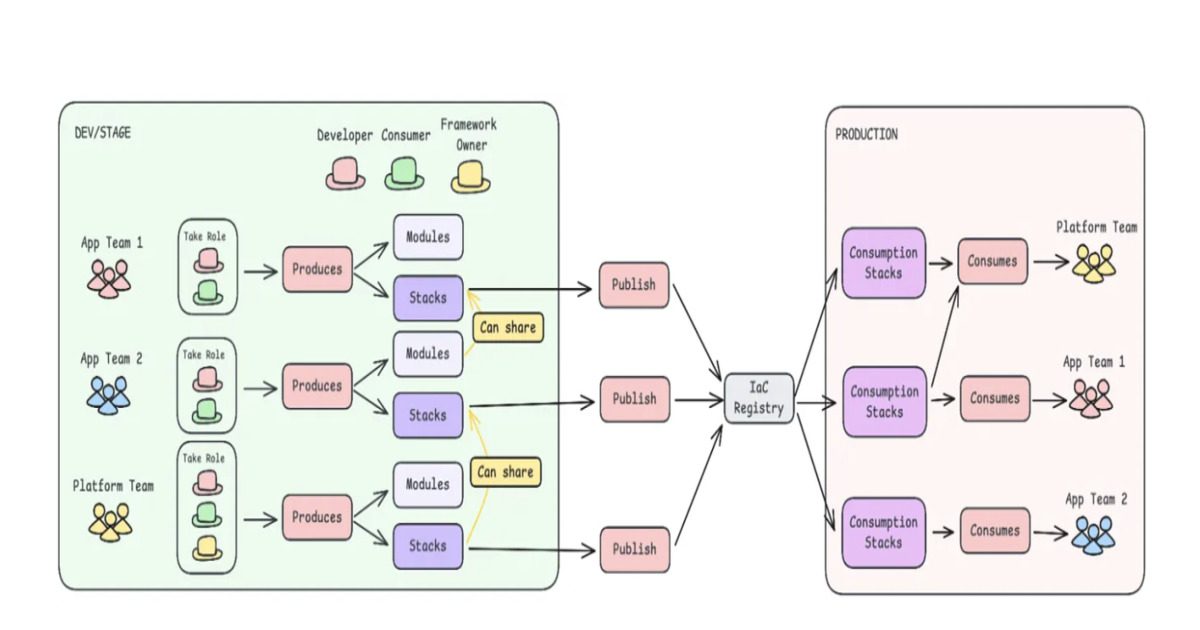
Adidas’ solution? A decentralized infrastructure delivery model. By distributing ownership to domain teams, they enable faster, autonomous delivery while maintaining standardized patterns. Platform engineers now focus on creating reusable building blocks and governance frameworks rather than executing individual changes.
Core Components of the New Model
- Reusable IaC Modules: Encapsulate resource definitions for consistent deployment.
- Stacks: Combine modules into deployable units for specific environments.
- Consumption Configurations: Allow teams to reference approved stacks for production.
Enabling Autonomy with Governance
Decentralization requires clear boundaries. Adidas implemented a layered governance approach:
- Standardized tooling and CI/CD pipelines enforce compliance
- Custom CLI abstracts complexity while embedding governance
- Automated pipelines ensure traceability and reproducibility
Role Clarity for Success
Defined roles reduce dependency on centralized teams:
- Framework Owners: Maintain shared tooling and standards
- Domain Developers: Compose infrastructure using approved patterns
- Consumers: Deploy configurations through automated pipelines
Benefits and Broader Implications
The shift reduced central team backlogs and enabled parallel infrastructure delivery. This approach aligns with industry trends toward self-service platforms, where standardized abstractions and automated policies ensure safety at scale.
Key Takeaways for Organizations
- Decentralization requires cultural and technical transformation
- Shared frameworks and automation are critical for governance
- Autonomy thrives when ownership boundaries are clearly defined
Conclusion: Embracing the Future of Infrastructure
Adidas’ experience shows that decentralized infrastructure delivery is not just a technical shift—it’s a strategic move toward scalable, autonomous teams. By combining reusable patterns, automated governance, and role clarity, organizations can achieve both speed and reliability. Ready to rethink your infrastructure model? Start by defining clear boundaries and investing in shared tooling.
FAQs
1. What is decentralized infrastructure delivery?
A model where domain teams own infrastructure provisioning within predefined governance frameworks, reducing dependency on centralized teams.
2. How does Adidas maintain compliance in a decentralized model?
Through standardized IaC modules, automated CI/CD pipelines, and governance tooling that enforce naming conventions, tagging, and deployment policies.
3. What challenges arise when decentralizing infrastructure?
Key challenges include ensuring consistent governance, managing role clarity, and maintaining traceability across autonomous teams.
4. How do reusable IaC modules help scale infrastructure delivery?
They provide reusable building blocks that teams can combine into deployable stacks, reducing duplication and ensuring compliance with organizational standards.
5. Can decentralized models work for small organizations?
Yes, but they require careful planning. Start with shared tooling and clear boundaries to balance autonomy with governance.