Discord Ends Persona Partnership Amid Privacy Concerns
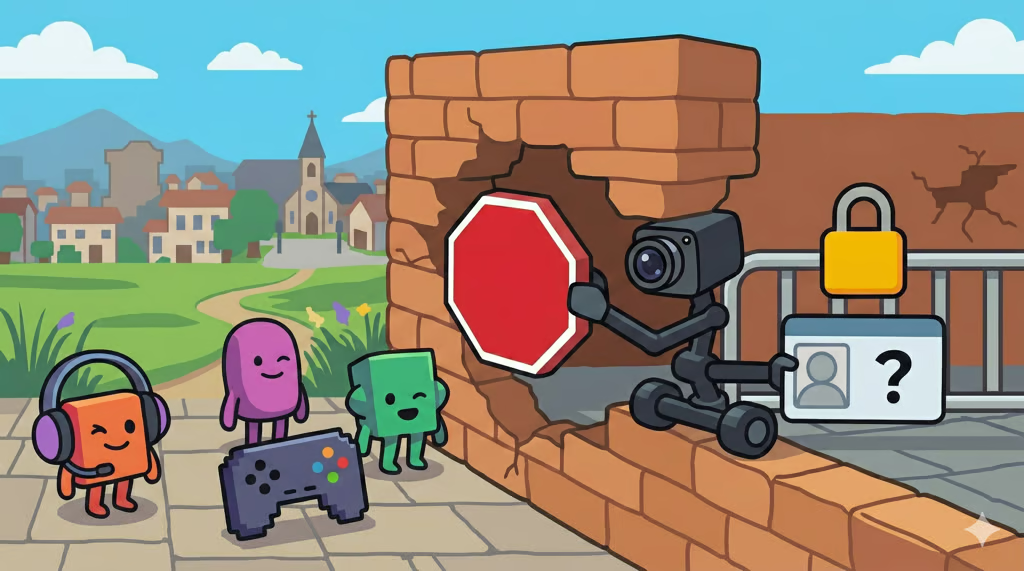
Discord’s recent experiment with age verification sparked a firestorm of user backlash, leading to the abrupt termination of its partnership with Persona. The incident highlights the delicate balance between platform safety and user privacy in the digital age.
The Persona Partnership: What Went Wrong?
User Backlash Over Identity Verification
Discord’s limited UK test with Persona required users to verify their real-world identities for age checks. While the company framed this as a safety measure, users quickly raised privacy concerns. The requirement to share personal information clashed with Discord’s reputation as a privacy-focused communication platform.
Why the Experiment Failed
- Transparency Issues: Users felt blindsided by the sudden introduction of identity verification without clear communication.
- Trust Erosion: The partnership with Persona—a third-party identity provider—raised questions about data handling and security.
- Community Pushback: Gamers and Discord users emphasized that mandatory identity checks could deter younger audiences and undermine anonymity.
Why Privacy Matters in Digital Identity Checks
The Balance Between Safety and Privacy
Platforms like Discord face a growing challenge: ensuring safety without compromising user trust. While age verification can prevent underage access to inappropriate content, the method of implementation is critical. Users expect transparency and control over their data.
Alternatives to Identity Verification
Experts suggest alternatives such as:
- Self-Reported Age Checks: Simple prompts without requiring real-world IDs.
- Behavioral Analytics: Using activity patterns to estimate age ranges.
- Parental Controls: Empowering guardians to manage access without exposing child identities.
Discord’s Response and Future Plans
Slowing Down Age-Verification Rollouts
Following the backlash, Discord paused its broader age-verification plans. The company acknowledged the need to prioritize user feedback and explore less intrusive solutions. This retreat underscores the importance of community engagement in shaping platform policies.
Rebuilding Trust Through Transparency
To regain user confidence, Discord must:
- Clearly communicate the purpose and scope of any new features.
- Offer opt-in options for identity checks rather than mandatory requirements.
- Partner with privacy advocates to audit data-handling practices.
Key Takeaways for Tech Companies
This incident serves as a cautionary tale for tech firms: privacy and trust are non-negotiable. When implementing safety measures, companies must:
- Engage users early in the design process.
- Provide clear explanations for data collection.
- Offer flexible, user-centric solutions.
Conclusion: The Road Ahead for Discord
Discord’s cancellation of the Persona partnership is a reminder that user trust is fragile. As platforms navigate the complexities of digital safety, they must prioritize transparency and respect for user autonomy. The gaming and tech communities will be watching closely to see how Discord adapts.
Call to Action: What are your thoughts on identity verification in online platforms? Share your perspective in the comments below!
FAQs
- What led to the cancellation of the Discord Persona partnership? Users raised privacy concerns over mandatory identity verification, prompting Discord to halt the UK test and delay broader plans.
- Why is age verification controversial on Discord? Critics argue it undermines anonymity and could deter younger users, while supporters see it as a safety measure.
- How can platforms balance safety and privacy? By using transparent, opt-in methods and prioritizing user feedback in policy design.
- What alternatives exist to third-party identity checks? Self-reported age checks, behavioral analytics, and parental controls are viable options.
- Will Discord reintroduce age verification in the future? The company has paused its plans but may revisit the issue with improved user communication and safeguards.