
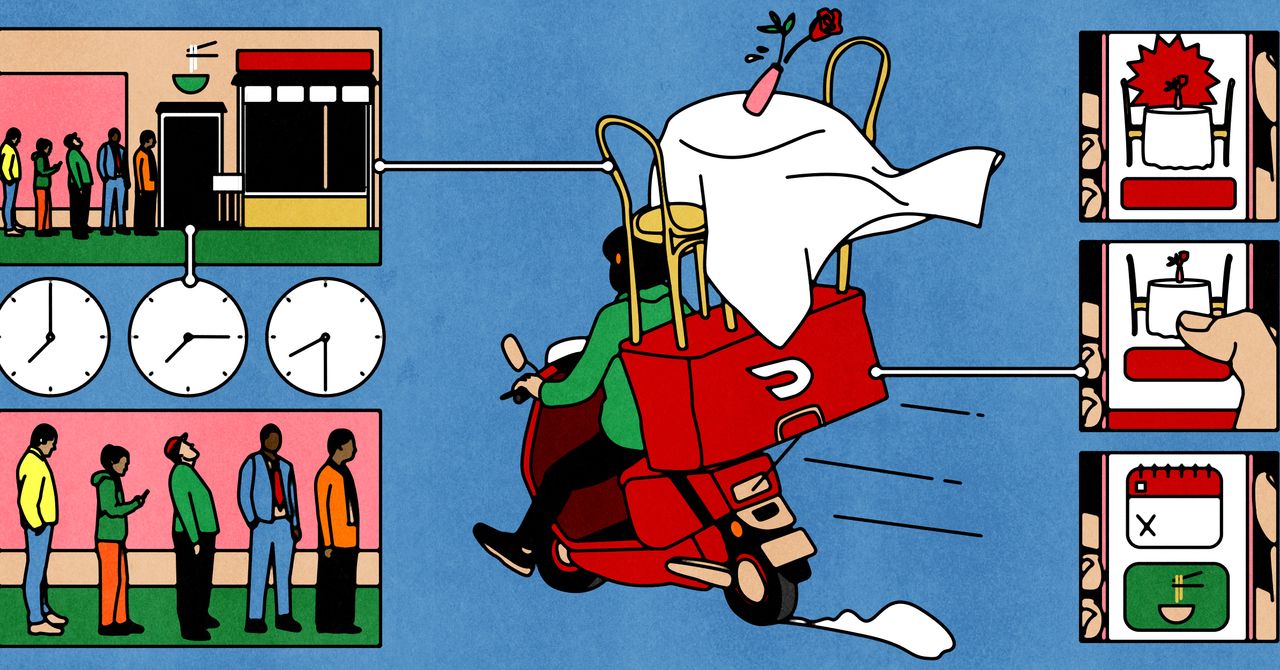
DoorDash Enters the Reservation Wars
DoorDash, a leading food logistics app, has recently entered the reservation wars by acquiring hospitality tech company SevenRooms. This move has enabled DoorDash to offer exclusive reservations at some of the most exclusive restaurants in the country.
Meanwhile, the company is also paying customers to book reservations through its app. For example, users can receive $12 in dining credits for booking a reservation at Manhattan’s Sushi Noz.
Exclusive Reservations and Table Drops
DoorDash has partnered with restaurants like The Eighty-Six in Manhattan to offer exclusive reservations. Additionally, the app offers "table drops" for certain restaurants, allowing users to book tables that are not available to the general public.
However, this has raised concerns about the gathering of customer data. Reservation and hospitality apps like SevenRooms track diner habits at granular levels, including who tips and who indulges in certain foods.
Reservation Wars and Data Collection
As the reservation wars heat up, companies like DoorDash and Resy are leveraging restaurant access to bring diners into an entire loyalty-based ecosystem. Meanwhile, customers must decide whether they are comfortable with the level of data collection involved.
For instance, Resy CEO Pablo Rivera mentioned that servers will already know about a birthday at the table and have a candle ready. While this may be seen as a benefit to customers, others may view it as an invasion of privacy.
DoorDash’s Strategy and Expansion
DoorDash CEO Tony Xu outlined the company’s strategy in a recent earnings call, stating that the goal is to become an everything app for restaurants. The company has already rolled out reservations in 13 of the largest US cities and plans to expand further.
Additionally, DoorDash is offering incentives to customers to book reservations through its app. Users can collect dining credits and receive offers for referrals to friends.
Conclusion and Future of Reservations
In conclusion, the reservation wars are heating up, and companies like DoorDash are at the forefront. While the benefits of exclusive reservations and paid bookings may be appealing to customers, the level of data collection involved is a concern.
As the industry continues to evolve, it will be interesting to see how companies balance the need for customer data with the need for privacy and security. Meanwhile, customers can take advantage of the benefits offered by DoorDash and other reservation apps, while being aware of the potential risks involved.
Finally, as the reservation wars continue to escalate, one thing is clear: the way we book restaurant reservations is changing. With companies like DoorDash leading the charge, the future of reservations is likely to be shaped by technology and data collection.








