
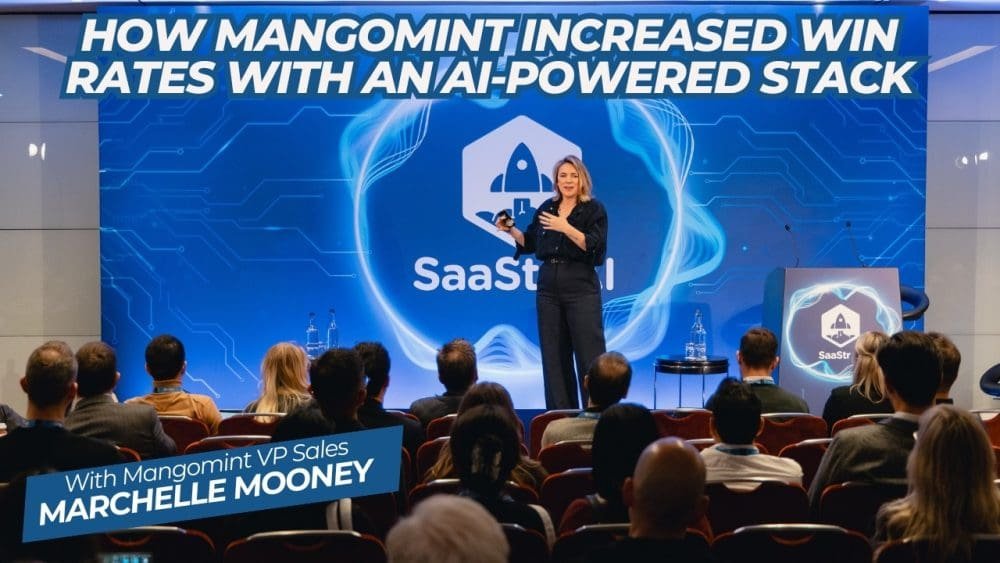
How Mangomint’s VP of Sales Built a 7.2x Bookings-to-Comp SMB Sales Machine
Most SMB sales teams struggle with inefficiencies: low ACV, high turnover, and endless tool sprawl. But Marshelle Mooney, VP of Sales at Mangomint, flipped the script. Her team achieves 7.2x ARR-to-OTE with a $4K ACV, five-day sales cycle, and eight demos per AE daily. Here’s how she did it—and how you can too.
Tool Consolidation: Less Is More
Marshelle’s first breakthrough came by cutting tools, not adding them. Early on, her team used an “AI kitchen sink” approach—six tools for call intelligence, dashboards, and more. It backfired: reps couldn’t find data, managers lost visibility, and the sales process fragmented.
The fix? Consolidate everything into Slack and Notion. All other tools either integrated or were cut. Why? Reps shouldn’t toggle between six apps to do their job. Automation only works if the foundation is simple.
Build the Operating Model First
Efficiency starts with structure, not tech. Mangomint’s model has three layers:
- Clarity: Playbooks, objection scripts, and comp details live in Notion—accessible via voice or keyboard.
- Cadence: Weekly updates, one-on-ones, and reviews run on a predictable schedule to keep remote teams aligned.
- Co-pilot: AI and automation only work if the first two layers are solid. Skip this step, and you’ll automate chaos.
Master Unit Economics
Marshelle knows her numbers cold: 4 hours per deal, 30 focused hours weekly per rep, and a 7.2x ratio. This clarity lets her spot underperformance instantly. Public calendars and real-time dashboards show exactly where reps stand—no guesswork.
Push Data to Reps, Don’t Wait for Them to Search
Reps won’t log into dashboards unless forced. At Mangomint, data flows automatically:
- Card failures route to reps instantly.
- Win rate changes pop up in Slack before weekly reviews.
- Call summaries push to Notion and Salesforce without manual input.
The lesson? Automation works best when it meets reps where they are.
Run Slack Like an Office
In a remote team, communication discipline is key. Mangomint’s rules are explicit:
- Public calendars for all.
- Direct messages demand immediate responses.
- Channels to mute and prioritize are spelled out in onboarding.
Unwritten rules don’t work. Write them down—and enforce them.
The Decision Change Log
Product updates and comp changes often get lost in SMB teams. Mangomint solves this with a Notion change log. Every update is documented with dates and roles. Reps are expected to check it—no exceptions. This eliminates misaligned messaging and disputes.
What 7.2x Actually Requires
It’s not one tool or tactic. It’s compounding small decisions:
- Two tools, not six.
- Unit economics known precisely.
- Data pushed to reps, not hidden.
- Written communication rules.
- Real-time access to critical info.
These aren’t new ideas. They’re the result of discipline—no hiring to cover inefficiencies, no tool overload. The takeaway? Efficiency in SMB sales isn’t about the best AI stack. It’s about building the right operating model first.
Take Action: Build Your SMB Sales Automation Strategy
Start by auditing your tools. Are reps juggling six apps? Consolidate. Next, document your operating model—playbooks, cadence, and data flows. Finally, automate only after clarity and structure are in place. The result? A sales machine that scales without endless headcount or tech debt.








