
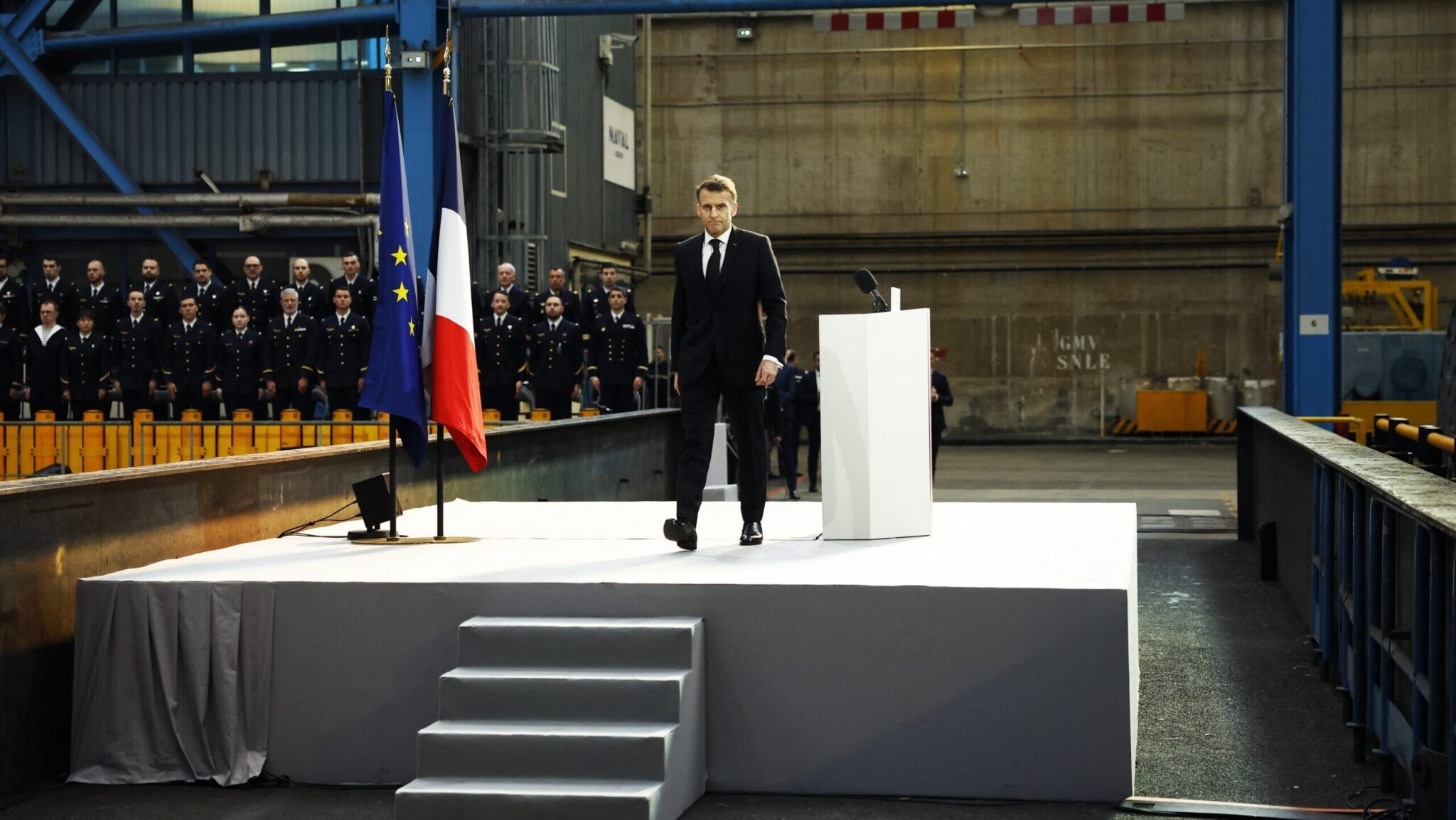
Macron’s Speech: A New Era for France’s Nuclear Deterrence
President Emmanuel Macron recently delivered a landmark speech outlining a significant shift in France’s nuclear strategy. Addressing military personnel at a dry-dock featuring the nuclear-powered submarine Le Téméraire, Macron emphasized the need to “upgrade our arsenal” amid a world he described as marked by “ambient animosity.” This move signals a strategic recalibration of France’s long-standing nuclear doctrine.
Key Announcements from the Speech
- Increased Nuclear Arsenal: France will expand its nuclear weapons inventory, though exact numbers will no longer be disclosed.
- Forward Deterrence Collaborations: Discussions are underway with Germany, the UK, Poland, and six other European nations to strengthen collective security under France’s nuclear umbrella.
- Doctrine Clarification: Macron reaffirmed that France’s nuclear strategy is “strategic and exclusively strategic,” rejecting the concept of a graduated nuclear response.
Strategic Implications of the New Doctrine
Macron framed the changes as essential for maintaining credible deterrence in a volatile global landscape. He warned that “no state, however powerful, will avoid the consequences” of France’s nuclear capabilities. His remarks highlighted the immense destructive potential of even a single French submarine, which carries more strike power than all bombs dropped in Europe during World War II.
Global Security Context
The speech came amid rising tensions, particularly referencing the war in Iran. Macron noted that “adversaries and partners have changed,” underscoring the need for adaptive defense policies. The proposed forward deterrence initiative aims to foster multilateral cooperation without deploying nuclear weapons on foreign soil—a delicate balance of solidarity and sovereignty.
Why This Matters for Global Security
France’s nuclear strategy has long been a cornerstone of European defense. By modernizing its arsenal and engaging allies, Paris seeks to reinforce stability in a multipolar world. However, the decision to withhold arsenal numbers raises questions about transparency and international trust.
Expert Takeaways
- Strategic Flexibility: The forward deterrence model could enhance regional security through shared intelligence and joint planning.
- Technological Edge: France’s nuclear submarines remain unmatched in range and payload, ensuring a credible second-strike capability.
- Geopolitical Messaging: Macron’s speech serves as both a warning to adversaries and a reassurance to allies.
Conclusion: A Call for Vigilance
Macron’s speech reaffirms France’s commitment to nuclear deterrence as a tool for peace. As global tensions persist, nations must weigh the risks and benefits of such strategies. For readers, the takeaway is clear: strategic defense remains a complex, evolving challenge in the 21st century.
Stay informed: Follow updates on France’s nuclear policy and its impact on international relations.
FAQs
1. How does France’s nuclear deterrence strategy compare to other nations?
France maintains an independent nuclear force, distinct from NATO’s collective deterrence model. Its focus on submarine-based capabilities ensures survivability in any conflict scenario.
2. What are the risks of expanding France’s nuclear arsenal?
While enhancing deterrence, increased arsenals risk triggering an arms race or miscalculations during crises. Transparency remains a critical factor in mitigating these risks.
3. Why is France engaging European allies in its deterrence efforts?
Collaboration strengthens regional security and ensures a unified response to shared threats. It also aligns with broader European defense integration goals.
4. How does France define its “strategic” nuclear doctrine?
France’s doctrine prioritizes nuclear weapons as a last-resort tool for national survival, avoiding scenarios where they might be used in limited conflicts.
5. What role do submarines play in France’s nuclear strategy?
Submarines provide a hidden, mobile platform for launching nuclear strikes, ensuring a second-strike capability even after a surprise attack.








