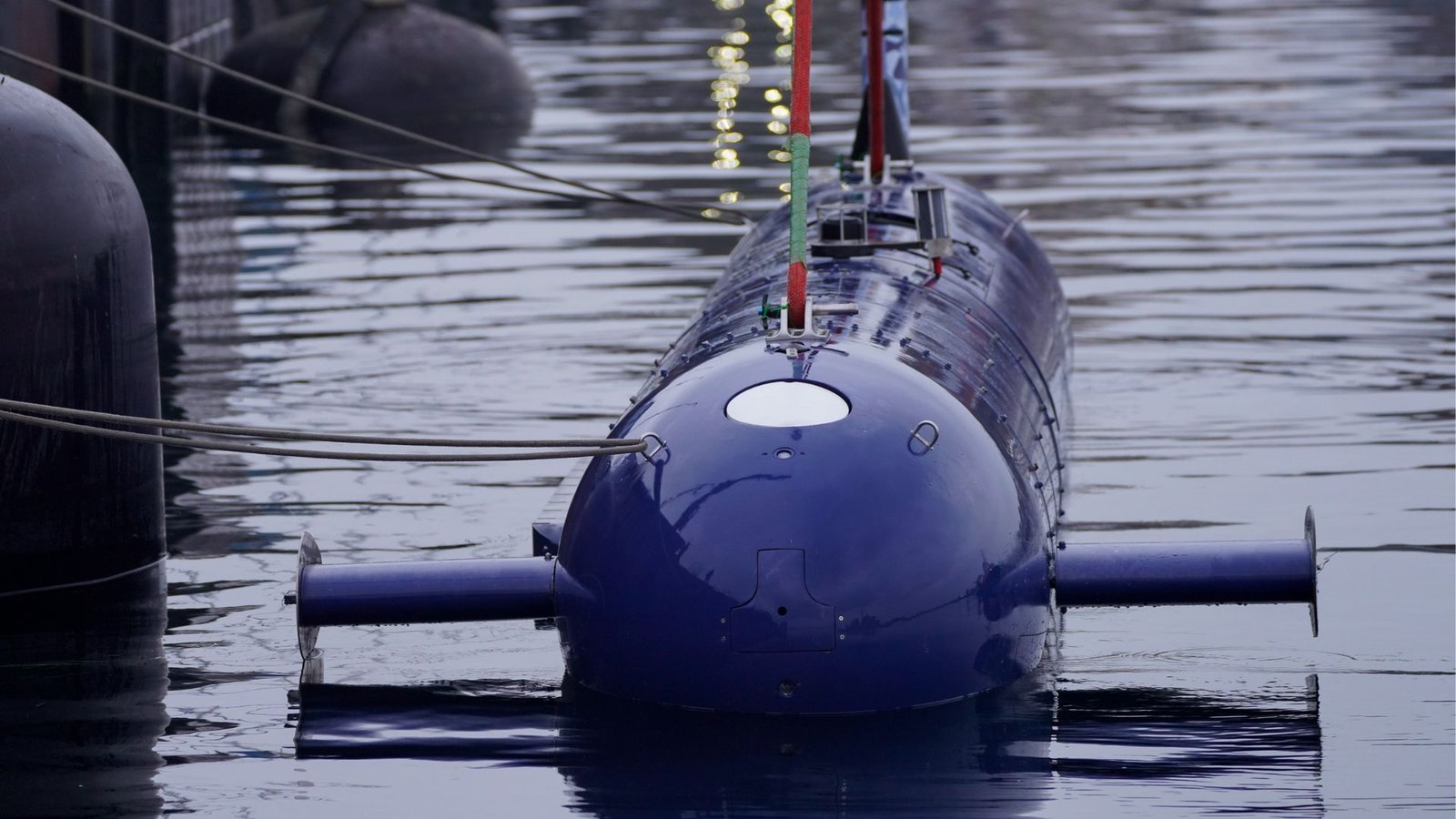
Germany’s BlueWhale AI Drone Revolutionizes Submarine Detection
In February 2026, Germany’s navy received its first BlueWhale AI-powered autonomous underwater vehicle (AUV), marking a pivotal shift in maritime defense. Developed by Israel Aerospace Industries (IAI) and ThyssenKrupp Marine Systems, this 5.5-ton, 10.9-meter-long drone can dive to 300 meters and operate for weeks, tracking submarines and monitoring critical infrastructure in the Baltic Sea.
Advanced Sensor Tech for Silent Surveillance
The BlueWhale’s sensor suite includes radar, EO/IR cameras, and a synthetic aperture sonar for high-resolution seabed imaging. Its AI algorithms process acoustic data to detect submarines without emitting detectable signals—a game-changer in anti-submarine warfare (ASW). This capability addresses NATO’s urgent need to protect subsea pipelines and cables from sabotage, particularly in the volatile Baltic region.
Germany’s Strategic Push for Unmanned Defense
Part of Germany’s Kurs Marine 2035+ modernization plan, the BlueWhale aligns with NATO’s Baltic Sentry initiative. With 12+ LUUVs planned by 2035, Berlin aims to counter hybrid threats from Russia and China, who have been linked to recent pipeline sabotage attempts. The drone’s stealthy operations complement manned submarines like the U212 CD class, creating a hybrid fleet for persistent surveillance.
Israel-Germany Defense Collaboration Expands
This deal reverses historical defense trade flows, with Germany now adopting Israeli tech. The BlueWhale’s success has spurred interest from Greece, which signed a MoU with IAI for potential procurement. Athens faces a growing submarine arms race in the Aegean, making the BlueWhale’s asymmetric ASW capabilities a strategic asset.
Why the BlueWhale Matters for Global Security
By reducing reliance on manned missions, the BlueWhale lowers risk while extending naval reach. Its AI-driven passive tracking could redefine how navies monitor contested waters. As NATO and the EU ramp up subsea infrastructure protection, autonomous systems like the BlueWhale may become the backbone of future maritime security.
Conclusion: A New Era in Underwater Warfare
The BlueWhale represents more than a technological leap—it’s a strategic shift toward AI-driven, crewless naval operations. As Germany and allies adopt this platform, the balance of power in critical waterways may tilt toward those who master autonomous warfare. Will your country be next to invest in this silent, subsea revolution?
FAQs
- What is Germany’s BlueWhale AI submarine hunter? A 5.5-ton autonomous drone developed by Israel and Germany for anti-submarine warfare and infrastructure protection.
- How does the BlueWhale detect submarines? It uses AI-powered sonar and passive acoustic sensors to track targets without emitting detectable signals.
- Why is the Baltic Sea a key focus? The region hosts critical energy pipelines and cables, frequently targeted by hybrid threats.
- What’s next for the BlueWhale program? Germany plans 12+ units by 2035, with Greece and other NATO allies exploring procurement.
- Can AI drones replace manned submarines? While not a direct replacement, they offer persistent, low-risk surveillance to complement traditional fleets.