Introduction to Germany’s Digital Transformation
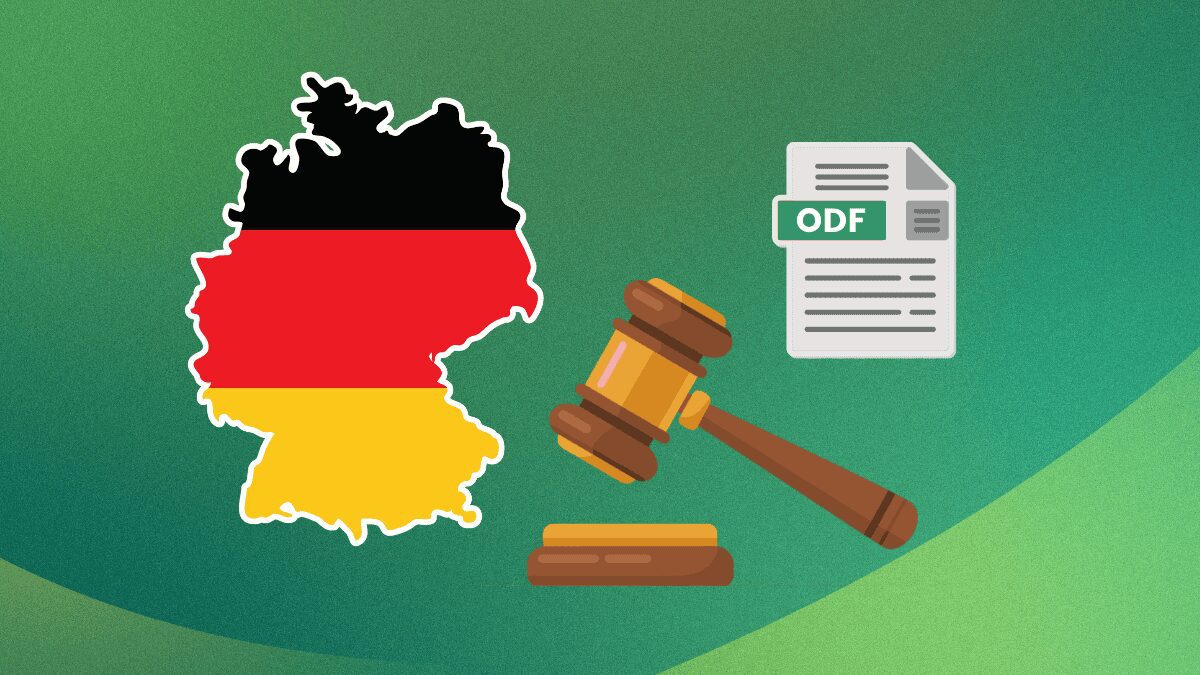
Meanwhile, Germany has been making significant strides in its digital transformation journey. The country has introduced the Deutschland-Stack, a sovereign digital infrastructure framework that outlines the standards for digital documents used in public administrations. For example, this framework names only two approved document formats: ODF and PDF/UA.
However, proprietary document formats from Microsoft, such as .doc, .ppt, and .xls, are not included in this list. Additionally, the framework is published by Germany’s Federal Ministry for Digital Transformation and Government Modernisation, covering all levels of public administration.
The Importance of Open Standards
Therefore, the use of open standards like ODF and PDF/UA is crucial for reducing vendor lock-in effects. When public administrations rely on proprietary document formats, they become dependent on the vendor controlling those formats. Furthermore, this can lead to significant disruption and cost if they need to switch to a different format.
Meanwhile, ODF, or OpenDocument Format, is an XML-based file format for office documents. It covers text files, spreadsheets, charts, and graphical documents, and is maintained by OASIS as an ISO standard (ISO/IEC 26300). Additionally, PDF/UA, or PDF/Universal Accessibility, is the ISO accessibility standard for PDF files (ISO 14289), making it a sensible choice for a government serving a diverse population.
Benefits of Open Source Solutions
Moreover, the Deutschland-Stack prioritizes the use of open source solutions where possible. This approach has several benefits, including reducing costs and increasing flexibility. For instance, open source solutions can be customized to meet specific needs, and they are often more secure than proprietary alternatives.
Additionally, the framework explicitly favors sourcing from European providers over foreign alternatives. This approach can help to promote local economic growth and reduce dependence on foreign companies. However, it also raises questions about the potential impact on global trade and cooperation.
Expert Insights and Reactions
Meanwhile, experts in the field have been reacting to Germany’s decision to adopt open standards. Florian Effenberger, Executive Director of The Document Foundation, stated that this move is not just a recommendation or preference, but a mandate. He emphasized that open, vendor-neutral document formats are a fundamental infrastructure for democratic, interoperable, and sovereign public administrations.
Furthermore, this decision sends a clear signal about the importance of interoperable, vendor-neutral infrastructure. It also highlights the need for governments to adopt open standards at a large scale. However, this is not without its challenges, and it will require significant investment and effort to implement.
Conclusion and Future Directions
Finally, Germany’s shift to open standards marks a new era for digital documents. The use of ODF and PDF/UA will help to reduce vendor lock-in effects and promote interoperability. Additionally, the prioritization of open source solutions and European providers will help to promote local economic growth and reduce dependence on foreign companies.
Therefore, other countries would benefit from taking note of Germany’s approach. By adopting open standards and prioritizing open source solutions, governments can create a more sustainable and flexible digital infrastructure. However, this will require a coordinated effort and a willingness to invest in the development of open standards and open source solutions.
Meanwhile, the future of digital documents looks promising. With the adoption of open standards and open source solutions, governments can create a more democratic, interoperable, and sovereign digital infrastructure. Additionally, this will help to promote innovation and economic growth, while also reducing costs and increasing flexibility.
For example, the use of ODF and PDF/UA can help to improve accessibility and readability of digital documents. This can be particularly beneficial for people with disabilities, who often rely on assistive technologies like screen readers. However, it also raises questions about the potential impact on the environment and the need for sustainable digital practices.
Finally, the adoption of open standards and open source solutions is a meaningful step towards creating a more sustainable and flexible digital infrastructure. However, it will require ongoing effort and investment to maintain and improve these standards. Additionally, it will be important to monitor the impact of this shift and make adjustments as needed to ensure that it is meeting its intended goals.
Therefore, the future of digital documents is exciting and full of possibilities. With the adoption of open standards and open source solutions, governments can create a more democratic, interoperable, and sovereign digital infrastructure. However, it will require a coordinated effort and a willingness to invest in the development of open standards and open source solutions.
Call to Action
Meanwhile, we encourage other countries to take note of Germany’s approach and consider adopting open standards and open source solutions. This can help to promote innovation and economic growth, while also reducing costs and increasing flexibility. Additionally, it can help to create a more sustainable and flexible digital infrastructure that is better equipped to meet the needs of citizens.
Finally, we believe that the adoption of open standards and open source solutions is a critical step towards creating a more democratic, interoperable, and sovereign digital infrastructure. However, it will require ongoing effort and investment to maintain and improve these standards. Therefore, we encourage governments and organizations to work together to promote the adoption of open standards and open source solutions.