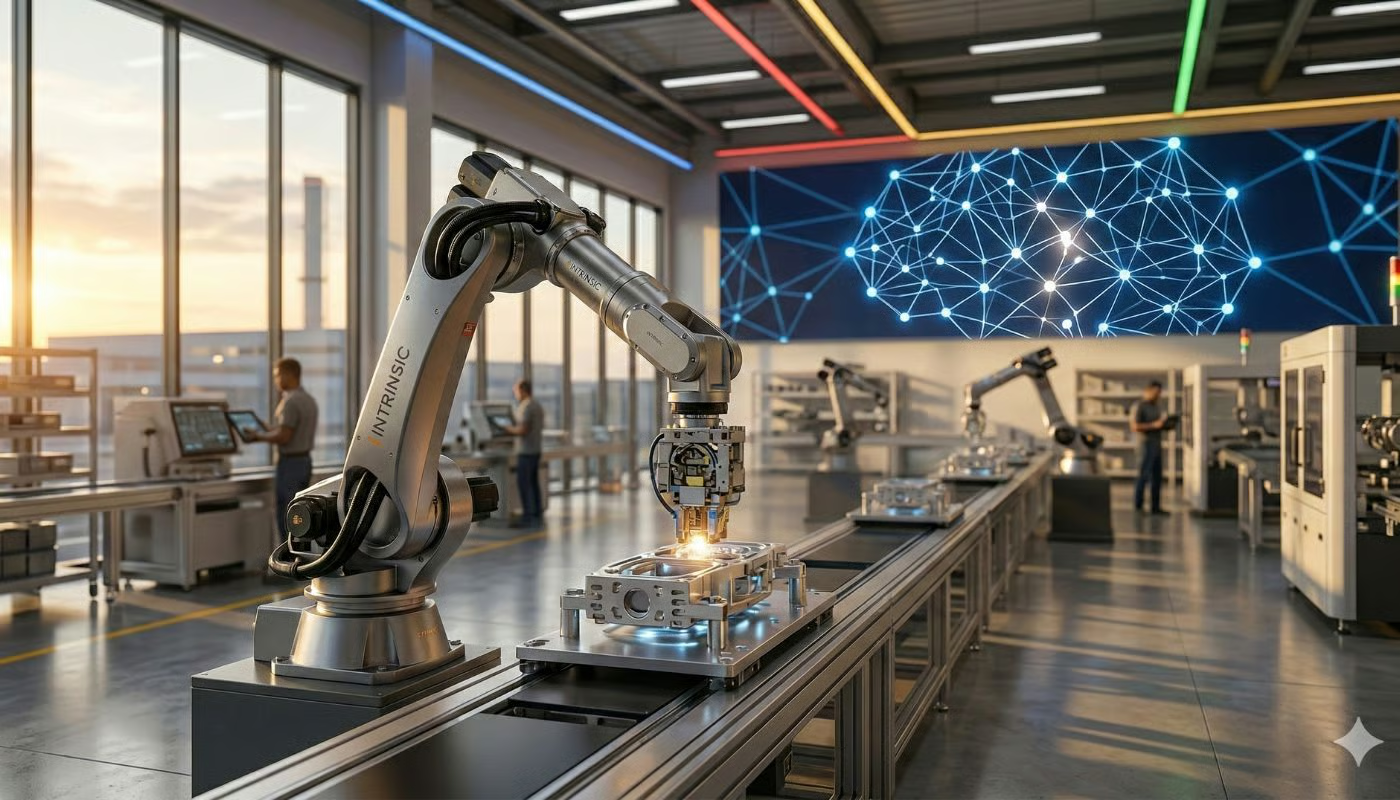
Google Acquires Intrinsic Robotics to Boost AI Automation
Google is accelerating its push into physical AI by acquiring Intrinsic, the robotics startup it founded in 2018. This move unites Intrinsic’s industrial automation expertise with Google DeepMind, Gemini models, and Google Cloud, creating a powerful synergy for AI-driven manufacturing and logistics.
Why This Acquisition Matters for AI Automation
Intrinsic, often dubbed the “Android for robotics,” has developed flexible software platforms for industrial robots. By bringing it in-house, Google aims to streamline AI research and deployment in real-world environments. The integration with DeepMind’s AI models and Google Cloud’s infrastructure will enable faster innovation in tasks like warehouse automation, quality control, and supply chain optimization.
Key Benefits of the Acquisition
- Unified AI Ecosystem: Combines robotics, cloud computing, and machine learning under one roof.
- Scalable Solutions: Accelerates deployment of AI-powered robots in manufacturing and logistics.
- Competitive Edge: Positions Google to lead in the $200B+ industrial robotics market by 2030.
How This Impacts the Future of Work
While automation often sparks fears of job displacement, Google emphasizes collaboration between humans and robots. Intrinsic’s systems are designed to handle repetitive or dangerous tasks, freeing workers to focus on creative problem-solving. For example, robots could manage inventory sorting while humans oversee strategic decisions.
Challenges and Opportunities
Google faces hurdles in adapting AI models to unpredictable physical environments. However, the acquisition opens doors for:
- Customizable AI: Tailoring robotics solutions for specific industries.
- Real-Time Data Processing: Leveraging Google Cloud for instant analytics.
- Global Expansion: Scaling AI automation in emerging markets.
What This Means for Businesses
Companies adopting Google’s AI robotics stack can expect:
- Reduced operational costs through 24/7 automation
- Improved precision in tasks like assembly and inspection
- Faster time-to-market for product innovations
Early adopters in automotive and electronics manufacturing are already testing Intrinsic-powered robots. One pilot project reduced assembly line errors by 40% in just three months.
Conclusion: The Road Ahead for AI Robotics
Google’s acquisition of Intrinsic marks a pivotal moment in AI automation. By merging cutting-edge robotics with its AI infrastructure, the company is poised to redefine industrial efficiency. As the technology matures, expect to see more seamless human-robot collaboration across industries.
Stay ahead of the curve: Follow our blog for updates on AI robotics trends and how to prepare your business for the automation revolution.
FAQs
How does Google’s acquisition of Intrinsic impact AI automation?
This move accelerates the development of AI-powered robotics by integrating Intrinsic’s platform with Google’s AI research and cloud infrastructure.
What industries will benefit most from this acquisition?
Manufacturing, logistics, and healthcare are expected to see significant improvements in automation efficiency.
Will this lead to widespread job losses?
Google emphasizes human-robot collaboration rather than replacement, with robots handling repetitive tasks.
How soon will these AI robots be available commercially?
Pilot programs are already underway, with full-scale commercial deployment expected by 2027.
What advantages does Google have over competitors in robotics?
Google’s access to vast datasets, cloud computing power, and AI research gives it a unique edge in developing adaptive robotics solutions.