How to Successfully Implement AI SDRs in 2026
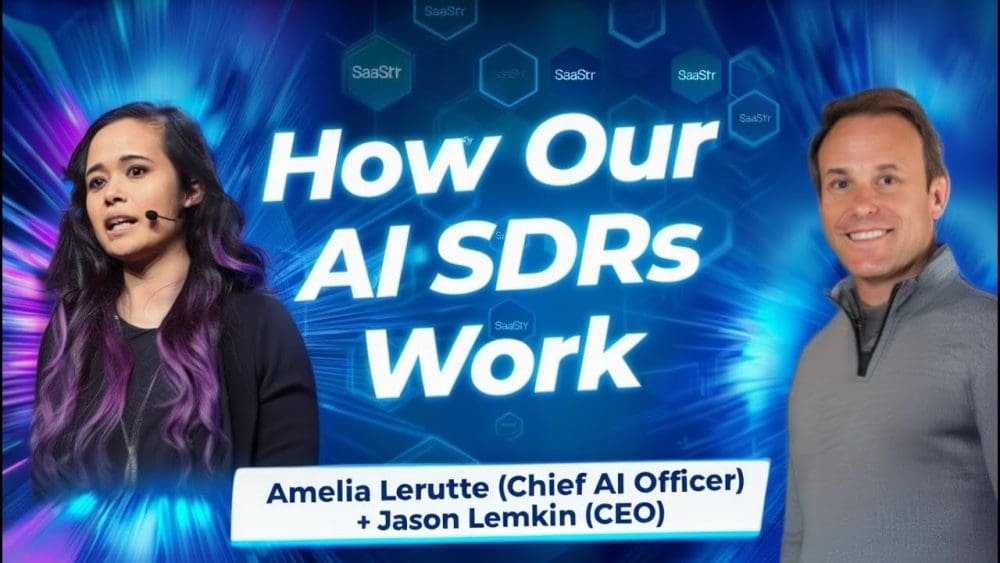
Artificial intelligence is reshaping sales development. But deploying AI SDRs requires more than just flipping a switch. Based on real-world data from SaaStr’s year-long experiment with multiple platforms, here’s how to launch an AI SDR strategy that delivers results.
Start with the Right Use Case
Don’t try to replace your entire sales motion overnight. Focus first on the leads your human SDRs ignore: cold CRM contacts, event attendees who never got follow-up, or low-ACV segments. These are where AI SDRs shine. At SaaStr, targeting previously ignored leads generated 15% of our London event revenue from contacts that would have produced zero pipeline otherwise.
Three High-Impact Use Cases
- Inbound follow-up: Respond to form fills, demo requests, and trial sign-ups 24/7
- CRM reactivation: Re-engage dormant contacts with personalized outreach
- SMB outreach: Scale outreach to lower-ACV accounts more efficiently than human teams
Real Data from Real Deployments
Here’s what we achieved with different AI SDR platforms:
Outbound AI SDR Results
- 3,221 monthly emails vs. 75-285 per human rep
- 11-40x volume increase with 5.5-12% response rates
Inbound AI SDR Results
- 668,591 sessions leading to $1M+ in 90 days
- 71% of one month’s closed deals came from AI-qualified leads
Implementation Best Practices
Successful AI SDR deployment requires careful planning:
1. Define Your ICP First
AI amplifies your targeting, good or bad. Before launching:
- Analyze your 20 best customers
- Identify shared characteristics (industry, tech stack, pain points)
- Define disqualified leads as clearly as qualified ones
2. Craft Human-Approved Messaging
AI-generated emails often feel robotic. Instead:
- Have your top SDRs write 5-7 winning templates
- Use AI for personalization and timing
- Review first 1,000 emails manually
3. Build the Handoff Process
When an AI SDR works, you must be ready. Define:
- Which responses AI handles autonomously
- When to escalate to human SDRs/AEs
- SLA for human response time (aim for <4 hours)
Time and Budget Considerations
Don’t underestimate the effort required:
- ICP/messaging work: 2-4 weeks
- Integration: 1-2 weeks
- Ongoing tuning: 30-45 minutes daily for first 90 days
What AI SDRs Can (and Can’t) Do
AI excels at:
- High-volume outreach
- 24/7 lead engagement
- Reactivating dormant contacts
But human SDRs remain essential for:
- Complex enterprise deals
- Real-time objection handling
- Relationship-building with key stakeholders
Conclusion
AI SDRs work best when deployed strategically. Start with one use case, invest in quality messaging, and build processes for handoffs. With proper implementation, you can unlock pipeline from leads your team previously ignored while scaling your warm outreach efforts.
Ready to launch your AI SDR strategy?
Download our free AI SDR implementation checklist to ensure your deployment delivers results.