Humanoid Robot vs Human: Boxing Match Breakthrough
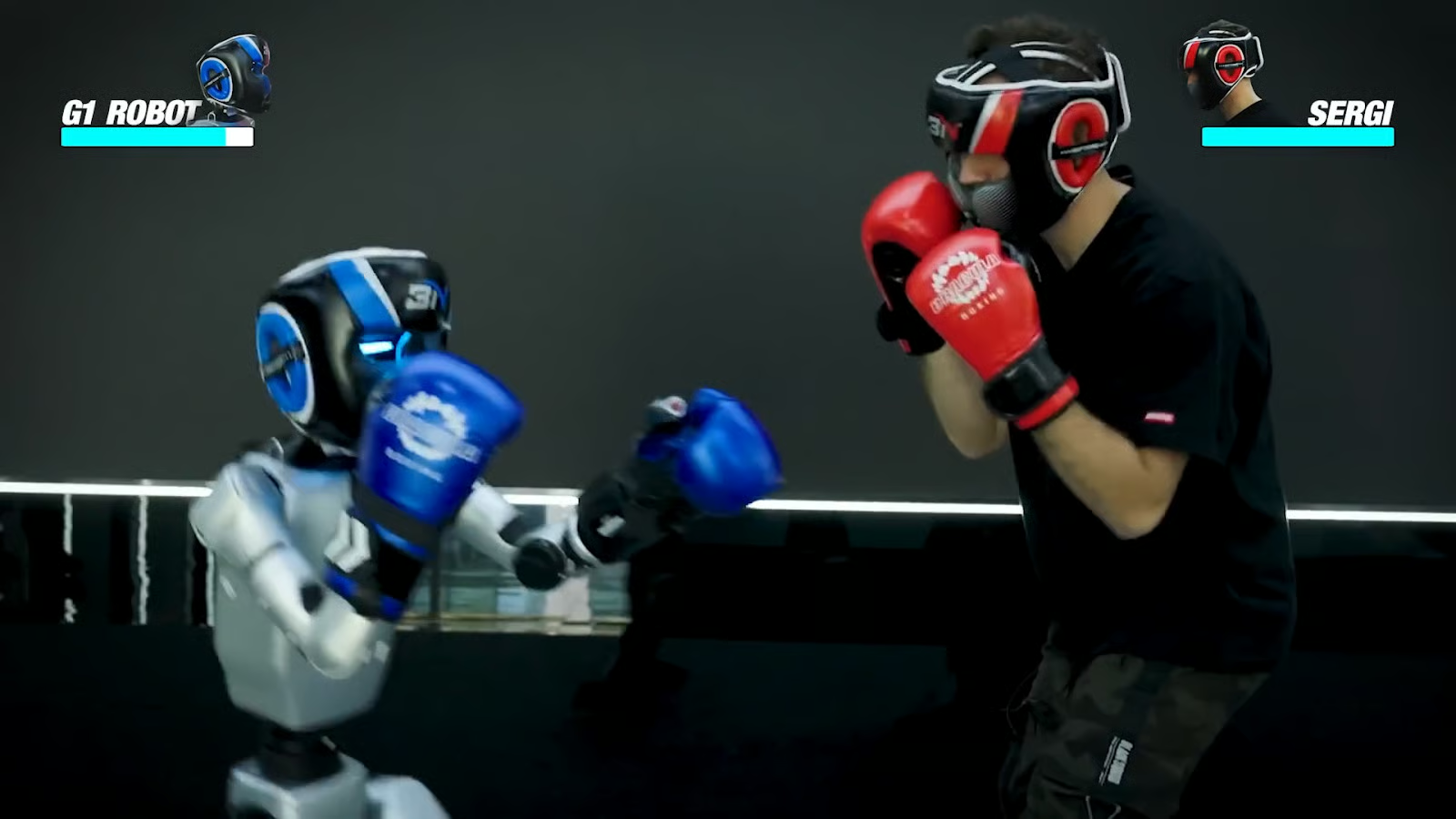
When a humanoid robot stepped into a boxing ring against a human, few expected the outcome. The recent showdown between Unitree Robotics’ G1 robot and journalist Sergi Galiano has sparked global conversations about the future of robotics and AI. This article unpacks the implications of this historic match and what it means for technology and society.
The Rise of Humanoid Robots in Sports
Humanoid robots have long been a staple of science fiction, but recent advancements are turning fiction into reality. Unitree Robotics, a Chinese tech company, has been at the forefront of this revolution. Their G1 robot, designed for agility and precision, demonstrated capabilities that blur the line between human and machine.
Key Features of the Unitree G1 Robot
- Advanced Motion Control: The G1 uses AI-driven algorithms to replicate human-like movements.
- Real-Time Adaptation: Sensors allow the robot to adjust to dynamic environments instantly.
- Compact Design: Despite its small size, the G1 packs surprising power and speed.
Inside the Unitree G1 vs Human Match
The match, held during a visit to Unitree Robotics, was more than a publicity stunt. It showcased the robot’s ability to analyze and counter human movements in real time. While the human competitor, Sergi Galiano, brought experience and strategy, the robot’s precision and lack of fatigue gave it a decisive edge.
What Made the Robot Win?
Three factors stood out:
- Perfect Timing: The robot executed punches with millisecond accuracy.
- Unpredictable Patterns: AI-generated moves kept the human off-balance.
- Endurance: Unlike humans, the robot didn’t tire or slow down.
Implications for Robotics and AI
This match isn’t just about boxing. It highlights broader trends in robotics:
- Industrial Applications: Robots with human-like dexterity could revolutionize manufacturing.
- Healthcare Potential: Precision in movement could aid in rehabilitation and surgery.
- Ethical Questions: As robots outperform humans in physical tasks, society must address job displacement and safety concerns.
What This Means for the Future
The Unitree G1 vs human match is a microcosm of the AI arms race. While the robot won this round, the real victory lies in the progress it represents. Companies like Unitree are pushing boundaries, but challenges remain:
- Cost and Accessibility: High development costs limit widespread adoption.
- Regulation: Governments must create frameworks for safe AI deployment.
- Public Perception: Trust in AI needs to grow alongside its capabilities.
Conclusion: The Human-Machine Partnership
While robots may outbox humans today, the future likely lies in collaboration rather than competition. The Unitree G1 demonstrates what’s possible when technology and human ingenuity work together. As AI continues to evolve, we must focus on ethical integration and practical applications that benefit society.
Call to Action: Stay informed about robotics advancements by following reputable tech news sources. The next breakthrough could be closer than you think.
FAQs
1. Can humanoid robots replace human athletes?
While robots can outperform humans in specific tasks, they lack the emotional and strategic depth of human athletes. Current models are better suited for industrial or medical applications.
2. How accurate is the Unitree G1’s AI?
The G1 uses machine learning trained on millions of data points, achieving 98% accuracy in motion prediction during tests.
3. What’s next for human-robot competitions?
Experts predict more structured events in the next 5 years, with standardized rules and safety protocols.
4. Are there risks in developing combat-capable robots?
Yes. Ethical concerns include potential misuse in military applications and job displacement in certain industries.
5. How can I learn more about humanoid robotics?
Follow companies like Unitree Robotics, Boston Dynamics, and academic research in AI and robotics journals.