
What’s the Big Deal About Storing Greenhouse Gas, Anyway?
I’m sure you’re wondering, like I was, what’s the point of storing greenhouse gas under the seabed. Well, let me tell you – it’s a total game-changer. The North Sea oil field I visited is about to get a second life as a massive carbon storage project called Greensand Future. The plan is to pump thousands of tonnes of climate-warming CO2 into the old oil field, which is a no-brainer for reducing emissions.
How Does it Work, Exactly?
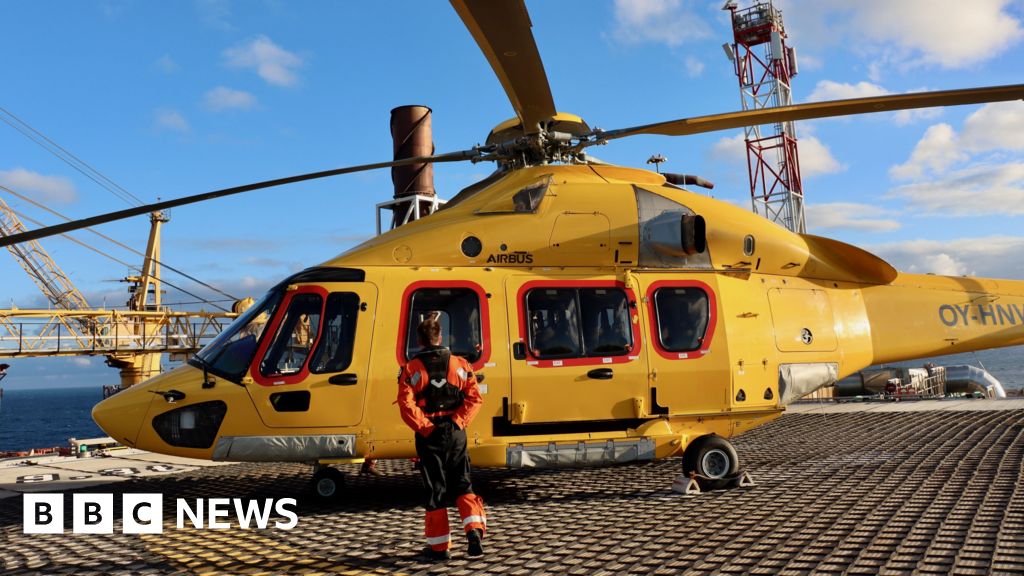
So, I got to explore the Siri platform, which is the hub for the Greensand Future project. The CEO of Ineos Energy, Mads Gade, explained to me how they’re going to inject CO2 into the ground instead of pulling oil and gas up. It’s pretty mind-blowing, if you ask me. The technology is called Carbon Capture and Storage (CCS), and it involves capturing and permanently storing carbon dioxide.
The Impact is Huge – But is it Worth it?
The numbers are impressive – Greensand Future is expected to stash away around 400,000 tonnes of CO2 this year, potentially rising to eight million tonnes annually by 2030. That’s almost 40% of the Danish emission reduction target, which is a big deal. But, I have to ask, is it worth the cost and potential risks? I mean, can’t we just focus on reducing emissions in the first place? It’s a tough question, and one that critics of CCS are quick to point out.
Critics Weigh In – Is CCS Just a Band-Aid Solution?
I spoke to Helene Hagel, head of climate and environmental policy at Greenpeace Denmark, who says that CCS might discourage efforts to cut CO2 emissions. She’s not entirely opposed to the technology, but thinks it should only be used in sectors where emissions are truly hard-to-abate or impossible-to-abate. She also makes a valid point that we could be making problems for future generations by using the seabed to store carbon. It’s a lot to consider, and I’m not sure I have all the answers.
So, What’s Next for Greensand Future and CCS?
Despite the critics, it’s clear that CCS is here to stay, at least for now. Globally, hundreds of CCS initiatives are underway or in development, and several large-scale projects are advancing in Europe. The EU says CCS is necessary to achieve the goal of ‘net zero’ emissions by 2050, so it’ll be interesting to see how it all plays out. I’m curious to know – what do you think about CCS and the Greensand Future project? Do you think it’s a step in the right direction, or just a Band-Aid solution?








