ICE’s Presence at Airports: What’s the Real Story?
As the partial government shutdown continues, thousands of federal employees from TSA to the Coast Guard are working without pay or calling out of work, causing staff shortages and hours-long security lines at airports across the country.
President Donald Trump deployed between 100 and 150 ICE agents to several airports to manage these growing, impatient crowds and alleviate wait times. However, the effects of the ongoing DHS shutdown are most palpable at airports, and the presence of armed federal agents has left many uneasy.
What is ICE Actually Doing at the Airport?
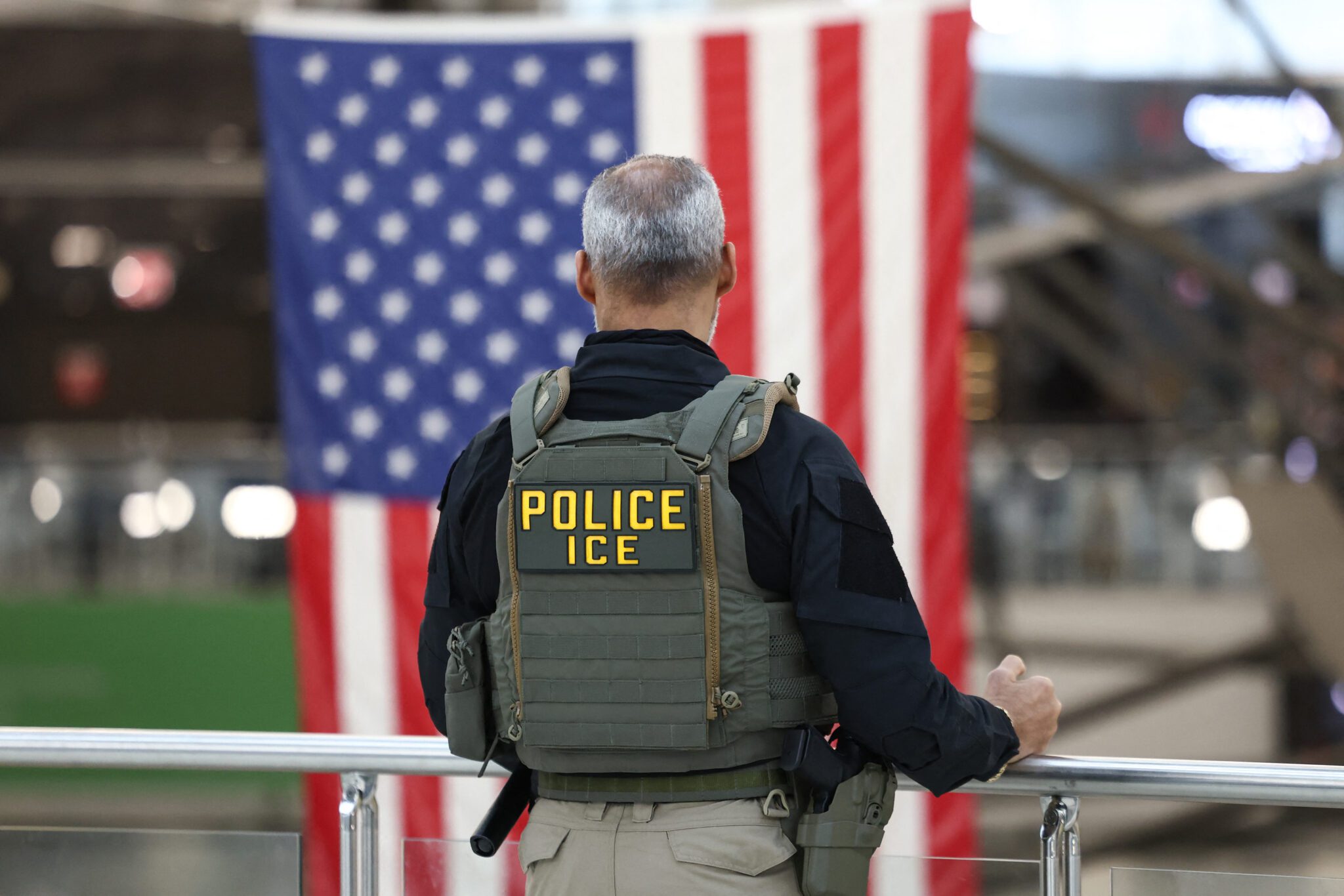
ICE is supposed to be helping TSA at American airports. However, I didn’t see that at JFK. In fact, the ICE agents I saw were standing idly in a corner, not managing the crowd or doing much of anything at all.
As I made my way to the TSA line, I saw two more agents standing idly in a corner. Despite the crowd, I had plenty of time to check out the ICE presence at JFK’s other terminals. I saw the same thing in each one: ICE agents, sometimes from ERO and sometimes from other divisions, gathered together near the check-in area.
They weren’t violently arresting anyone, but they also weren’t helping manage the crowds, which is ostensibly why they had been dispatched to JFK and other airports in the first place. I saw six ERO agents at Terminal 5 huddled around a coffee stand near the entrance. I made my way to Terminal 7, the oldest and smallest at JFK, and saw ICE before I even walked inside.
These agents were with Homeland Security Investigations, the unit typically tasked with investigating terrorism, child sexual abuse, human smuggling, and international financial crimes, which under Trump has had its resources diverted toward the president’s mass deportation effort. Like the ERO officers at the other terminals, the five HSI agents at Terminal 7 were standing in a circle and chatting.
I stood outside and peered through the large windows, trying to look inconspicuous while puffing on my matcha-flavored vape. I waited to see if something would happen. Nothing did, so I went to Terminal 8.
At Terminal 8, I saw four officers, also standing against a wall near the check-in area. Two of them broke off from the group and joined another pair of agents near bag drop. As I took the escalator down to the AirTrain, I saw a man approach them. I couldn’t hear what he said, but the conversation looked friendly enough.
A strange version of this scene repeated itself at the next terminal. The first thing you see upon entering JFK’s Terminal 1 is a large American flag. The second thing you see is an even larger photo of Kendall Jenner. And if you happened to be there at approximately 4:30PM on Monday, the third thing you’d see is a man approaching a group of six ERO agents and asking them to take a photo with his baby.
The agents beamed, seemingly thrilled at the request and not otherwise occupied. The father beamed back. The baby sat in his arms limply, as babies do.
I had seen enough. My flight was in a little over three hours; there was no reason for me to keep skulking around JFK.
The Stress at Airports
The stress at airports seems to be manifesting in silly and serious ways. The TSA line at Atlanta’s Hartsfield-Jackson was so long that one woman pulled out a violin to entertain her fellow passengers. Sunday night, an Air Canada plane hit a fire truck on the runway of New York City’s LaGuardia Airport.
Two pilots died and dozens of people, including travelers and plane staff, were injured in the crash. The accident is seemingly unrelated to the shutdown — air traffic controllers are fully funded, though the Federal Aviation Administration has been dealing with a long-running staffing crisis of its own — but for travelers, the particulars of this crisis are hard to extricate from the long lines and ICE agents they now see at the airport.
Did ICE’s presence make the TSA process smoother in some way I couldn’t detect? It’s hard to say. What’s clear, however, is that the presence of armed federal agents has left many uneasy, and the effects of the ongoing DHS shutdown are most palpable at airports.