
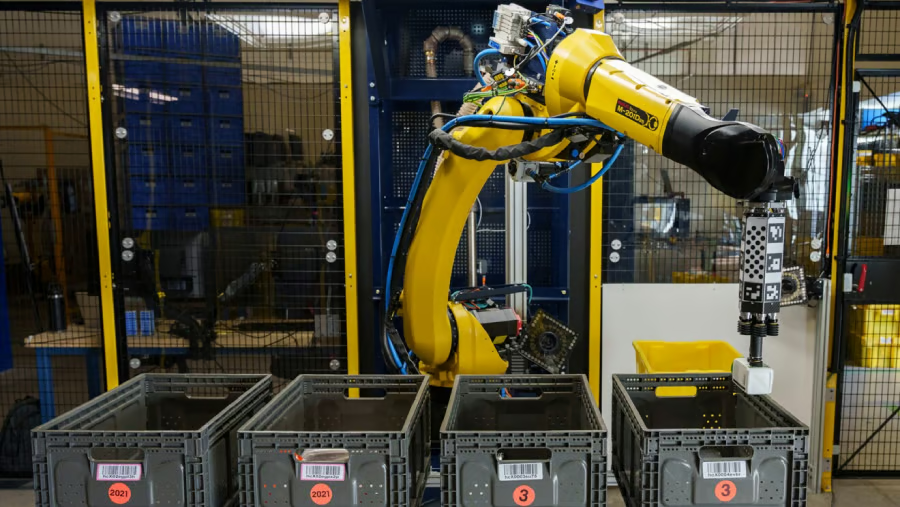
Inside Amazon’s Robotic Warehouse: Humans Still Lead the Way
Amazon’s latest $536 million robotic warehouse in Australia is a glimpse into the future of logistics. But here’s the twist: humans remain the backbone of operations. This 150,000-square-meter facility, set to handle 125 million packages annually, blends cutting-edge automation with human expertise to redefine efficiency.
How Amazon’s Robotic Warehouse Works
The warehouse uses robots to transport goods, sort packages, and manage inventory. These machines handle repetitive tasks like lifting heavy items and scanning barcodes, freeing employees to focus on complex decisions. For example, robots might move shelves to pickers, but humans oversee quality checks and resolve errors.
Key Features of the Facility
- 1,000+ Human Workers: Employees manage inventory, handle customer returns, and ensure package accuracy.
- 125 Million Packages/Year: The warehouse is designed for high-volume, fast-paced operations.
- 24/7 Automation: Robots operate continuously, reducing delays during peak seasons.
Why Humans Still Matter
Amazon’s strategy isn’t about replacing workers—it’s about enhancing their capabilities. While robots excel at speed and precision, humans bring adaptability. For instance, a robot might struggle with damaged packages or ambiguous customer requests, tasks where human judgment is critical.
Collaborative Workflows
Employees work alongside robots in a “human-in-the-loop” model. This approach ensures:
- Real-time problem-solving
- Customized customer service
- Adaptability to unexpected challenges
Efficiency Meets Scalability
Amazon’s investment highlights a growing trend: automation that scales without sacrificing quality. The warehouse’s design allows for rapid expansion, with modular systems that can be upgraded as demand grows. This flexibility is key in an industry where customer expectations evolve rapidly.
Benefits of the Hybrid Model
- Cost Savings: Robots reduce labor costs for repetitive tasks.
- Speed: Automated systems process orders faster than manual workflows.
- Accuracy: Human oversight minimizes errors in complex tasks.
The Future of Warehouse Work
Amazon’s model sets a benchmark for the industry. By combining robotics with human expertise, companies can achieve unprecedented efficiency. However, this shift requires reskilling workers to manage advanced systems. For example, employees might learn to troubleshoot robots or analyze performance data.
Challenges to Overcome
While the benefits are clear, challenges remain:
- High upfront costs for automation
- Need for continuous employee training
- Ensuring ethical use of AI in workforce planning
Conclusion: A Balanced Approach
Amazon’s robotic warehouse proves that automation and human labor can coexist. By leveraging the strengths of both, businesses can meet rising demand while maintaining quality. As technology evolves, the key will be striking the right balance between innovation and human touch.
Ready to explore how your business can adopt hybrid automation? Contact us for tailored solutions.








