Intel Laptop CPU Evolution: 18 Years of Performance Gains
From the 45nm Penryn to the cutting-edge Panther Lake, Intel’s laptop CPUs have seen staggering performance leaps. In this deep dive, we benchmark 18 years of Intel laptop processors, revealing how far performance has come—and how much power efficiency has improved.
Why This Benchmarking Matters
Modern laptops are 95x faster than their 2008 counterparts. That’s not a typo. When re-testing Intel laptops from 2008 to 2026, the performance gains are nothing short of revolutionary. With Ubuntu 26.04 as the testing ground, we see how Linux support has kept even decade-old hardware relevant.
Key Findings
- Geo Mean Performance Boost: 21.5x improvement from Penryn to Panther Lake.
- Extreme Case: Panther Lake outperforms Penryn by 95x in specific workloads.
- Power Efficiency: Modern CPUs like Lunar Lake use 17W while delivering 4.8GHz turbo speeds.
The Hardware Lineup
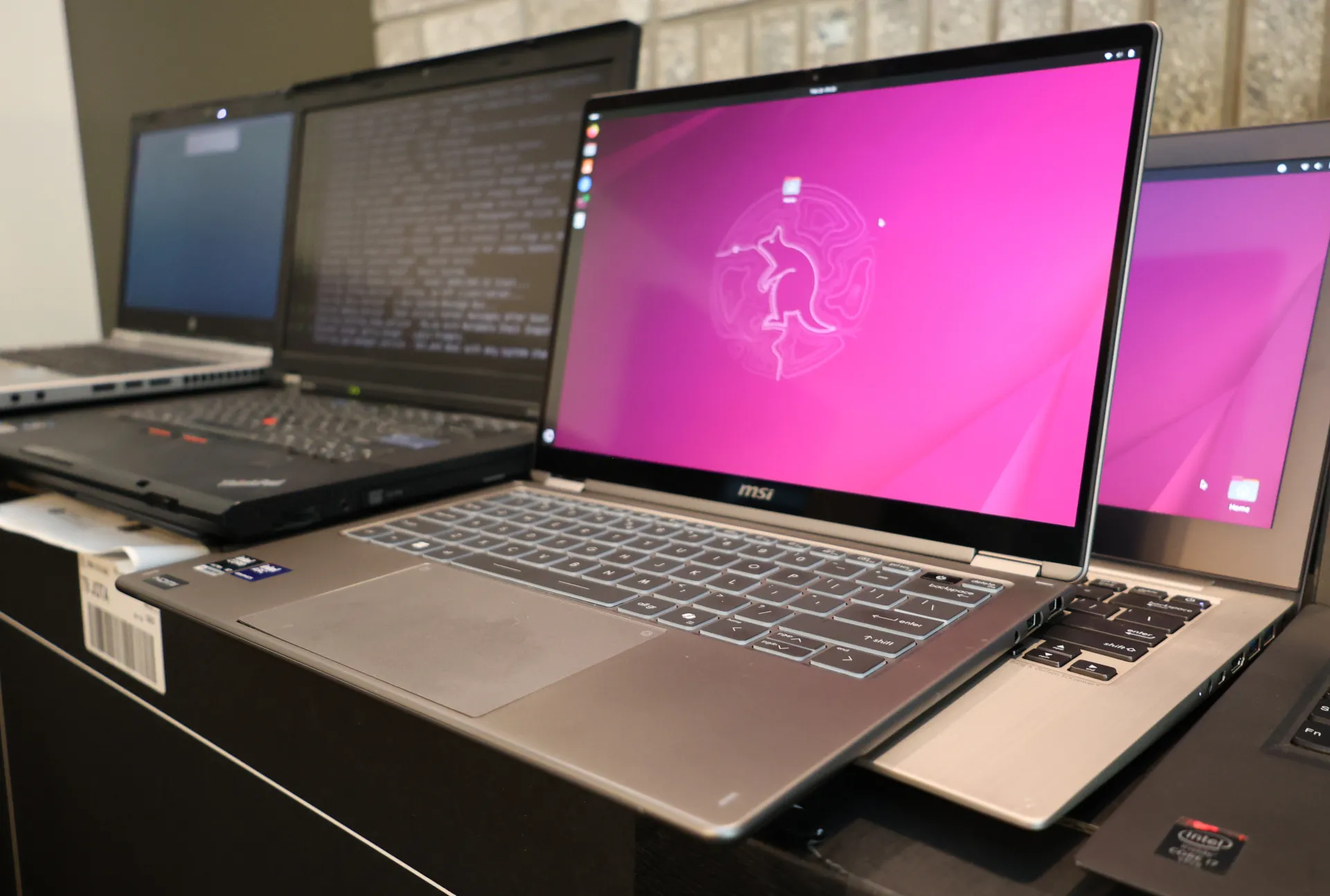
Testing spanned 14 Intel laptops, from the 2008 Core 2 Duo T9300 to the 2026 Core Ultra X7 358H. Each model represents a major architectural shift:
- Penryn (2008): 2 cores, 2.5GHz, 35W TDP.
- Haswell (2013): 2 cores, 2.8GHz, 28W TDP.
- Ice Lake (2019): 4 cores, 3.9GHz turbo, 15W TDP.
- Panther Lake (2026): 16 cores, 4.8GHz turbo, 25W TDP.
Methodology
Each laptop ran over 150 benchmarks under Ubuntu 26.04. Power consumption was measured via RAPL for Sandy Bridge and newer models, ensuring fair comparisons across generations.
Performance Per Watt: The Real Game-Changer
While raw speed is impressive, power efficiency defines modern laptops. The Core Ultra 7 256V (Lunar Lake) delivers 4.8GHz turbo at just 17W—ideal for thin-and-light designs. Meanwhile, Panther Lake’s 25W base power rating supports 32GB LPDDR5-8533 memory without thermal throttling.
Workload Breakdown
- Web Browsers: Panther Lake handles 100+ tabs effortlessly, while Penryn struggles with 10.
- Code Compilation: Alder Lake compiles Linux in 3 minutes; Penryn takes 2 hours.
- Media Encoding: Tiger Lake encodes 4K video in 12 seconds; Haswell needs 5 minutes.
Why Linux Matters for Legacy Hardware
Modern Linux drivers keep older Intel CPUs functional. The 2008 ThinkPad T61 still runs Ubuntu 26.04, proving open-source support extends hardware lifespans. Meanwhile, Windows 11 drops support for pre-2012 CPUs, making Linux the better choice for vintage laptops.
Conclusion: The Future of Laptop Performance
Intel’s roadmap shows no slowdown. With Panther Lake’s 16-core design and Lunar Lake’s hybrid architecture, laptops are becoming more powerful than ever. For developers, creators, and power users, the performance-per-dollar ratio has never been better.
Ready to upgrade? Compare Intel’s latest CPUs and find the perfect fit for your workflow.
FAQs
How much faster are modern Intel laptops compared to 2008 models?
Modern Intel laptops are up to 95x faster than the 2008 Core 2 Duo T9300 in specific workloads, with a 21.5x average improvement across 150+ benchmarks.
What’s the most power-efficient Intel laptop CPU?
The Core Ultra 7 256V (Lunar Lake) offers 4.8GHz turbo speeds at just 17W, making it ideal for thin-and-light laptops.
Can old Intel laptops run Ubuntu 26.04?
Yes! The 2008 ThinkPad T61 with Penryn still works with Ubuntu 26.04, thanks to updated open-source drivers.
Why does Panther Lake outperform previous generations?
Panther Lake’s 16-core design (4 P-cores, 8 E-cores, 4 LPE-cores) and 32GB LPDDR5-8533 memory enable massive multitasking and compute-heavy workloads.
Are Intel CPUs still relevant in 2026?
Absolutely. With 95x performance gains since 2008 and hybrid architectures like Lunar Lake, Intel remains a top choice for power efficiency and raw speed.