Invisible Data Transmission: Hiding Messages in Heat Radiation
Imagine sending messages that vanish like smoke—undetectable to even the most advanced snooping tools. Scientists have demonstrated a groundbreaking communications method that hides data in natural heat radiation, making transmissions invisible to snoopers. This innovation could redefine secure communication in fields ranging from military operations to personal privacy.
How Heat Radiation Becomes a Secret Channel
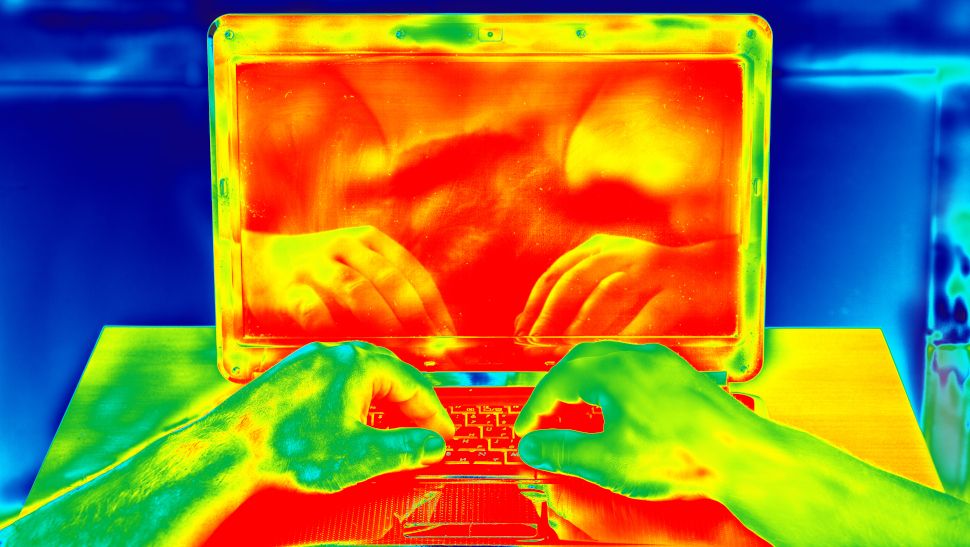
Natural heat radiation, or thermal noise, is the random motion of particles in any object with a temperature above absolute zero. Researchers have found a way to encode data within this chaotic energy, effectively using it as a covert communication channel. The method leverages the fact that thermal noise is always present but difficult to distinguish from background radiation without precise tools.
Thermal Masking: The Science Behind the Hiding
- Encoding Process: Data is embedded into the intensity fluctuations of heat radiation using quantum-level modulation techniques.
- Decoding Process: Receivers use specialized sensors to detect subtle patterns in the thermal noise, filtering out irrelevant data.
- Security Advantage: Without knowing the exact modulation pattern, even advanced eavesdroppers cannot extract the hidden information.
Applications and Implications
This communications method that hides data in natural heat radiation has far-reaching potential. For instance:
1. Military and Government Use
Secure battlefield communications could become nearly unhackable. Troops could exchange critical data without fear of interception, as the signals blend seamlessly with environmental heat.
2. Personal Privacy
Individuals might use this technology to protect sensitive conversations or financial transactions from cyber threats. Imagine a world where your phone’s heat signature becomes a secure communication channel.
3. Industrial Espionage Defense
Companies handling proprietary data could deploy this method to prevent corporate spies from intercepting trade secrets during wireless transmissions.
Challenges and Future Directions
While promising, the technology faces hurdles. Current prototypes require precise temperature control and specialized hardware, limiting scalability. Researchers are also exploring ways to increase data transfer speeds and reduce energy consumption.
Key Challenges
- Environmental Noise: Urban areas with high thermal activity may interfere with signal clarity.
- Hardware Costs: Developing affordable sensors for widespread adoption remains a priority.
- Regulatory Hurdles: Governments may need to establish new standards for thermal-based communication.
Why This Matters for the Future of Tech
The communications method that hides data in natural heat radiation represents a shift in how we think about security. By using the environment itself as a transmission medium, it turns the very fabric of nature into a shield against digital threats. As quantum computing and AI-driven hacking evolve, such innovations will become essential for maintaining privacy.
Ready to stay ahead of the curve? Explore more about cutting-edge communication technologies and their impact on your digital life. Share your thoughts in the comments—how do you envision this technology shaping the future?