
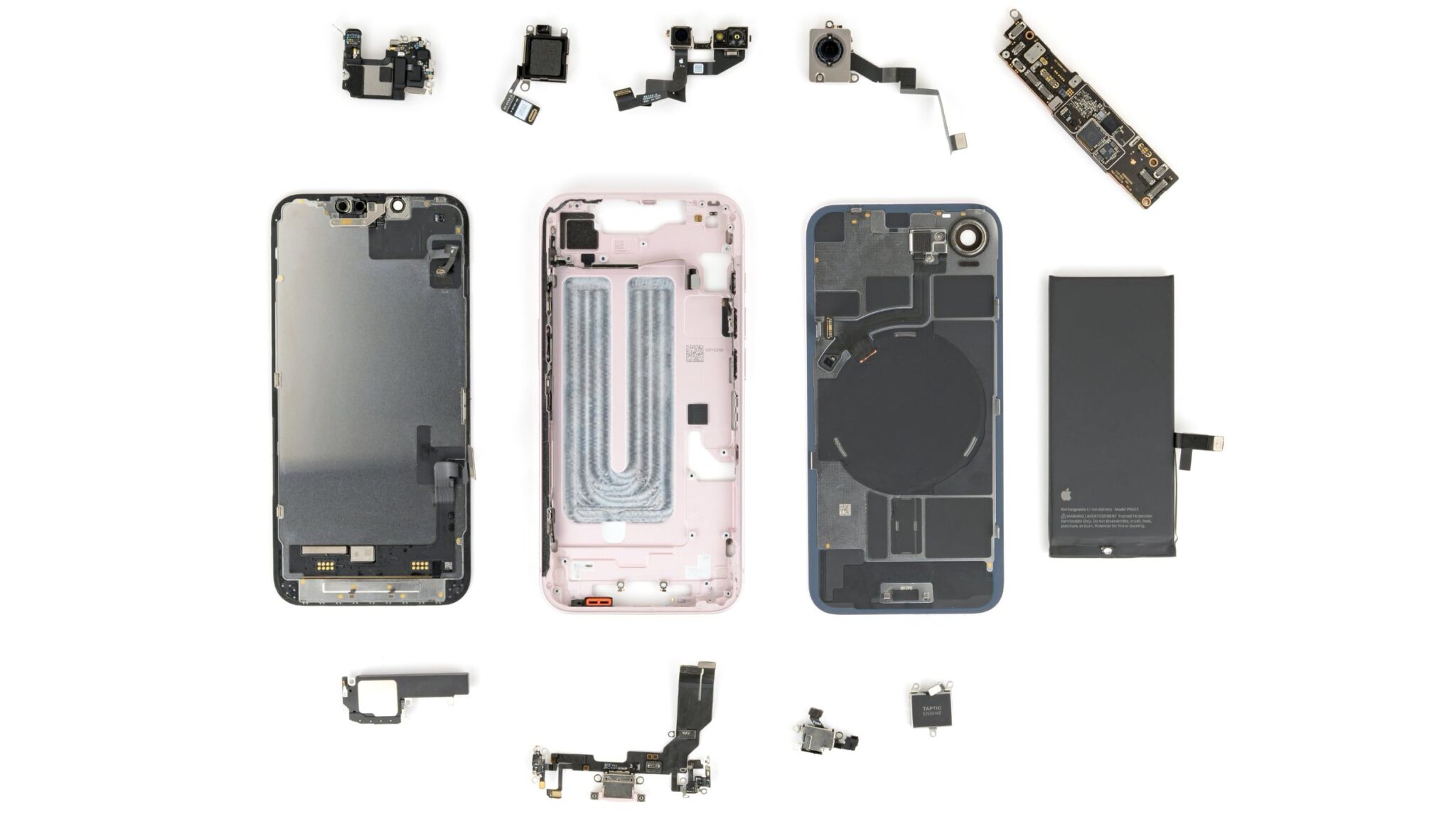
iPhone 17e Teardown: A Closer Look
The iPhone 17e, Apple’s latest low-cost iPhone, has been taken apart by iFixit, revealing a MagSafe back panel that supports MagSafe and faster Qi charging. Meanwhile, the device’s design is almost identical to the iPhone 16e. However, the MagSafe panel is interchangeable with the iPhone 16e, making it possible to add MagSafe to the older model.
MagSafe Upgrade Path for iPhone 16e Owners
For example, iPhone 16e owners can upgrade to MagSafe by swapping the back panel with one from an iPhone 17e. Additionally, this discovery is good news for users who don’t want to upgrade their entire device just to get MagSafe. Therefore, iPhone 16e customers may be able to get their hands on an iPhone 17e back panel to make the swap.
However, there is a downside to the MagSafe swap: the iPhone 16e doesn’t have the built-in software to recognize MagSafe accessories and provide animations. Furthermore, it’s not yet clear if it charges at the full 15W. Meanwhile, iFixit says this cross-compatibility is a big win for repairability.
iPhone 17e Repairability
Apple made day one manuals available for the iPhone 17e, which helped iFixit with the teardown. The front and back panels can be removed, and the battery can be swapped without having to go through the display. However, there is still adhesive to deal with. The iPhone 17e continues to use adhesive for the battery that can be removed with an electrical pulse, making battery replacements simpler.
Additionally, iFixit found that almost all components inside the iPhone 17e and iPhone 16e are interchangeable. For instance, it’s possible to take an iPhone 16e logic board and put it into an iPhone 17e chassis with almost no issues registering parts. However, the TrueDepth camera for Face ID didn’t work when swapped from iPhone to iPhone.
Components and Repairability
Meanwhile, iFixit was happy with the dual entry design and the battery adhesive that releases electrically. However, the site found the USB-C port was too buried behind components, which will make DIY repairs daunting for people. Apple fixed the USB-C accessibility issue in its main flagship models but has not made the port easier to get to in the ‘e’ models.
Despite these issues, iFixit awarded points for the parts interchangeability because there’s more salvage value and more refurbishment potential. Therefore, iFixit gave the iPhone 17e a provisional repairability score of 7 out of 10, the same score as the iPhone 16e and iPhone 17.
Finally, the iPhone 17e teardown reveals a device with improved repairability and upgrade options. However, there are still some challenges to overcome, such as the buried USB-C port. Meanwhile, the MagSafe upgrade path for iPhone 16e owners is a significant discovery that could extend the life of the older model.








