Lenovo’s Modular AI PC Concept: Redefining Laptop Flexibility with Magic Bay Tech
Imagine a laptop that adapts to your workflow like a chameleon. Lenovo’s Modular AI PC concept, unveiled at Mobile World Congress 2026, does exactly that. By combining a selectively modular design with its innovative Magic Bay system, the device lets users reconfigure screens, keyboards, and ports on the fly. This isn’t just another laptop—it’s a glimpse into the future of customizable computing.
How the Magic Bay System Works
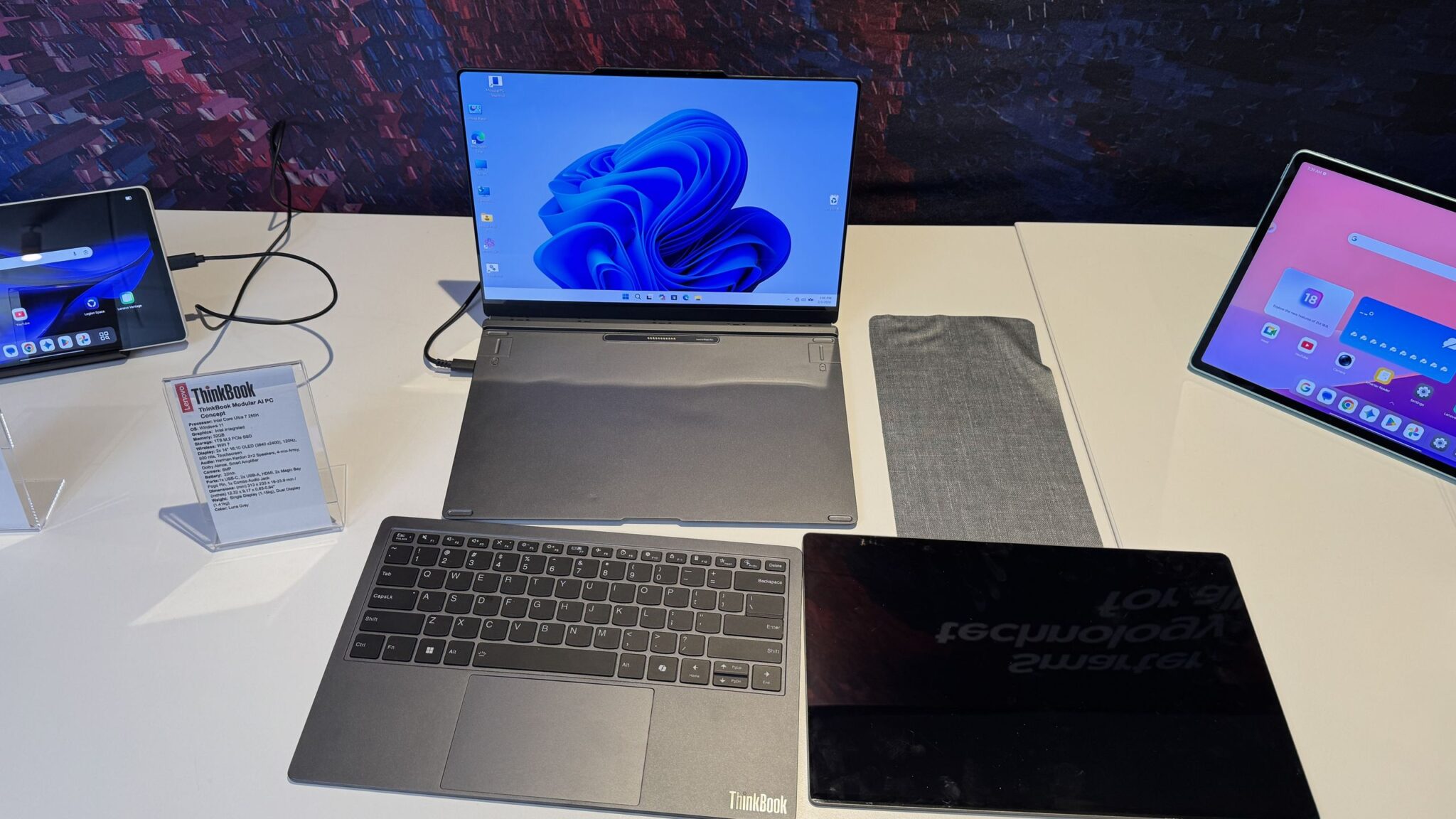
At the heart of Lenovo’s concept is the Magic Bay—a pogo-pin connector system that allows seamless attachment of modular components. The base unit features a primary display and a metal chassis, while the deck and back of the screen support interchangeable accessories. Users can attach a second screen for multitasking, swap in a keyboard for typing, or connect ports like USB-C, USB-A, or HDMI as needed.
This flexibility mirrors Framework’s modular laptops but focuses on external components rather than internal hardware. For example, you can transform the device into a dual-screen workstation for coding or switch to a lightweight setup for travel. The Magic Bay’s design even allows the second screen to function as a portable monitor with a kickstand—ideal for presentations or on-the-go work.
Key Modular Components and Use Cases
1. Detachable Screens
- Dual-Screen Mode: Attach the second screen to the keyboard deck for a productivity boost.
- Lid Display Mode: Place the screen on the lid for presentations or closed-lid use (though the prototype felt top-heavy).
- Portable Monitor: Use the second screen with a USB-C cable and kickstand for standalone display needs.
2. Swappable Ports
Lenovo’s modular ports let users choose between USB-C, USB-A, and HDMI. Unlike Framework’s adapter-based approach, these modules connect directly to the motherboard. The concept unit also includes a fixed USB-C port and 3.5mm headphone jack for essential connectivity.
3. Keyboard Flexibility
The detachable keyboard offers surprising versatility. While it fits on the base unit, attaching it to the lid proved impractical during testing—Lenovo acknowledges this limitation. However, the modular design still allows users to prioritize portability when needed.
Pros and Cons of the Modular AI PC
Pros:
- Adaptable for different workflows (dual-screen, travel, presentations).
- Compact base unit with a 32GB RAM and 1TB SSD for high performance.
- Future-proof design with upgradable external components.
Cons:
- Battery life concerns: The 33 WHr battery is smaller than typical ultrabooks.
- Current prototype’s flimsy magnetic stand needs refinement.
- Complexity may overwhelm casual users.
Why This Concept Matters
Lenovo’s Modular AI PC addresses a growing demand for hybrid work tools. By letting users switch between configurations daily, it bridges the gap between laptops, desktops, and portable monitors. While the concept remains theoretical (no price or release date yet), it highlights a shift toward user-centric hardware design.
For professionals who juggle tasks like video editing, coding, or remote work, this device could eliminate the need for multiple gadgets. The Magic Bay system also hints at a future where laptops evolve with user needs rather than becoming obsolete.
Final Thoughts and Call to Action
Lenovo’s Modular AI PC isn’t just a tech demo—it’s a bold vision for adaptable computing. While challenges like battery life and accessory durability remain, the concept proves that modularity can extend beyond hardware upgrades to reshape how we interact with devices.
Ready to explore the future of laptops? Stay tuned for updates on Lenovo’s Modular AI PC and similar innovations. Share your thoughts in the comments below—what modular features would you want in your next laptop?
FAQs
1. What is Lenovo’s Modular AI PC concept?
Lenovo’s Modular AI PC is a selectively modular laptop that lets users attach and detach screens, keyboards, and ports via its Magic Bay system. It adapts to different workflows, from dual-screen productivity to lightweight travel setups.
2. How does the Magic Bay system work?
The Magic Bay uses pogo-pin connectors to attach modular components like second screens, keyboards, and ports. This allows users to customize their device without tools or technical expertise.
3. Can the second screen function independently?
Yes, the second screen can connect to a laptop via USB-C or use a magnetic kickstand as a standalone portable monitor. However, the prototype’s stand requires sturdier design improvements.
4. What are the limitations of the Modular AI PC?
Current limitations include a smaller battery than typical ultrabooks, a flimsy magnetic stand, and the keyboard’s inability to function on the lid. Lenovo will need to refine these aspects before a commercial release.
5. When will the Modular AI PC be available?
Lenovo has not announced a release date or price for the Modular AI PC. The concept remains in the prototype stage, with potential for design and feature updates before launch.