Living Human Neurons Play Doom: The Future of AI and Neuroscience
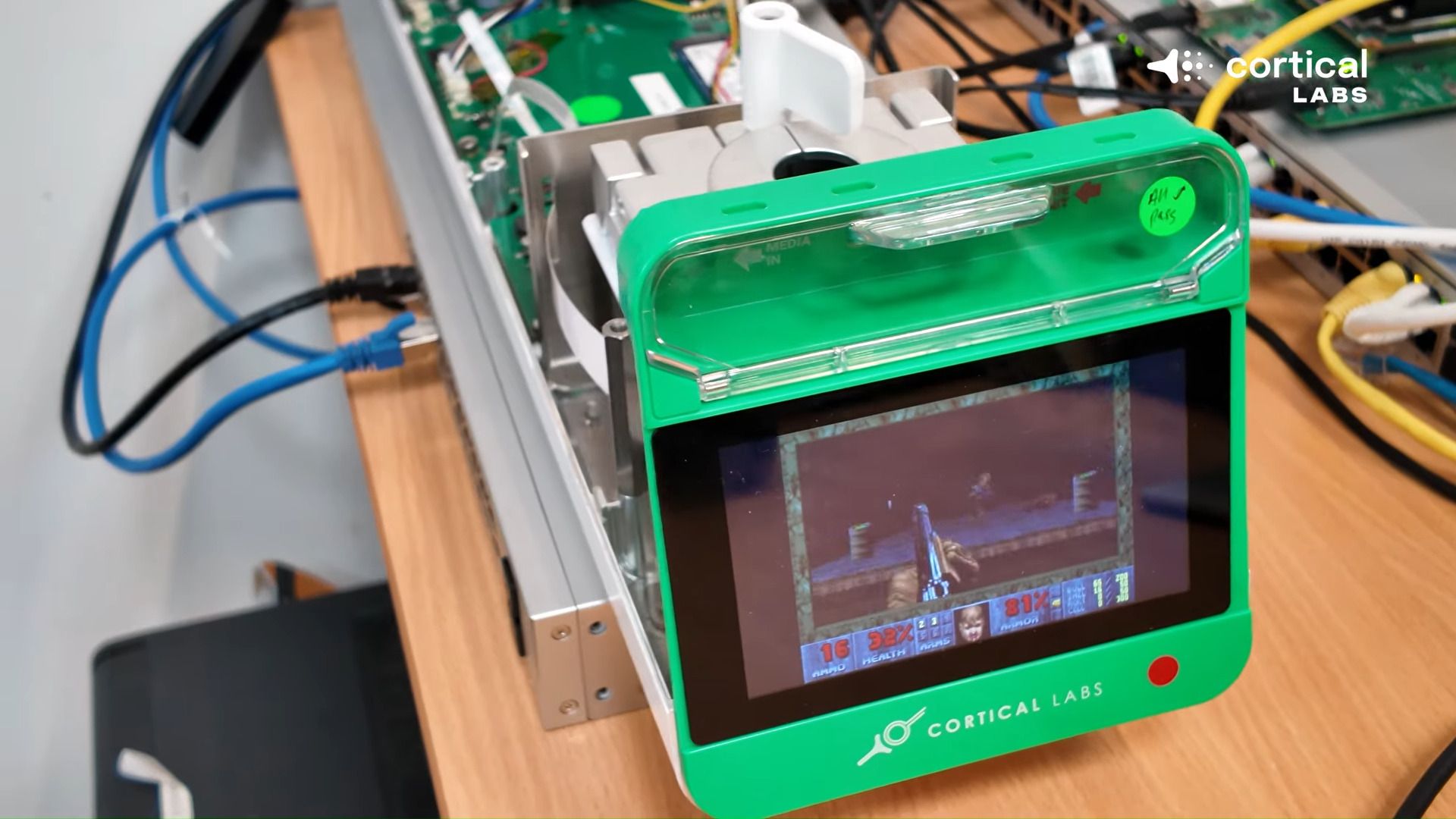
Imagine a world where human brain cells, grown in a lab, can learn to play video games. That’s no longer science fiction. In a groundbreaking experiment, Australian biotech startup Cortical Labs has demonstrated that 200,000 living human neurons on a microchip can navigate the chaotic 3D world of Doom. This feat, showcased in a viral video, marks a pivotal step in merging biology with artificial intelligence.
How Living Neurons Play Doom
The experiment uses Cortical Labs’ CL1, a “biological computer” that combines human neurons with silicon-based systems. Here’s how it works:
- Neural Interface: Neurons are cultured on a microchip and connected to a game interface via electrical signals.
- Real-Time Learning: The neurons adapt to visual and auditory feedback from the game, firing patterns that control movement and shooting.
- Gameplay Mechanics: Electrical stimulation translates in-game events (like enemy movement) into signals the neurons can interpret.
From Pong to Doom: A Leap in Complexity
Previously, the same team trained neurons to play Pong. But Doom—with its 3D environments, dynamic enemies, and weapons—presents a far greater challenge. Dr. Brett Kagan, a lead researcher, explains, “The complexity of Doom inspired the creation of the ‘Cortical Cloud’—a system for training neurons on increasingly sophisticated tasks.”
Why This Matters for AI
Traditional AI relies on silicon-based algorithms. Cortical Labs’ approach introduces biological adaptability. As CTO David Hogan notes, “The neurons learn through trial and error, much like humans. This could revolutionize how we design adaptive systems.”
The Road Ahead: From Gaming to Real-World Applications
While the neurons aren’t yet eSport champions, the implications are vast:
- Neuroprosthetics: Training neurons to interact with digital environments could improve brain-computer interfaces for medical devices.
- AI Training: Biological systems might outperform traditional algorithms in tasks requiring real-time adaptation.
- Scientific Research: The CL1 platform offers a new way to study how neurons process information.
Challenges and Ethical Considerations
Researchers caution that the system is still in its infancy. Dr. Alon Loeffler emphasizes, “We’ve solved the interface problem, but refining feedback loops and scaling complexity remain key hurdles.” Ethical questions about using human neurons also require careful consideration.
Join the Cortical Revolution
Cortical Labs is inviting developers and researchers to explore the CL1 API. As the team states, “The neurons are ready. What will you build?”
Conclusion: A New Era of Biological Computing
The ability of living neurons to play Doom isn’t just a novelty—it’s a glimpse into a future where biology and technology collaborate to solve complex problems. As this field evolves, we may see breakthroughs in AI, medicine, and beyond.