MOF Water Harvester: 1,000 Liters a Day from Desert Air
Water scarcity affects millions globally, but a breakthrough by 2025 Nobel laureate Professor Omar Yaghi could change the game. His company, Atoco, has developed a desert water harvester capable of extracting 1,000 liters of clean water daily from arid air with as little as 20% humidity. This off-grid innovation, powered by Metal-Organic Frameworks (MOFs), promises to revolutionize water access in drought-prone regions.
How MOFs Work
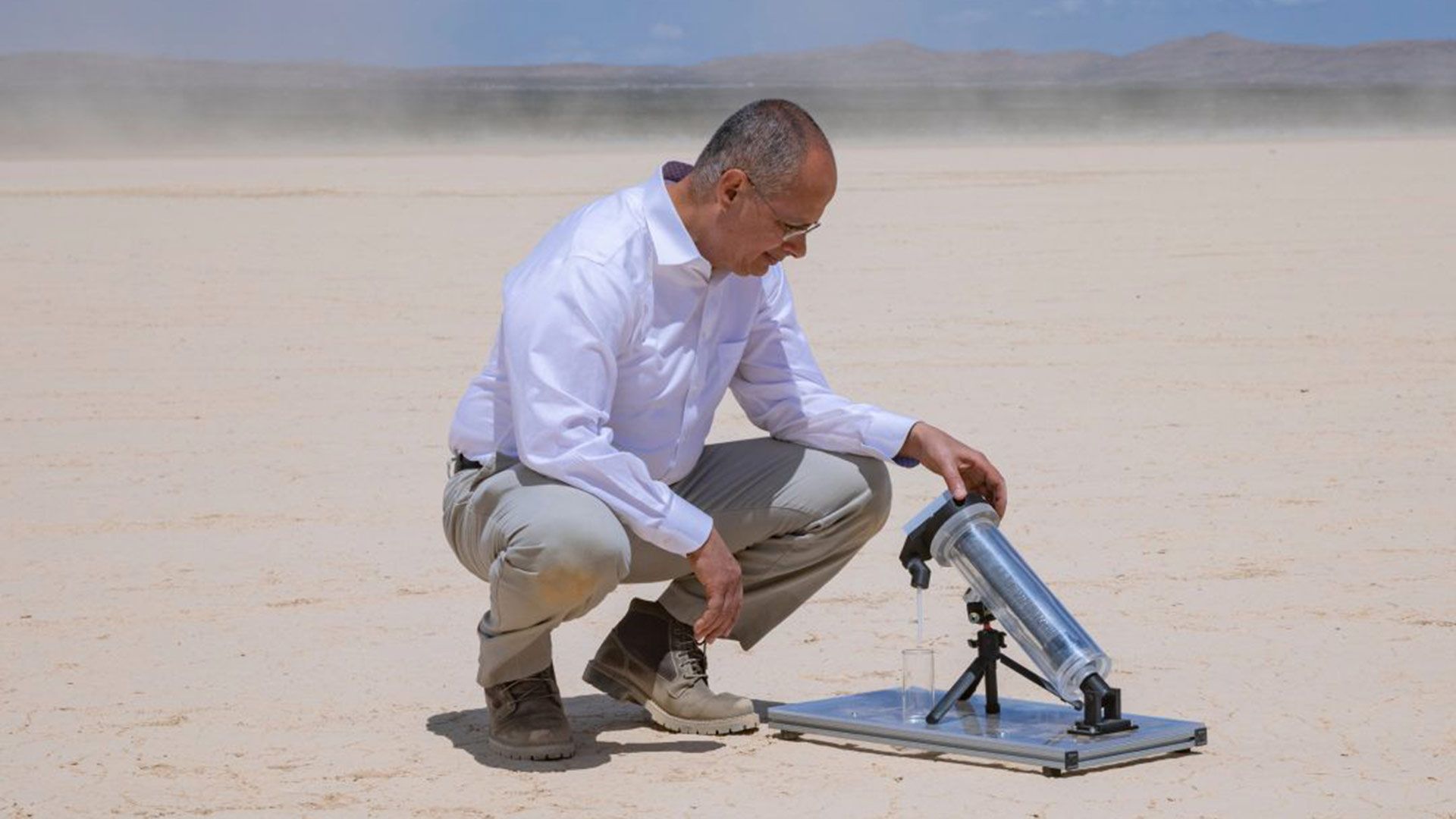
At the heart of this technology are Metal-Organic Frameworks (MOFs), synthetic materials with an enormous surface area. A single gram of MOF can have the surface area of a football field, enabling it to capture moisture from even the driest air. The device uses wind for airflow and solar energy to condense water vapor, eliminating the need for external power sources.
Key Features
- Humidity Tolerance: Functions in air with 20% humidity or lower.
- Off-Grid Operation: No electricity required—powered by wind and sunlight.
- Scalability: Ranges from compact prototypes to shipping-container-sized units.
Real-World Applications
Atoco envisions this technology addressing water shortages in disaster zones, remote communities, and arid regions like Death Valley. The system’s “personalized water” model mirrors solar energy adoption, allowing households to generate their own supply. Field tests in extreme environments have already validated its effectiveness.
Impact on Global Water Crises
With the UN warning of impending water shortages, Yaghi’s invention could alleviate pressure on vulnerable populations. The device’s ability to operate independently makes it ideal for areas without infrastructure, offering a lifeline during droughts or humanitarian crises.
Future of Water Harvesting
While the 1,000-liter machines are large-scale solutions, Atoco is also developing smaller versions for individual use. The technology’s potential extends beyond water access—MOFs could also advance air purification and carbon capture.
Challenges Ahead
- Cost: Initial production costs may limit early adoption.
- Deployment: Requires partnerships for large-scale distribution.
- Research: Ongoing optimization of MOF efficiency.
Conclusion
The MOF water harvester represents a leap forward in sustainable innovation. By transforming desert air into clean water, it addresses one of humanity’s most urgent challenges. Stay tuned for updates on this Nobel-winning technology—and consider how it might shape the future of resource management.
FAQs
1. How does the MOF water harvester work in low-humidity environments?
MOFs have an ultra-high surface area that captures moisture even when humidity is as low as 20%. Solar energy then condenses the vapor into liquid water.
2. Can this technology replace traditional water sources?
While not a complete replacement, it serves as a critical supplement in regions with unreliable access to clean water.
3. What are the dimensions of the 1,000-liter machine?
The full-scale unit is approximately 20 feet long, comparable to a shipping container.
4. Is the MOF water harvester energy-efficient?
Yes—it uses wind and solar power, making it entirely off-grid and sustainable.
5. How soon will this technology be available?
Atoco is in the commercialization phase, with plans for pilot deployments in 2026.