
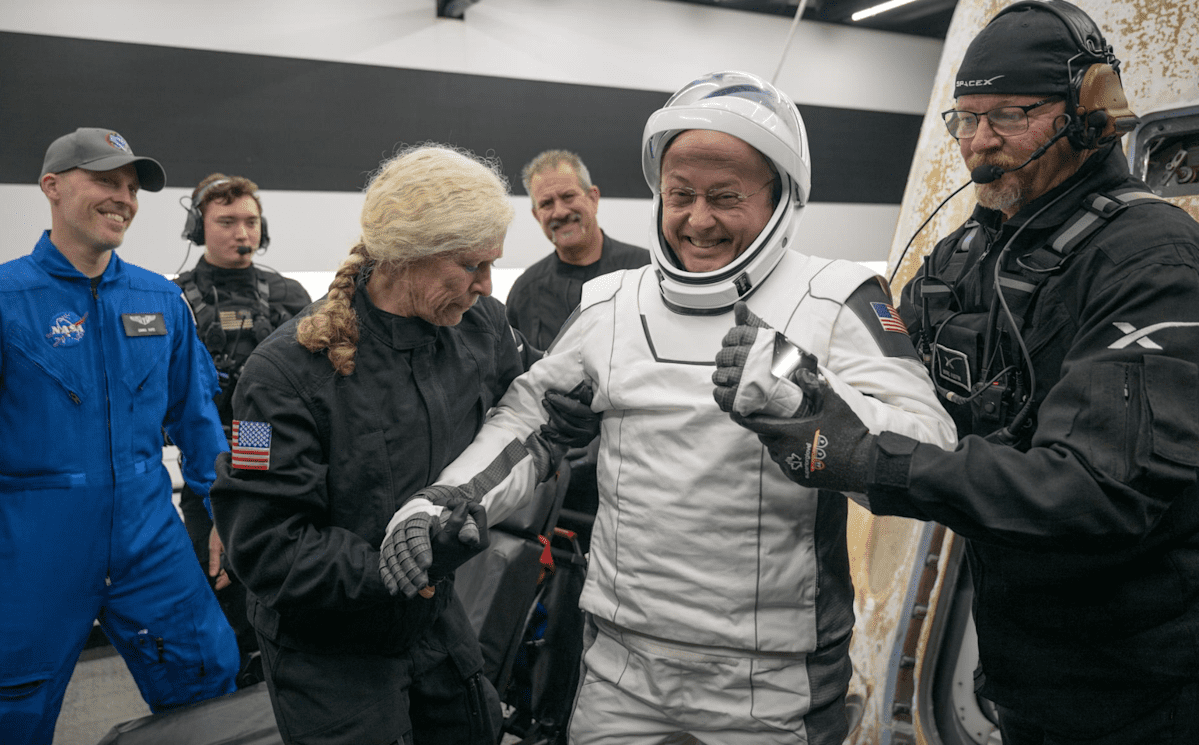
NASA Ends Mission Early Due to Astronaut’s Medical Issue
Space exploration is inherently risky, but even the most advanced agencies like NASA face unexpected challenges. In a rare and historic move, NASA recently terminated its Crew-11 mission to the International Space Station (ISS) a month early due to a medical emergency involving astronaut Mike Fincke. This incident marks the first medical evacuation in ISS history and raises important questions about spaceflight safety protocols.
The Medical Incident That Changed Everything
On January 7, 2026, Mike Fincke experienced a medical event that required immediate attention from his crewmates aboard the ISS. According to NASA, the situation stabilized quickly thanks to the rapid response of the team and guidance from flight surgeons. However, the incident forced NASA to cancel a scheduled spacewalk on January 8 and ultimately end the mission three months ahead of schedule.
The Crew-11 team—comprising Fincke, NASA astronaut Zena Cardman, Japanese astronaut Kimiya Yui, and Russian cosmonaut Oleg Platonov—had been stationed at the ISS since August 2025. Their original mission duration was six months, with an expected return in February 2026. Instead, the crew returned to Earth on January 15, 2026, after a decision by NASA’s chief health and medical officer.
What We Know About the Evacuation
- Medical Details: NASA has not disclosed the specific nature of Fincke’s condition, citing privacy concerns.
- Response Protocol: The crew followed established emergency procedures, with flight surgeons providing real-time guidance from Mission Control.
- Impact on Operations: The canceled spacewalk delayed several critical experiments, though NASA confirmed no long-term mission damage.
Fincke’s Recovery and Public Statement
Mike Fincke, a veteran astronaut with over 300 days in space, has since returned to NASA’s Johnson Space Center in Houston for post-flight reconditioning. In a public statement, he described the incident as a humbling reminder of the human element in space exploration: “Spaceflight is an incredible privilege, and sometimes it reminds us just how human we are. Thank you for all your support.”
Replacing the Crew: The Accelerated Launch of Crew-12
To maintain continuous human presence on the ISS, NASA expedited the launch of Crew-12. This new team docked at the space station on February 14, 2026, and is scheduled to remain for approximately eight months. The accelerated timeline highlights NASA’s commitment to operational continuity despite unforeseen challenges.
Key Takeaways for Space Agencies
- Medical Preparedness: The incident underscores the need for robust in-orbit medical protocols.
- Team Training: Crew members must be trained for a wide range of emergencies, including medical crises.
- Public Communication: Balancing transparency with privacy remains a challenge in high-profile missions.
What This Means for Future Missions
While this event is unprecedented in ISS history, it provides valuable lessons for future deep-space missions. As NASA prepares for lunar and Martian expeditions, medical contingency planning will become even more critical. The agency has already announced plans to review and enhance its in-orbit health protocols following this incident.
FAQs About the NASA Mission Termination
1. Why was Mike Fincke’s medical issue classified?
NASA cited privacy concerns and the sensitive nature of medical information as reasons for not disclosing specific details about Fincke’s condition.
2. How common are medical emergencies in space?
While rare, medical issues have occurred in spaceflight history. This is the first such event requiring an early ISS mission termination.
3. What happens next for the Crew-11 team?
The crew is undergoing standard post-flight evaluations. Fincke is currently participating in reconditioning programs at NASA’s Johnson Space Center.
4. Will this affect future ISS operations?
NASA has confirmed that the ISS will continue normal operations with the new Crew-12 team. No long-term disruptions are expected.
5. How does NASA prepare for medical emergencies in space?
Astronauts receive extensive medical training. The ISS is equipped with advanced diagnostic tools and emergency medical kits for in-orbit care.
Conclusion: A Reminder of Spaceflight’s Human Element
The early return of Crew-11 serves as a powerful reminder that even in the most advanced space missions, human factors remain unpredictable. While the incident was undoubtedly stressful for all involved, it also demonstrated the effectiveness of NASA’s emergency response protocols. As we push further into space, such events will likely become more common, making robust medical preparedness essential for the future of human space exploration.
Share your thoughts: How do you think space agencies should balance mission continuity with crew safety in deep-space exploration? Let us know in the comments below.








