
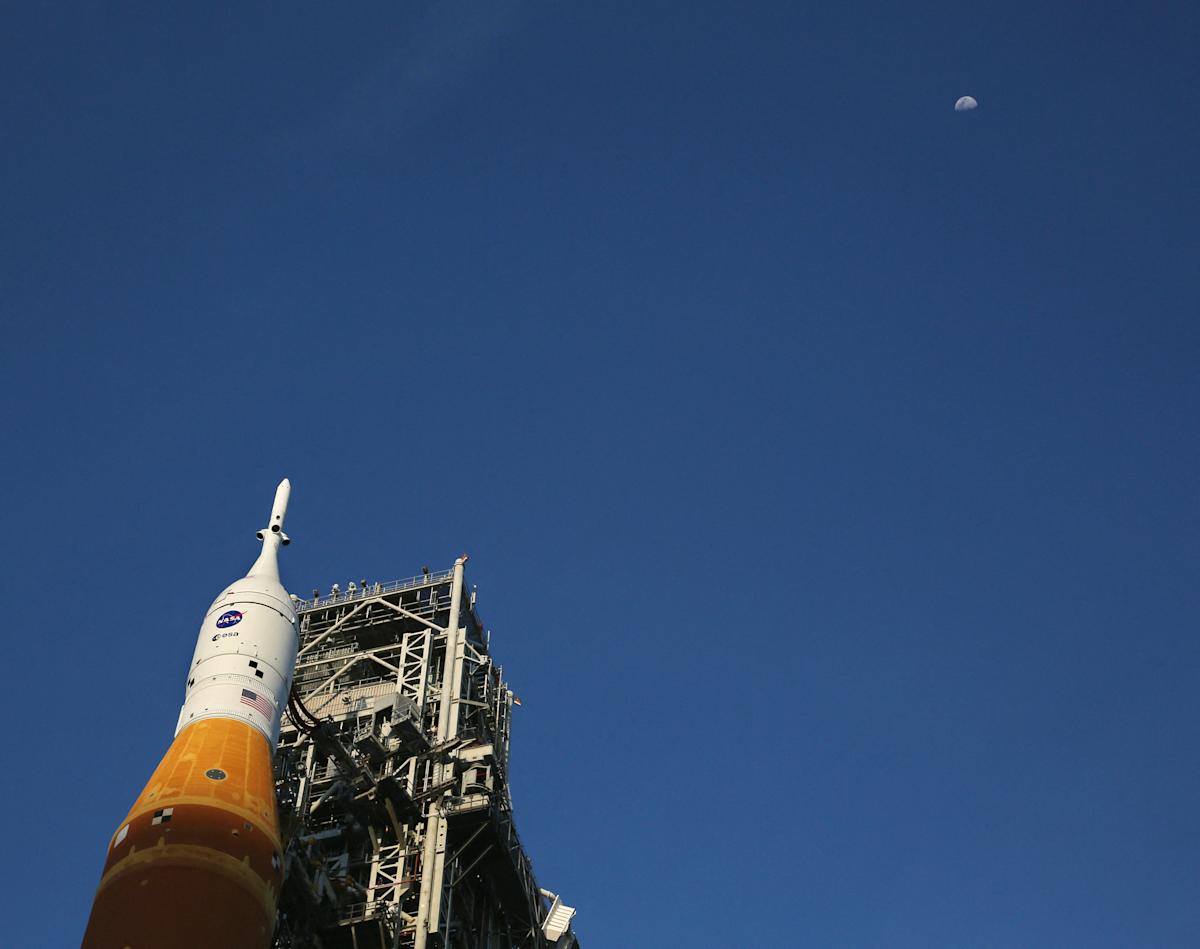
NASA’s Artemis Program Undergoes Significant Changes
NASA has announced major changes to its Artemis Moon program, delaying the planned Moon landing to 2028. The new plan includes an additional flight in 2027 to test commercial lunar landers from SpaceX and/or Blue Origin. This decision comes after NASA’s Aerospace Safety Advisory Plan deemed the existing mission plan too risky.
Artemis 3 Mission Redesign
The redesigned Artemis 3 mission will test at least one lander in low Earth orbit, providing a safer environment for the agency to assess the landers’ capabilities. Meanwhile, NASA will attempt to return humans to the Moon during Artemis 4 in 2028. Additionally, the agency plans to test a new spacesuit made by Axiom Space.
However, the change of plan also comes as Artemis 2 has faced multiple delays in recent months. The Space Launch System (SLS) heavy-lift rocket has proven to be temperamental, with issues such as hydrogen leaks and helium pressurization problems. Therefore, NASA has delayed the mission to give its engineers time to fix these issues.
Reasons Behind the Delay
According to NASA Administrator Jared Isaacman, the agency must standardize its approach, increase flight rate safely, and execute on the President’s national space policy. Furthermore, Isaacman emphasized the need to move faster, eliminate delays, and achieve objectives in a logical, phased approach. For example, the agency’s success in 1969 was achieved through standardizing vehicle configuration, increasing flight rate, and progressing through objectives in a phased approach.
Meanwhile, the decision to delay the Moon landing has significant implications for the space agency’s plans. NASA will now focus on testing commercial lunar landers and developing a new spacesuit. Additionally, the agency will prioritize standardizing its approach and increasing flight rate safely.
What’s Next for Artemis?
As NASA moves forward with its revised plan, the agency will prioritize testing commercial lunar landers and developing a new spacesuit. The Artemis 4 mission, scheduled for 2028, will attempt to return humans to the Moon. However, the success of this mission depends on the agency’s ability to standardize its approach and increase flight rate safely.
Finally, the delay of the Moon landing highlights the challenges and complexities involved in space exploration. Nevertheless, NASA remains committed to its mission to return humans to the Moon and eventually send humans to Mars. The agency’s revised plan demonstrates its dedication to safety, standardization, and achieving its objectives in a logical, phased approach.
Frequently Asked Questions
- What is the new target date for the Moon landing? The new target date for the Moon landing is 2028.
- Why did NASA delay the Moon landing? NASA delayed the Moon landing due to concerns about the existing mission plan being too risky.
- What is the purpose of the additional flight in 2027? The additional flight in 2027 will test commercial lunar landers from SpaceX and/or Blue Origin.
- What is the significance of the Artemis 3 mission redesign? The redesigned Artemis 3 mission will test at least one lander in low Earth orbit, providing a safer environment for the agency to assess the landers’ capabilities.
- How will NASA’s revised plan impact its overall mission to return humans to the Moon? NASA’s revised plan prioritizes safety, standardization, and increasing flight rate safely, which will ultimately impact the agency’s ability to achieve its objectives.








