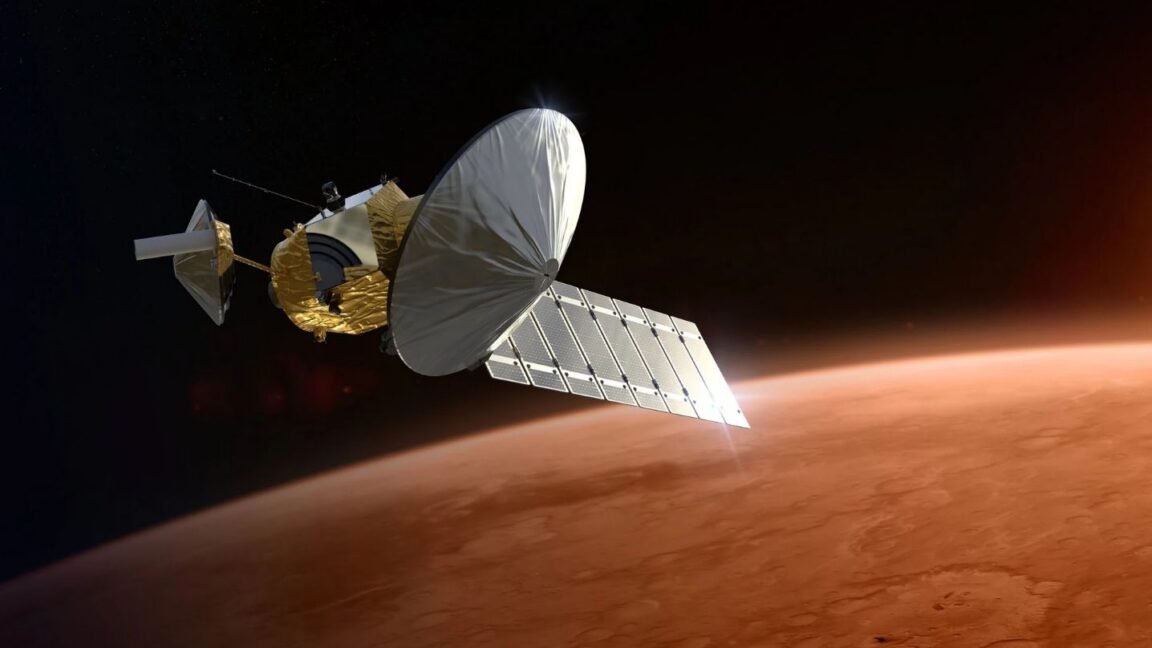
NASA’s Mars Telecommunications Network: What You Need to Know
NASA is preparing to launch a groundbreaking mission to Mars, but the details remain shrouded in secrecy. The agency has issued a pre-solicitation for the Mars Telecommunications Network (MTN), a spacecraft designed to relay communications between Mars and Earth. However, the lack of publicly shared objectives and the debate over scientific priorities have sparked controversy among experts and industry stakeholders.
The Mars Telecommunications Network: A New Era
Mission Objectives
The MTN, formerly known as the Mars Telecommunications Orbiter, aims to provide critical communication and navigation services for Mars missions through 2035. Key goals include:
- Relay data between Mars assets, the surface, and Earth
- Support positioning, navigation, and timing for future missions
- Enhance communication with existing Mars missions
- Facilitate Entry, Descent, and Landing demonstrations
Why This Matters
The MTN is the only major NASA Mars mission scheduled for the Trump administration’s term and could be the agency’s sole large-scale Mars project for the decade. Its success will shape future exploration, including potential sample return missions and human landings.
Science vs. Communication: The Debate
The Case for Scientific Instruments
Scientists argue the MTN could carry scientific payloads like high-resolution cameras, magnetometers, or spectrometers. These instruments could study Mars’ magnetic field, space weather, and subsurface ice. With a $700 million budget, adding three instruments for $200 million is feasible.
NASA’s Stance on Science Payloads
However, the non-public objectives document states that science payloads are “not precluded” but emphasizes schedule risk as a priority. This language suggests NASA will prioritize on-time delivery over scientific additions, despite pressure from the science community.
Rocket Lab’s Role and Controversy
Competition Heats Up
Rocket Lab, Blue Origin, SpaceX, and traditional contractors like Lockheed Martin are vying for the MTN contract. Rocket Lab recently received a $390,936 NASA contract to study communication architectures—a move critics call a conflict of interest, as the same Goddard Space Flight Center manages the MTN solicitation.
Protests and Timelines
With a 2028 launch deadline, delays from industry protests could derail the mission. The tight timeline leaves little room for error, raising concerns about whether NASA can balance speed, cost, and scientific value.
What’s Next for NASA’s Mars Mission?
The final Request for Proposals will determine the MTN’s future. While the focus remains on communication infrastructure, the debate over science payloads highlights a broader tension in space exploration: balancing practical needs with scientific ambition.