
Introduction
How does a company scale from a niche DVD rental service to a global streaming giant with 230 million subscribers? Netflix’s journey offers a masterclass in adaptive architecture. At QCon London 2026, principal engineer Kasia Trapszo revealed the pragmatic evolution of Netflix’s commerce systems—from real-time credit card billing to handling live event surges in 130+ countries.
The Early Days: Simple Assumptions
In 2000, Netflix’s commerce model was straightforward: customers paid with credit cards, received DVDs by mail, and access was tied to successful payments. This worked well for a US-centric business but became a bottleneck as the company expanded globally.
Key Assumptions That Broke
- Real-time payment authorization was sufficient
- Single-account billing models
- Geographic billing zones aligned with payment realities
Brazil’s Debit Card Challenge
Brazil’s reliance on offline debit cards forced Netflix to adopt asynchronous payment validation. Instead of immediate access, the system now handles provisional entitlements with grace periods and delayed fraud detection. This shift required:
- Validation windows for delayed payment confirmation
- Behavioral fraud detection over time
- Provisional access models
Global Launch: The 130-Country Gamble
In 2016, Netflix launched in 130 countries simultaneously using simplified billing zones. This approach revealed critical mismatches—like St. Pierre and Miquelon being incorrectly treated as Canadian territory. The team prioritized rapid launch over perfect localization, iterating based on real-world data.
Lessons Learned
- Launch quickly, then optimize
- Use production data to guide localization
- Balance speed with regional accuracy
India’s Regulatory Shift
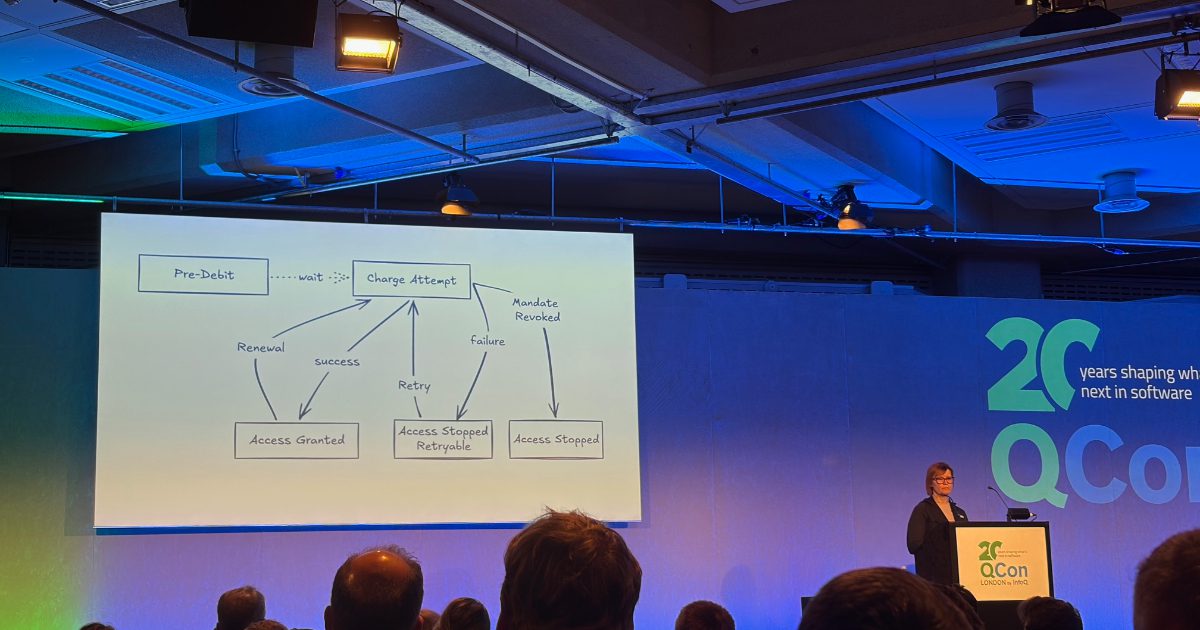
India’s 2020-2022 credit card storage ban required Netflix to adopt:
- Pre-approved mandates
- 3D Secure authentication
- Pre-debit notifications
This regulatory change demonstrated the importance of staying ahead of compliance requirements in new markets.
Multi-Household Subscriptions
Allowing extra member slots fundamentally changed billing dependencies. The biggest challenges emerged in data systems and monitoring, requiring:
- Multi-account dependency tracking
- Enhanced metrics and dashboards
- Domain-specific team structures
Live Events: The Jake Paul Challenge
Live events like the Jake Paul vs. Mike Tyson fight created signup spikes 10x higher than predicted. Netflix prioritized access over immediate financial reconciliation, implementing:
- Graceful degradation strategies
- Asynchronous billing reconciliation
- Regional load prioritization
Architectural Evolution Principles
Trapszo emphasized three core principles:
- Duplication over coordination: Teams duplicated vendor integrations to move faster
- Continuous adaptation: “Great systems survive because they keep evolving as reality changes”
- Pragmatic shortcuts: Launch with simplified models, then refine based on production data
Conclusion
Netflix’s commerce architecture evolution proves that scalability requires embracing change, not perfect design. By treating architecture as an ongoing process rather than a one-time project, companies can navigate global complexity while maintaining customer access. The key takeaway? “Some duplication is cheaper than coordination,” as Trapszo wisely noted.
Ready to learn more? Subscribe to our newsletter for insights on scalable architecture and global tech strategies.








