
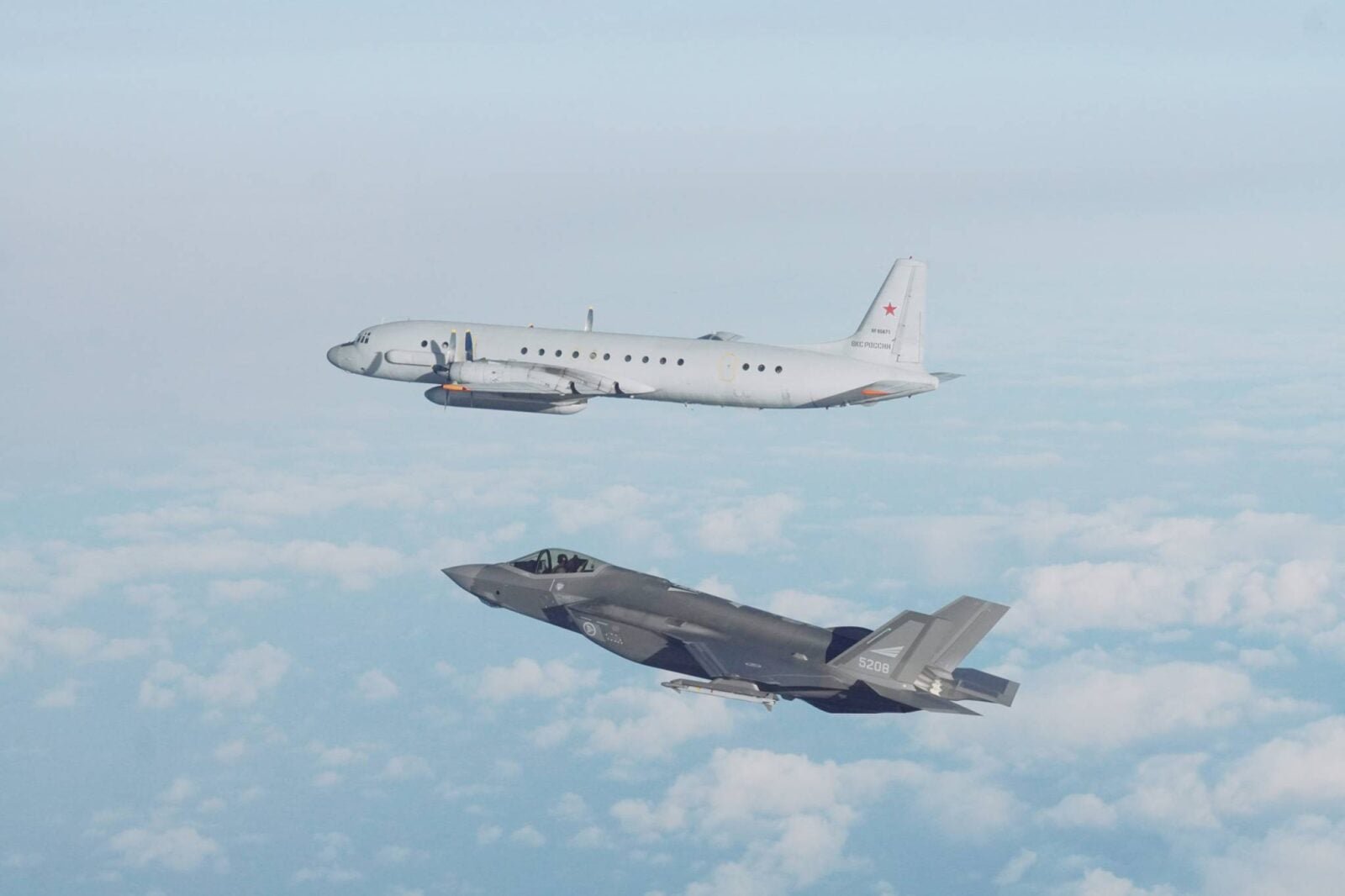
Norwegian F-35 Jets Intercept Russian Spy Plane
Norwegian F-35 fighter jets intercepted and identified a Russian Il-20M reconnaissance aircraft flying in international airspace off Finnmark on two consecutive days. The interceptions occurred during NATO’s Cold Response 2026 exercise.
Background of the Incident
The Norwegian Armed Forces scrambled two F-35 Lightning II fighter jets to intercept and identify the Russian Ilyushin Il-20M reconnaissance aircraft. The aircraft was detected through Norwegian radar and sensor networks, despite flying with its transponder switched off.
Meanwhile, the Norwegian fighters shadowed the Russian aircraft as it moved south along the coast before turning northward off Vesterålen. Additionally, the aircraft later flew south again twice, reaching as far as Lofoten, before turning back toward the Kola Peninsula.
Details of the Russian Aircraft
The Il-20M reconnaissance aircraft is a specialized intelligence platform derived from the Soviet-era Ilyushin Il-18 airliner. However, it carries a range of sensors designed for radar reconnaissance and electronic intelligence (ELINT) missions.
For example, these systems allow the aircraft to collect data on radar emissions, communications signals, and other electronic signatures generated by military units operating in the region. Furthermore, such aircraft are frequently used to build electronic intelligence profiles of military forces.
Importance of the Interception
Therefore, the Norwegian Armed Forces said that even though Russian reconnaissance flights are routine, it remains necessary for NATO air defense systems to detect and identify aircraft operating near allied territory. Moreover, the flights were most likely intended to gather information on allied military activity associated with the ongoing Cold Response 2026 exercise.
Finally, the Norwegian authorities emphasized that the Russian aircraft remained in international airspace during both incidents and that such missions are not unusual. However, the incident highlights the ongoing tensions between NATO and Russia, particularly in the context of military exercises and reconnaissance activities.
Conclusion and Recommendations
In conclusion, the interception of the Russian Il-20M reconnaissance aircraft by Norwegian F-35 fighter jets highlights the importance of air defense systems in detecting and identifying aircraft operating near allied territory. Additionally, the incident underscores the need for continued vigilance and cooperation among NATO member states in monitoring and responding to Russian military activities.
Meanwhile, readers who wish to stay informed about the latest developments in defense and security can subscribe to our weekly newsletter. Furthermore, we invite readers to share their thoughts and opinions on this topic in the comments section below.
Frequently Asked Questions
Q: What is the Cold Response 2026 exercise?
A: The Cold Response 2026 exercise is a major multinational exercise conducted in Northern Norway designed to train allied forces in cold-weather operations and large-scale joint defense scenarios.
Q: What is the Il-20M reconnaissance aircraft?
A: The Il-20M reconnaissance aircraft is a specialized intelligence platform derived from the Soviet-era Ilyushin Il-18 airliner, designed for radar reconnaissance and electronic intelligence (ELINT) missions.
Q: Why are Russian reconnaissance flights a concern for NATO?
A: Russian reconnaissance flights are a concern for NATO because they can be used to gather intelligence on allied military activities and capabilities, potentially compromising the security of NATO member states.
Q: What is the role of the F-35 fighter jet in air defense?
A: The F-35 fighter jet plays a critical role in air defense, providing advanced capabilities for detecting and identifying aircraft operating in international airspace.
Q: How can readers stay informed about the latest developments in defense and security?
A: Readers can stay informed about the latest developments in defense and security by subscribing to our weekly newsletter and following our social media channels.








