Nuro’s Tokyo Autonomous Vehicle Test: Zero-Shot Autonomy Explained
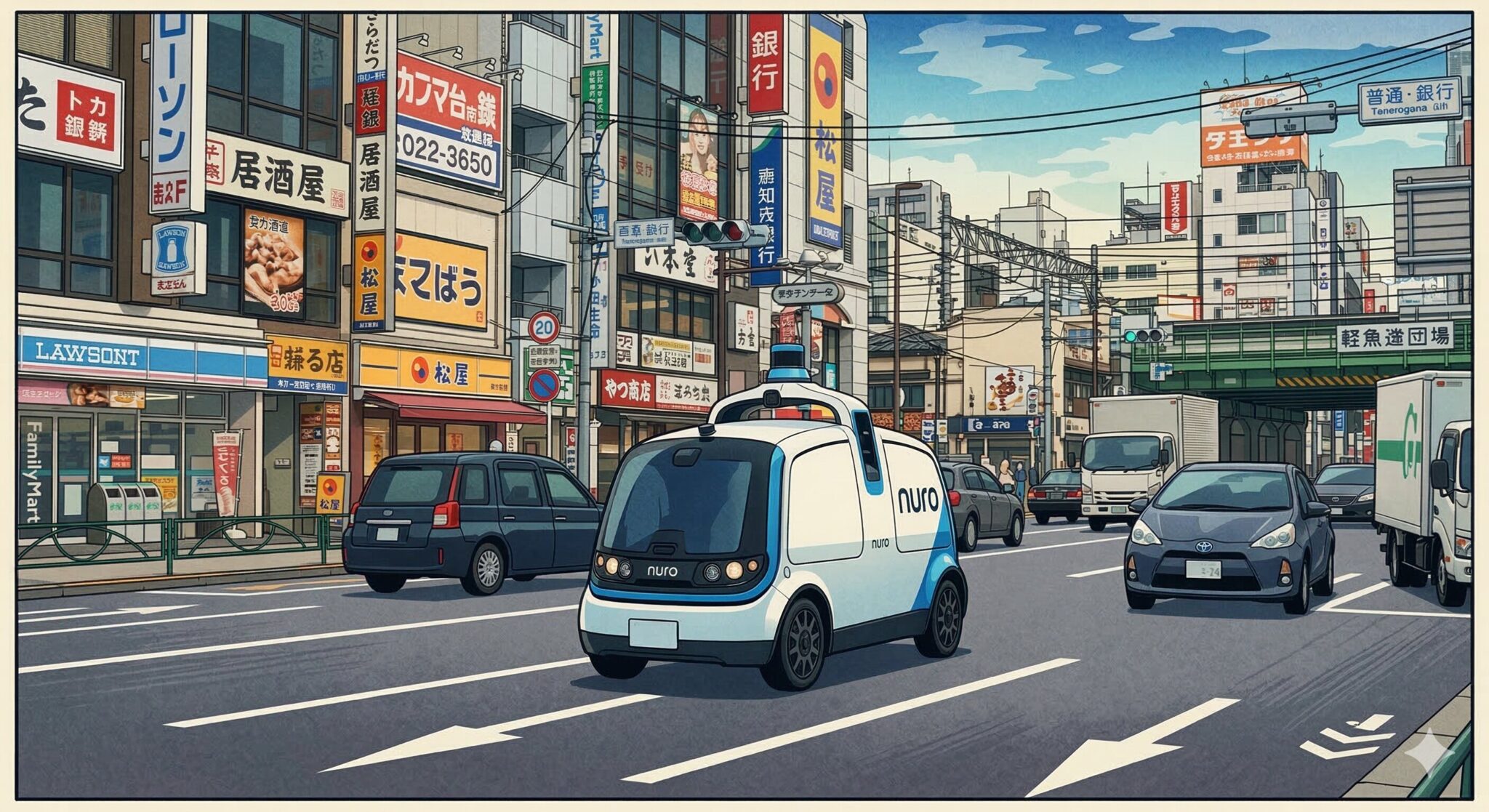
Autonomous vehicle technology is no longer confined to Silicon Valley. Nuro, the California-based startup known for its delivery-focused robots, has taken a bold step by testing its self-driving systems on Tokyo’s complex urban streets. This marks the company’s first public-road expansion beyond the U.S. and signals a pivotal shift in how autonomous systems might scale globally.
Why Tokyo? A Strategic Choice for Testing
Tokyo is not a simple testbed. Its dense traffic, unique road rules, and varied signage present a far tougher challenge than controlled environments. For Nuro, this city is a proving ground for zero-shot autonomy—a concept where AI systems adapt to new markets without city-specific reprogramming. The goal? Prove that one autonomous driving model can handle diverse environments with minimal tweaks.
Partnerships and Financial Backing
- Uber and Lucid Collaboration: Nuro partnered with Uber and Lucid to facilitate its Tokyo rollout, leveraging their local expertise.
- Series E Funding: A $203 million round led by Uber and Nvidia underscores confidence in Nuro’s vision.
What Zero-Shot Autonomy Means for Nuro
Zero-shot autonomy isn’t about perfection—it’s about adaptability. Nuro’s system combines simulation, closed-course testing, and real-world trials to train its AI. By reducing the need for location-specific tuning, the company aims to cut costs and accelerate global deployment. However, Tokyo’s test is just the beginning. Scaling this approach to cities with even more chaotic conditions (like Mumbai or Jakarta) remains unproven.
Key Implications for the Robotaxi Market
If successful, Nuro’s model could redefine how autonomous vehicles enter new markets. Instead of rebuilding systems for each city, companies could deploy a single adaptable framework. This aligns with the broader push toward physical AI, where machine learning thrives in unpredictable real-world settings.
Challenges and the Road Ahead
While Tokyo’s test is promising, it’s not a guarantee of global success. Regulatory hurdles, cultural differences in driving behavior, and unpredictable edge cases (like construction zones or erratic pedestrians) will test Nuro’s systems further. The company’s ability to balance innovation with safety will determine its long-term viability.
Conclusion: A Step Toward Portable Autonomy
Nuro’s Tokyo experiment is a critical milestone in the evolution of autonomous vehicles. It highlights the potential of zero-shot autonomy to streamline global expansion. However, the true test lies in how well this model performs in increasingly complex markets. For now, Tokyo serves as a signal—not a final verdict—on the future of AI-driven mobility.
Stay ahead of the curve: Subscribe to the Daily Tech Insider Newsletter for updates on AI, robotics, and the future of transportation.