Introduction: The Future of AI Is Physical
At NVIDIA GTC 2026, the line between virtual and physical worlds blurred as the company unveiled groundbreaking advancements in physical AI. From autonomous robots to digital twin factories, NVIDIA’s innovations are reshaping industries. This article explores how NVIDIA’s Omniverse, OpenUSD, and physical AI frameworks are accelerating the next era of intelligent systems.
Simulating the AI Factory Before It’s Built
Modern AI factories are complex ecosystems of power grids, thermal systems, and mechanical networks. NVIDIA’s Omniverse DSX Blueprint solves this puzzle by creating a unified digital twin. This reference architecture lets operators optimize performance and efficiency before deploying hardware—reducing costs and accelerating timelines.
Key Features of the DSX Blueprint
- Single digital twin for end-to-end simulation
- Real-time optimization of AI factory workflows
- Collaborative design across engineering teams
Compute Is Data: Scaling Physical AI
Real-world data has long been a bottleneck for physical AI. NVIDIA’s Physical AI Data Factory Blueprint transforms this challenge into an opportunity. By generating synthetic datasets from limited real-world inputs, the blueprint enables developers to train autonomous systems at scale.
How It Works
- Uses NVIDIA Cosmos world models for data generation
- Leverages NVIDIA OSMO for data curation and augmentation
- Produces high-quality datasets for robotics, vision AI, and autonomous vehicles
From OpenUSD to Reality: Design to Deployment
OpenUSD is the backbone of NVIDIA’s physical AI ecosystem. By converting CAD files into simulation-ready assets, OpenUSD bridges design and deployment. Tools like NVIDIA Omniverse Kit and Isaac Sim enable teams to test robots in physically accurate virtual environments before real-world deployment.
Industry Impact
Companies like FANUC and Fauna Robotics are using this workflow to:
- Accelerate robotic system validation
- Reduce prototyping costs
- Improve collaboration across engineering teams
Transforming Manufacturing with Digital Twins
“Factories themselves are now robotic systems,” said NVIDIA’s Rev Lebaredian at GTC. The Mega Omniverse Blueprint allows enterprises to simulate entire facilities, training robot fleets and AI agents in virtual environments before real-world implementation.
Real-World Applications
KION, Accenture, and Siemens are using this blueprint to build warehouse digital twins for GXO, the world’s largest logistics provider. These twins train autonomous forklifts, optimizing efficiency and safety.
Physical AI Steps Into the Real World
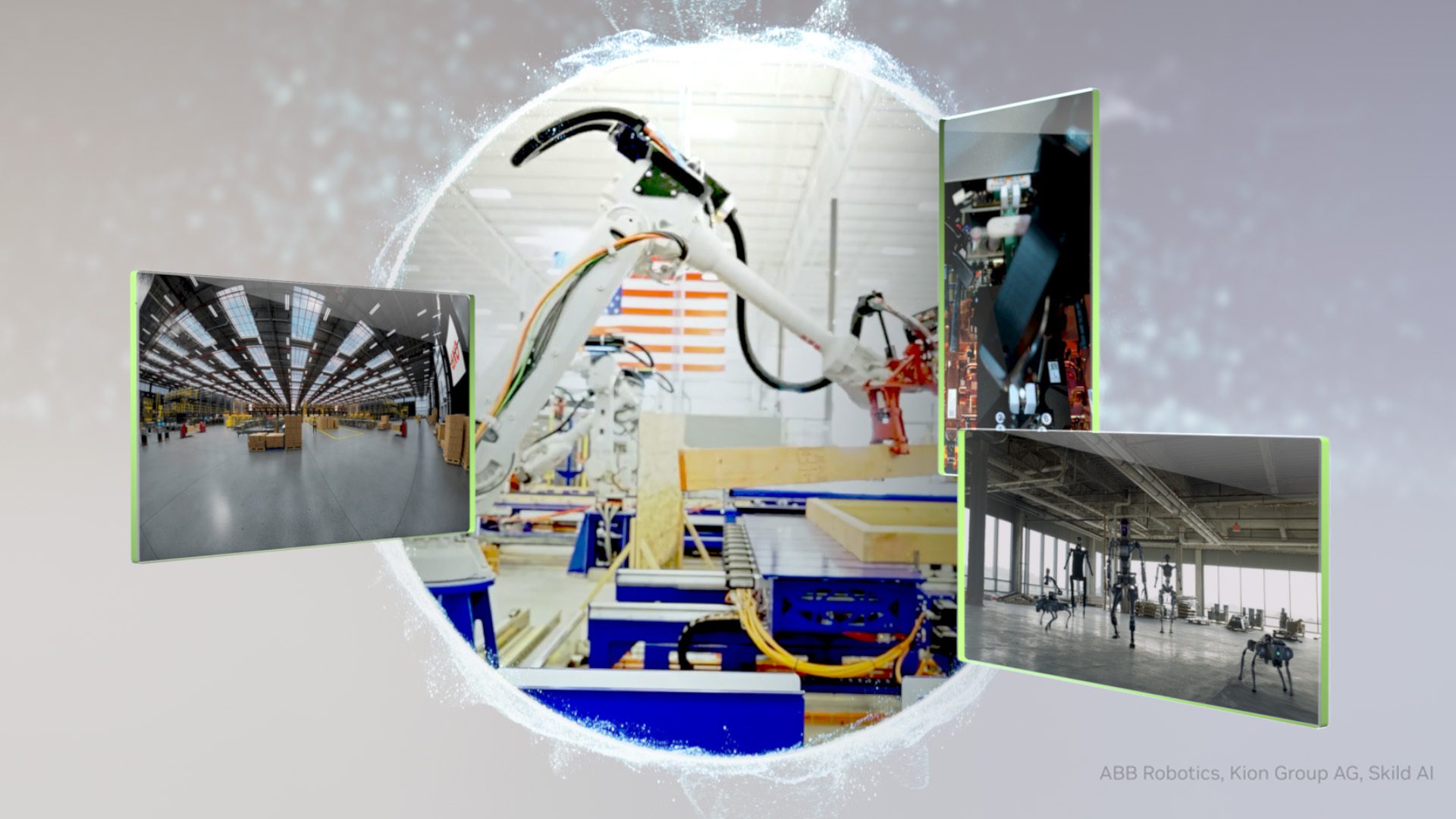
NVIDIA’s partnerships with robotics leaders like ABB, FANUC, and Yaskawa are bringing physical AI to life. These companies use NVIDIA’s simulation frameworks to validate complex applications and integrate Jetson modules for real-time AI inference.
Emerging Innovations
- Generalist AI uses synthetic data to train robots for diverse tasks
- OpenClaw extends AI to operations with autonomous workflows
- Cloud platforms like Microsoft Azure and Nebius enable global data production
Conclusion: The Physical AI Era Is Here
NVIDIA GTC 2026 has set the stage for a new era of physical AI. By combining simulation, synthetic data, and OpenUSD, NVIDIA is empowering industries to build smarter, faster, and more scalable systems. Explore NVIDIA’s GTC press kit to learn more about these innovations and watch the keynote replay to stay ahead of the curve.