Nvidia Vera Rubin: 10x Efficiency in AI Supercomputing
The AI arms race has shifted focus. Speed is no longer the sole metric—efficiency, scalability, and sustainability now define leadership. Enter Nvidia Vera Rubin, a liquid-cooled supercomputing system promising 10x performance per watt over its predecessor. This isn’t just hardware evolution; it’s a strategic move to redefine AI infrastructure for an era of exploding compute demands.
What Is Nvidia Vera Rubin?
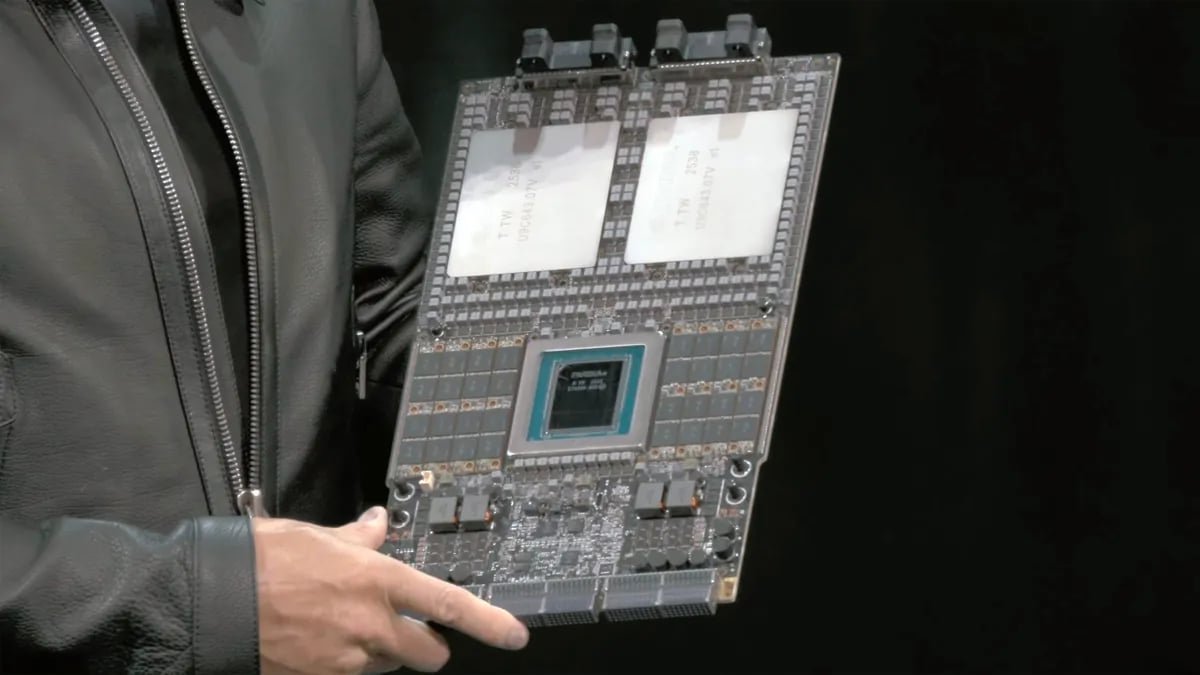
Announced for 2025 deployment, Vera Rubin combines 72 Rubin GPUs and 36 Vera CPUs, sourced from TSMC, with a modular design that prioritizes ease of maintenance. Unlike the soldered components of the Grace Blackwell system, Vera Rubin’s compute trays slide out in seconds, enabling rapid upgrades and repairs. This modularity, paired with 100% liquid cooling, addresses two critical pain points: energy consumption and operational complexity.
Key Specifications
- 72 Rubin GPUs + 36 Vera CPUs
- 1,300 microchips per rack (vs. 864 in Grace Blackwell)
- 10x performance per watt efficiency
- Modular design with 18 removable compute trays
- 100% liquid cooling system
Why Efficiency Matters Now
AI models are growing exponentially. Training a single large language model can consume as much energy as 120 U.S. homes in a year. Meanwhile, global memory shortages and power grid limitations are straining data centers. Vera Rubin’s 10x efficiency isn’t just a technical win—it’s a business imperative.
Energy and Environmental Impact
Nvidia claims Vera Rubin reduces water usage compared to traditional evaporative cooling. Dion Harris, head of AI infrastructure at Nvidia, emphasizes supply chain alignment: “We’re in good shape to meet demand.” Yet, the system still consumes double the power of Grace Blackwell, highlighting the delicate balance between performance and sustainability.
Adoption and Competition
Meta plans to deploy Vera Rubin by 2027, while OpenAI, Anthropic, and cloud giants like AWS and Google Cloud have signed on. However, Nvidia faces rising competition from AMD, Broadcom, and Google. Jensen Huang, Nvidia’s CEO, calls Vera Rubin “the king of inference,” but skeptics question whether the promised efficiency will offset infrastructure costs.
Industry Reactions
- Meta: Prioritizing scalability for next-gen AI models
- OpenAI: Focused on reducing token costs
- Environmental Groups: Scrutinizing data center energy use
Future Outlook
As AI adoption accelerates, Vera Rubin’s modular design and efficiency could set a new standard. However, the system’s success hinges on overcoming memory shortages and proving long-term cost-effectiveness. Nvidia’s bet is clear: the future of AI isn’t just about power—it’s about smart, sustainable power.
Practical Takeaways
- Invest in liquid cooling infrastructure to future-proof data centers
- Adopt modular systems for faster upgrades and repairs
- Monitor energy consumption metrics closely