Offshore Wind Turbine Data Center: Aikido’s Bold Innovation
Imagine a world where renewable energy and digital infrastructure merge seamlessly. That vision is now a reality thanks to Aikido, a startup pioneering an offshore wind turbine data center prototype set to launch in the North Sea. This groundbreaking project combines floating wind energy with underwater data storage, addressing two critical global challenges: climate change and the exploding demand for cloud computing.
How Aikido’s Hybrid System Works
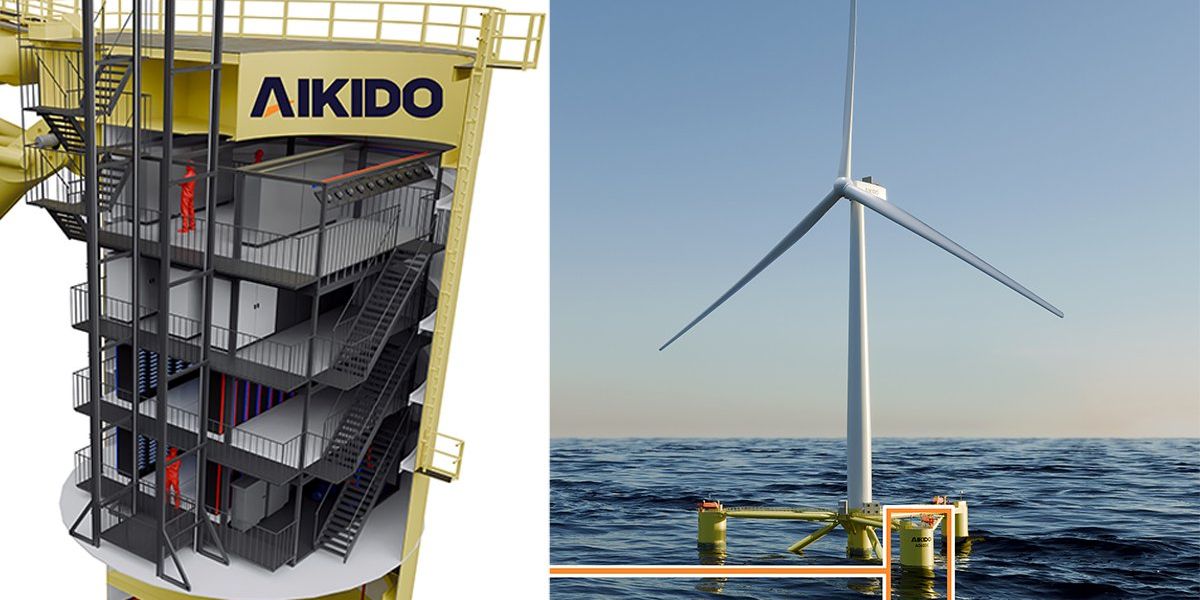
Aikido’s design features a floating wind turbine platform with three ballast tanks, each capable of housing a 4-megawatt, liquid-cooled data hall. The system leverages the North Sea’s consistent winds to generate clean energy while using the ocean’s natural cooling properties to maintain optimal temperatures for servers. This dual-purpose approach reduces both energy costs and carbon footprints.
Key Components of the Design
- Floating Wind Turbine: Generates renewable energy to power the data center.
- Liquid-Cooled Data Halls: Submerged in ballast tanks for efficient thermal management.
- Modular Architecture: Scalable design allows for expansion as demand grows.
Why This Innovation Matters
Data centers currently consume about 1% of global electricity and produce 0.3% of CO2 emissions. Aikido’s solution tackles this head-on by:
- Reducing reliance on fossil fuels through on-site wind energy generation.
- Eliminating the need for energy-intensive air conditioning via seawater cooling.
- Minimizing land use conflicts by locating infrastructure offshore.
Environmental and Economic Benefits
By situating data centers near coastal populations, Aikido also reduces latency for users in Europe and North America. The startup estimates its system could cut data center energy costs by 40% while achieving carbon neutrality.
Challenges and Future Outlook
While promising, the project faces technical hurdles like corrosion resistance and deep-sea connectivity. However, Aikido’s prototype—planned for 2026—aims to validate the concept’s feasibility. If successful, this model could inspire similar projects in the Gulf of Mexico, the Baltic Sea, and beyond.
What’s Next for Aikido?
The company is seeking partnerships with cloud providers and governments to scale the technology. Early interest from telecom giants suggests strong potential for commercialization within five years.
Conclusion: A New Era for Sustainable Tech
Aikido’s offshore wind turbine data center represents a paradigm shift in how we power and locate digital infrastructure. By solving energy and cooling challenges simultaneously, this innovation could redefine the future of cloud computing. Ready to stay ahead of the curve? Follow Aikido’s progress and explore how your organization can leverage offshore renewable energy solutions.
FAQs
1. How does the offshore wind turbine power the data center?
The floating turbine generates electricity directly, which is used to run the submerged data halls. Excess energy can be stored or fed into the grid.
2. Are there risks to marine ecosystems?
Aikido’s design includes environmental safeguards to minimize disruption. The company conducts regular impact assessments to ensure compliance with marine conservation standards.
3. Can this model work in other regions?
Yes. The North Sea prototype’s success could enable replication in areas with strong winds and deep coastal waters, such as the Gulf of Mexico or the South China Sea.
4. What are the cost savings compared to traditional data centers?
By eliminating air conditioning and using free wind energy, Aikido estimates a 40% reduction in operational costs over a 10-year period.
5. When will the first prototype launch?
Aikido aims to deploy its initial offshore wind turbine data center in the North Sea by early 2026.