The Future of AI Clusters: A Collaborative Breakthrough
Artificial intelligence is evolving at lightning speed, but even the most advanced AI models hit a wall when data transfer limits slow down training and inference. Enter the optical scale-up interconnect—a revolutionary technology now being defined by AMD, Broadcom, and Nvidia in partnership with hyperscalers like Meta, Microsoft, and OpenAI. This collaboration aims to push AI cluster speeds to unprecedented levels, eventually reaching 3.2 Tb/s. Let’s break down how this partnership could reshape the future of AI.
Why Optical Scale-Up Matters for AI
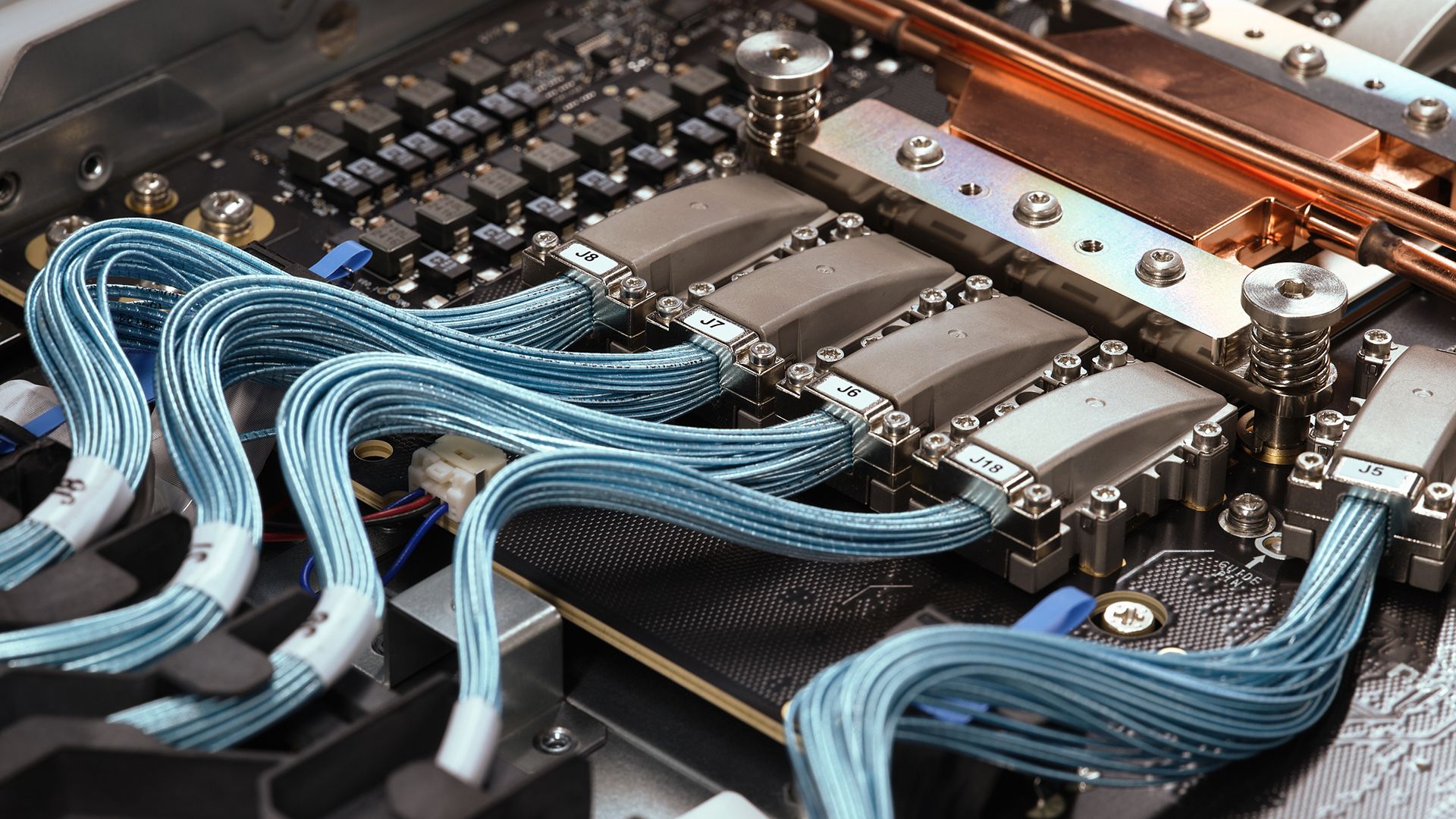
Modern AI clusters require massive data throughput to process complex models efficiently. Traditional interconnects, such as PCIe or InfiniBand, struggle to keep up with the exponential growth of data demands. Optical scale-up interconnects solve this by leveraging light-based communication, which offers higher bandwidth, lower latency, and reduced energy consumption. For hyperscalers, this means faster model training, real-time inference, and the ability to handle larger datasets without bottlenecks.
Key Benefits of Optical Interconnects
- Speed: Targeting 3.2 Tb/s, these interconnects outperform current solutions by orders of magnitude.
- Scalability: Designed for modular expansion, they adapt to growing AI workloads seamlessly.
- Energy Efficiency: Optical technology reduces power consumption compared to copper-based systems.
How AMD, Broadcom, and Nvidia Are Shaping the Standard
These semiconductor giants are not just building hardware—they’re defining the architecture of the next-generation interconnect. AMD’s expertise in high-performance computing, Broadcom’s leadership in optical networking, and Nvidia’s AI-focused silicon design create a powerful synergy. By aligning with hyperscalers, they ensure the technology meets real-world demands, such as Meta’s need for real-time content moderation or OpenAI’s ambition to train trillion-parameter models.
Collaboration in Action
The partnership includes:
- Co-designing optical transceivers and switches tailored for AI workloads.
- Optimizing software stacks to maximize throughput and minimize latency.
- Testing prototypes in hyperscaler data centers to validate performance at scale.
What This Means for the AI Ecosystem
The optical scale-up interconnect isn’t just a technical upgrade—it’s a catalyst for innovation. For developers, it means faster experimentation cycles. For enterprises, it reduces time-to-market for AI-driven products. And for consumers, it could lead to smarter, more responsive AI assistants and recommendation systems. However, adoption will take time. While 3.2 Tb/s is the long-term goal, early implementations may focus on 1.6 Tb/s to balance cost and performance.
Challenges and the Road Ahead
Despite the promise, hurdles remain. Optical interconnects require new infrastructure, including specialized cabling and cooling systems. Costs are also a concern, though economies of scale could drive prices down as adoption grows. Nvidia, AMD, and Broadcom will need to work closely with cloud providers and hardware manufacturers to ensure compatibility and interoperability.
Stay Ahead of the Curve
The optical scale-up interconnect represents a pivotal shift in AI infrastructure. As hyperscalers and tech leaders push this technology forward, staying informed is critical. Whether you’re a developer, IT professional, or AI enthusiast, understanding these advancements will help you navigate the next wave of innovation. Keep an eye on how this collaboration unfolds—it could redefine what’s possible in AI within the next decade.