
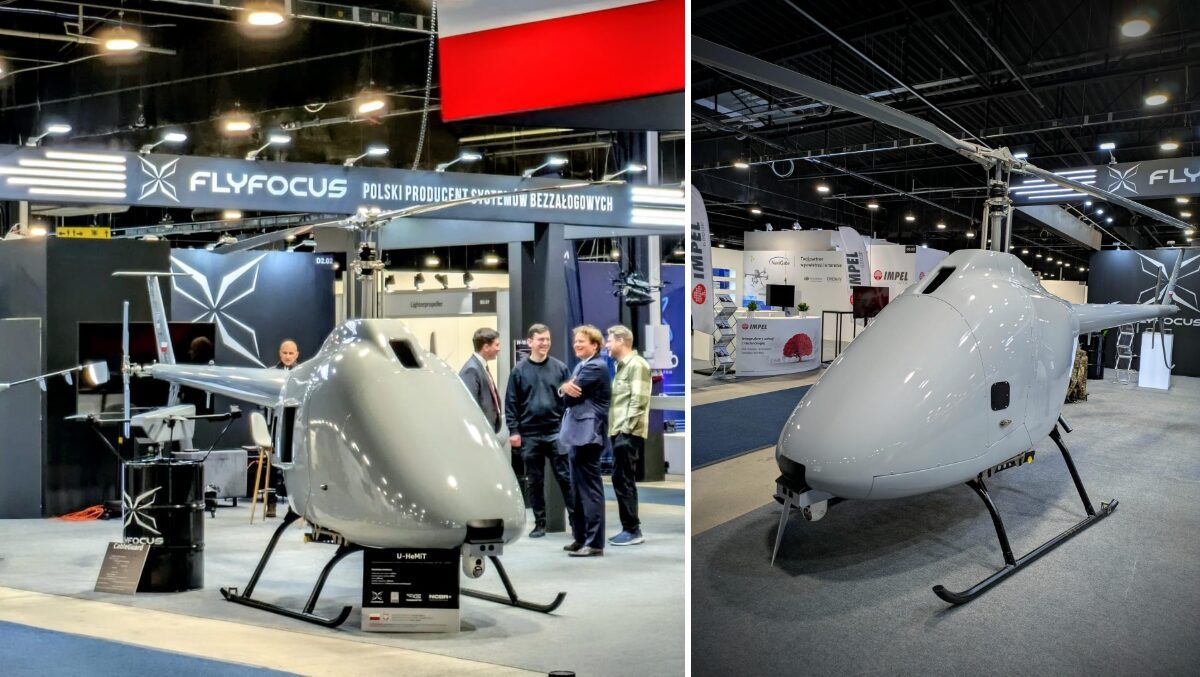
Poland’s KURIER Unmanned Helicopter: A Game-Changer in Military Logistics
Modern warfare demands agility, precision, and resilience. Poland’s KURIER unmanned helicopter is redefining battlefield logistics with its autonomous capabilities and robust design. Developed by FlyFocus in collaboration with Polish defense institutions, this 600 kg-class drone can carry over 200 kg of cargo to remote or contested zones—revolutionizing how military units sustain operations in high-threat environments.
Key Features of the KURIER Unmanned Helicopter
The KURIER platform combines cutting-edge technology with practical battlefield needs. Here’s what sets it apart:
- Autonomous Operations: Designed to function in GPS-denied or jammed environments using advanced navigation systems.
- Heavy Payload: Carries up to 200 kg of cargo, including ammunition, medical supplies, or surveillance equipment.
- Extended Range: Flies at speeds up to 180 km/h with a 3–10 hour endurance, reaching altitudes of 4,000 meters.
- European Supply Chain: Built with components from NATO-aligned suppliers to ensure security and reliability.
Development and Strategic Backing
Funded by Poland’s National Centre for Research and Development and supervised by the Ministry of Defence, the €5 million KURIER project involves a consortium of FlyFocus, FusionCopter, and the Polish Academy of Sciences. Launched in February 2024, the program has achieved Technology Readiness Level 6 after rigorous flight tests in military training areas.
Why This Matters for Modern Warfare
Traditional resupply missions face growing risks from electronic warfare and hostile terrain. KURIER addresses these challenges by:
- Delivering critical supplies to special forces deep behind enemy lines.
- Reducing exposure of personnel and aircraft in high-threat zones.
- Enabling operations in GPS-degraded environments where adversaries disrupt navigation systems.
Future Applications and Global Implications
While KURIER is currently optimized for land-based military logistics, its design allows for maritime adaptations. Potential uses include:
- Ship-to-ship resupply in naval operations.
- Surveillance and anti-submarine warfare support.
- Monitoring critical infrastructure in remote regions.
By prioritizing European technological sovereignty, FlyFocus founder Igor Skawiński emphasizes that KURIER strengthens Poland’s defense independence. “Trusted, locally controlled systems are vital for military security,” he states, highlighting the project’s alignment with NATO standards.
How KURIER Stands Out
Unlike many unmanned systems, KURIER’s hybrid approach balances payload, speed, and autonomy. Its ability to operate in contested environments—without relying on GPS—makes it a versatile asset for future conflicts. As unmanned logistics drones become essential to modern militaries, Poland’s innovation positions it as a leader in defense technology.
Conclusion: The Future of Autonomous Logistics
The KURIER unmanned helicopter is more than a drone—it’s a strategic leap forward for autonomous battlefield logistics. By addressing real-world challenges with European-built solutions, Poland is setting a new standard for military resupply. Stay tuned for updates on this groundbreaking platform and its potential to reshape defense operations globally.
Subscribe to our Weekly Defense Roundup for the latest insights on military technology and innovation.








