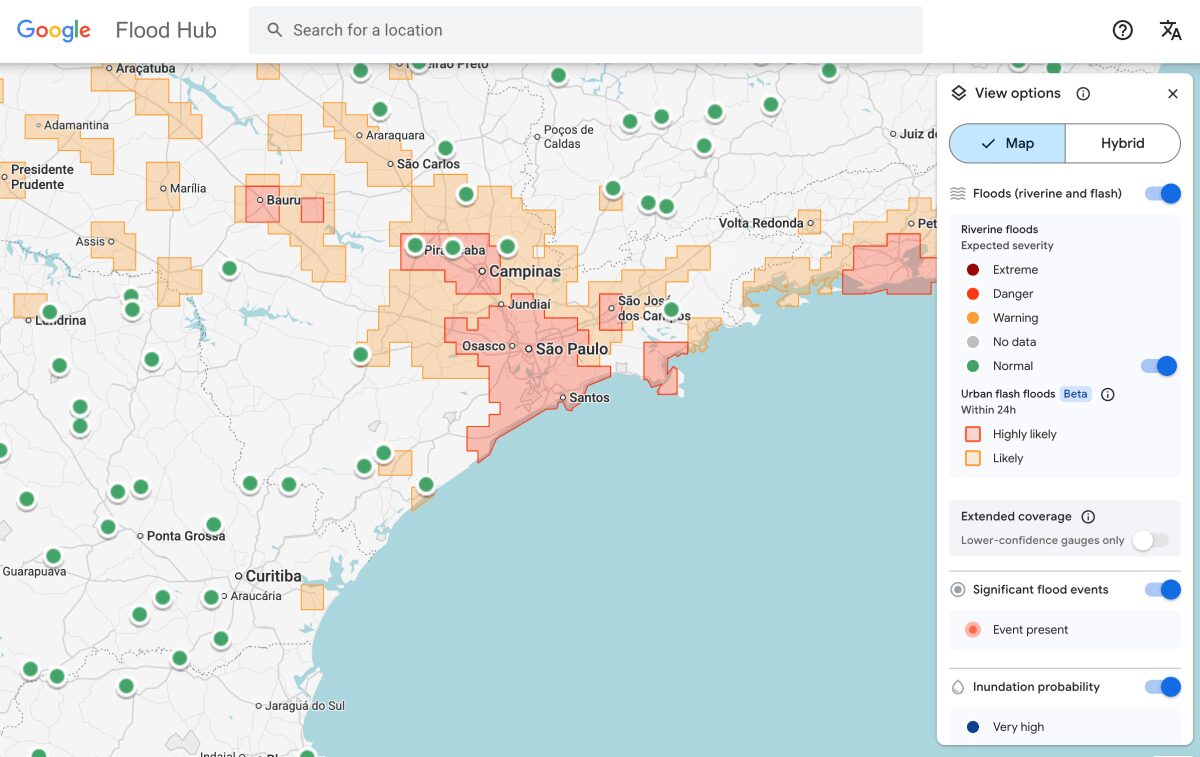
Predicting Flash Floods: A New Approach
Flash floods are among the deadliest weather events globally, claiming over 5,000 lives annually. However, predicting them has been a significant challenge. Meanwhile, Google has developed an innovative solution by leveraging news reports to forecast flash floods.
Additionally, traditional weather monitoring methods are insufficient for predicting flash floods. Therefore, deep learning models, which are effective in forecasting weather patterns, are not able to predict flash floods accurately.
Understanding Flash Floods
For example, flash floods are short-lived and localized, making them difficult to measure comprehensively. Meanwhile, temperature and river flows are monitored over time, providing valuable data for weather forecasting.
However, the lack of data on flash floods hinders the ability of deep learning models to predict them. Furthermore, assembling weather data has been a significant challenge, and the data gap persists.
Google’s Innovative Approach
Google’s approach involves reading news reports to gather data on flash floods. Additionally, this method enables the company to gather information on the location and severity of flash floods.
Meanwhile, this data is used to train deep learning models, which can then predict flash floods more accurately. Therefore, Google’s innovative approach has the potential to save lives and reduce the impact of flash floods.
Benefits of Predicting Flash Floods
Predicting flash floods can have numerous benefits, including saving lives and reducing property damage. For instance, early warnings can be issued, allowing people to evacuate the area and seek safety.
Additionally, predicting flash floods can help emergency responders to prepare and respond more effectively. Meanwhile, it can also reduce the economic impact of flash floods by minimizing damage to infrastructure and property.
Conclusion and Future Directions
In conclusion, predicting flash floods is a significant challenge that has been addressed by Google’s innovative approach. Meanwhile, the use of news reports to gather data has the potential to improve the accuracy of flash flood predictions.
Therefore, it is essential to continue developing and refining this approach to save lives and reduce the impact of flash floods. Finally, the use of AI and machine learning can help to improve the accuracy of weather forecasting and reduce the risk of flash floods.
Some frequently asked questions about flash floods include:
- What is a flash flood, and how does it occur?
- How can I stay safe during a flash flood?
- What are the benefits of predicting flash floods, and how can it be done?
- How does Google’s approach to predicting flash floods work, and what are its limitations?
- What are the future directions for predicting flash floods, and how can AI be used to improve the accuracy of predictions?