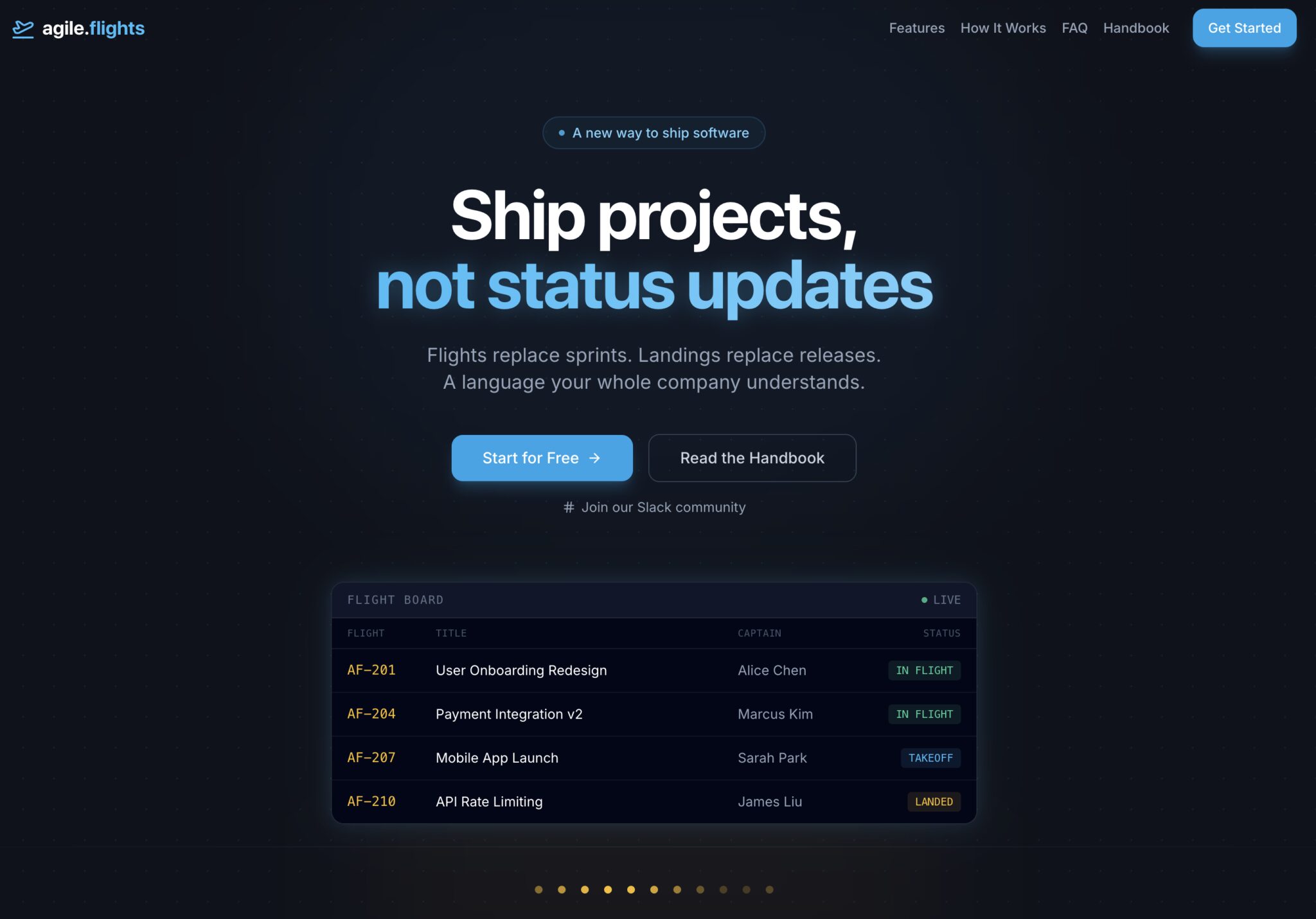
Replace Sprints with Flights: Agile Project Management Redefined
Traditional Agile frameworks like Scrum often lead to endless meetings, unclear priorities, and wasted time. Standups that drag on. Retros that end with vague promises. Velocity charts that mislead more than they clarify. What if there was a simpler way to manage projects without the overhead?
What Is the Flights Methodology?
Enter Flights methodology, a fresh approach to project management that replaces sprints with time-boxed initiatives called "flights." Each flight has a clear takeoff date, landing date, and a captain responsible for delivery. Tasks become "crates" loaded onto the flight, while team members act as "crew" working toward the shared goal.
- No story points or velocity charts—just done or not done.
- Transparent communication with terms like "headwinds" and "emergency landings" that resonate across teams.
- Real-time visibility through an airport-board-style dashboard showing active flights, runway projects, and completed work.
Why Flights Outperform Traditional Sprints
Simplified Task Management
Flights eliminate the complexity of Scrum ceremonies. Instead of grooming sessions and burndown graphs, teams focus on:
- Defining clear flight goals with captains.
- Assigning crates to crew members.
- Tracking progress without micromanaging.
Improved Communication
Metaphors like "headwinds" and "tailwinds" make project status universally understandable. When a team says, "This flight is hitting headwinds but still lands Friday," stakeholders instantly grasp the situation without translation.
AI Integration Without Overhead
Flights work seamlessly with AI tools. While developers use AI for coding, the Flights methodology ensures visibility into dependencies and adjustments. For example, if one team’s flight faces an emergency landing, others can recalibrate quickly.
How to Get Started with Flights
- Define your first flight: Set a realistic takeoff and landing date.
- Assign a captain: Choose someone accountable for the flight’s success.
- Load crates: Break the project into manageable tasks.
- Track progress: Use the agile.flights dashboard for real-time updates.
Flights in Action
One engineering team replaced Scrum with Flights and saw immediate results. Standups became shorter, retros focused on actionable changes, and stakeholders finally understood project status without jargon. After a year of use, they built agile.flights, a tool that turns the methodology into a visual, collaborative platform.
Conclusion: Agile Flights for Modern Teams
The Flights methodology isn’t just a metaphor—it’s a proven way to simplify project management. By replacing sprints with flights, teams reduce overhead, improve communication, and deliver faster. Ready to try it? Visit agile.flights for a live demo and methodology handbook.
FAQs
How does the Flights methodology improve project visibility?
Flights use clear metaphors and real-time dashboards to make project status obvious to everyone, from engineers to executives.
Can the Flights methodology work with AI tools?
Yes. Flights integrate with AI pair programmers and CI/CD pipelines, ensuring visibility even as teams scale.
Is Flights suitable for non-technical teams?
Absolutely. The methodology’s simplicity makes it ideal for any team needing to manage time-boxed initiatives.
What happens if a flight misses its landing date?
Captains reassess priorities and adjust the flight plan. The goal is progress, not perfection.
How do teams handle multiple flights at once?
Crew members can work on multiple flights, but captains remain focused on one at a time to ensure accountability.