Introduction to The Great Dictator
The rise of AI-generated content has made it increasingly difficult to distinguish fact from fiction. However, a new installation at the South by Southwest (SXSW) festival is using this technology to place people inside history’s most defining moments. Meanwhile, this innovative project, titled “The Great Dictator,” premiered in Austin, aiming to flip the script on what deepfakes have come to represent.
Using AI for Good
Instead of using generative AI to create misinformation, “The Great Dictator” uses AI video and voice tools to blend participants into archival footage. For example, attendees can experience history through their own voice and likeness. Additionally, this project is the latest from filmmaker and artist Gabo Arora, who wanted to show how emerging tech can be used for something other than profit, warfare, or propaganda.
Therefore, Arora’s project examines the power of rhetoric and speech, which has remained unchanged for thousands of years. As he notes, “It really shows you we might have all the technology we want, and humans don’t change. We have something hardwired in us about rhetoric and power and someone speaking up.”
How it Works
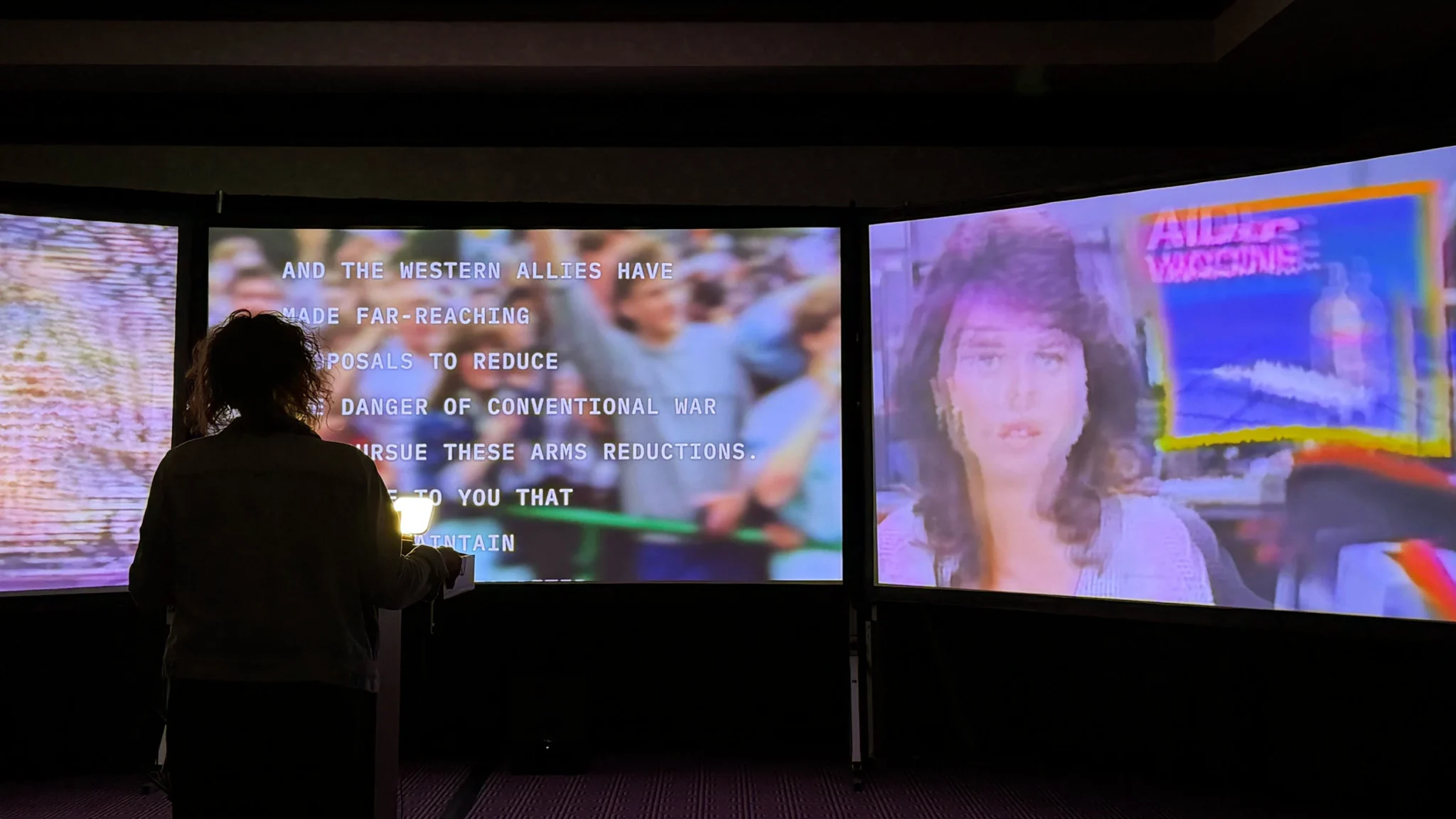
At a hotel in downtown Austin, attendees step up to a podium flanked by three large screens cycling archival footage. After consenting for their voice and likeness to be used, the person then chooses one of three speeches from three very different eras. Meanwhile, these speeches include Malcolm X’s 1964 “The Ballot or the Bullet” speech in Cleveland, Ronald Reagan’s 1987 “Tear down this wall” speech in Germany, and Zohran Mamdani’s 2024 victory speech in New York City.
Additionally, participants then recite a 90-second excerpt from a teleprompter while an AI-generated crowd reacts with cheers at some moments and falls silent at others, based on the speaker’s words and tone. Finally, they are shown a short film in which their cloned voice continues the speech while their likeness is seamlessly inserted into the original footage.
The Technology Behind The Great Dictator
The project relies on several generative AI platforms, including ElevenLabs to capture a participant’s vocal signature and Runway for video generation. However, the use of AI in this project is not just about the technology itself, but about how it can be used to create a unique and immersive experience. For instance, the AI-generated crowd reactions add a new layer of realism to the experience, making it feel more like the participant is actually giving the speech.
Meanwhile, the project’s use of archival footage and historical speeches also serves as a reminder of the power of rhetoric and speech throughout history. As Arora notes, “This is an exhibit that examines something that was as powerful 3,000 years ago with no technology, with the ancient Greeks.”
Conclusion and Future Implications
In conclusion, “The Great Dictator” installation is a groundbreaking project that uses AI technology to place people inside history’s most defining moments. However, this project is not just about the technology itself, but about how it can be used to create a unique and immersive experience. Therefore, as we move forward, it will be interesting to see how this technology is used in other contexts, such as education and entertainment.
Finally, the project’s focus on the power of rhetoric and speech serves as a reminder of the importance of these skills in today’s world. As Arora notes, “We have something hardwired in us about rhetoric and power and someone speaking up.” Therefore, it is essential that we continue to develop and refine these skills, using technology to enhance and augment our abilities, rather than replacing them.
Additionally, the project’s use of AI-generated content also raises important questions about the role of technology in shaping our perceptions of reality. However, as we move forward, it will be essential to consider the potential implications of this technology and how it can be used in a way that is both responsible and beneficial to society.
Meanwhile, the project’s focus on history and the power of rhetoric also serves as a reminder of the importance of learning from the past. Therefore, as we move forward, it will be essential to continue to study and learn from history, using technology to enhance and augment our understanding of the past, rather than replacing it.
Furthermore, the project’s use of immersive technology also serves as a reminder of the importance of creating engaging and interactive experiences. However, as we move forward, it will be essential to consider the potential implications of this technology and how it can be used in a way that is both responsible and beneficial to society.
In the end, “The Great Dictator” installation is a powerful reminder of the importance of rhetoric, speech, and immersive technology in shaping our perceptions of reality. Therefore, as we move forward, it will be essential to continue to develop and refine these skills, using technology to enhance and augment our abilities, rather than replacing them.